Oct 2008
Who Will Get Your Vote for President?
October/27/2008 Polls
As a business
owner, your vote for president is always important.
This is especially true in 2008, given the current
uncertainty about the economy brought on by the
collapse of confidence in the worldwide banking
system. So I thought it would be interesting to know
how photographers plan to vote next Tuesday. I hope
you will take a moment to respond to this anonymous
one-vote-per-computer survey. I'd like to get as many
votes from photographers as possible, so please feel
free to pass this link on to photographers
you know and ask them to vote as well. Unlike some
members of the traditional media, I'll wait to
report the final result of this humble survey
until after the polls have closed :-).
Epilogue: About All Those Sheep
October/23/2008 Ireland
Journal
Jim and I are
now back home from Ireland, and we had to wait to get
here to post the rest of the blog articles I wrote
while we were in the western part of the country, as
well as proof everything which is hard for me to do
on a laptop. At some of our stops, I couldn't find an
Internet Cafe, and even cell phone service was
spotty. But that wasn't a bad thing: no email to
answer and no calls to return. Now that's a real
vacation!
It was a spectacular trip, and I'm so thankful to all the photographers, B&B hosts, and pub friends who made us feel so welcome.
Now about the sheep: Somewhere along our journey, I became addicted to photographing sheep. I'm not totally sure when it happened, but I have to admit I'm hooked.
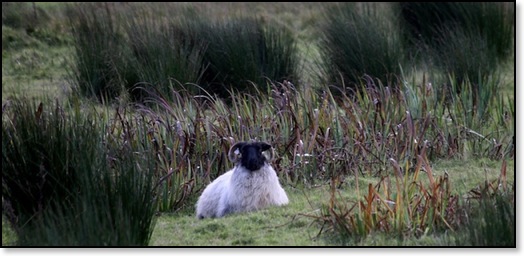
Maybe it occurred when I was out there in the rain with all those perpetually wet sheep in Donegal. I really admire the way they never seemed to fret about the rain.
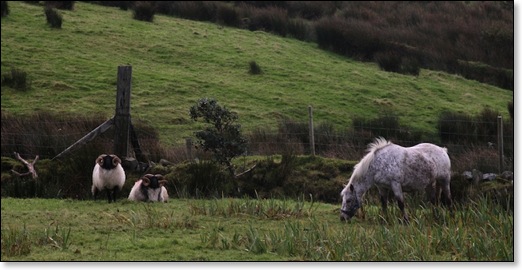
Perhaps it had something to do with seeing how loyal they are to their friends from other species.
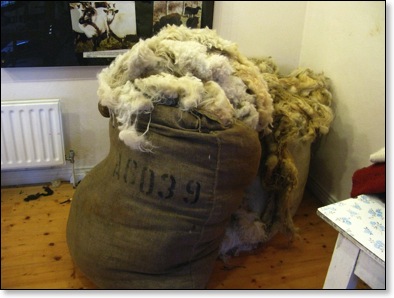
Maybe I was impressed with how giving sheep are because of all that wool I saw at the Leenane Sheep Museum . . .
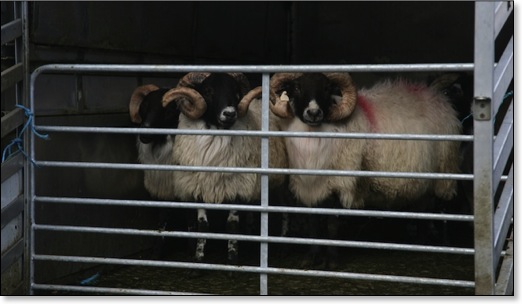
. . . or how patient they were at the Ram Fair.
Or perhaps it was just a matter of learning that some sheep really like to pose for the camera. Honestly they do. Granted that most sheep will run off when you approach them.
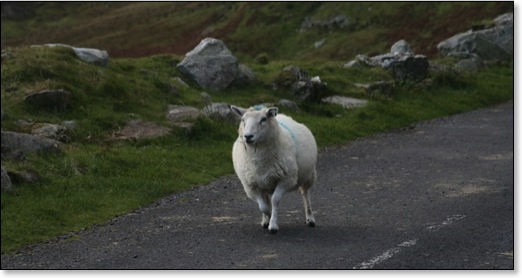
And some who are munching away on grass may not move, but they won't look into the camera even if you set off a firecracker to get their attention.
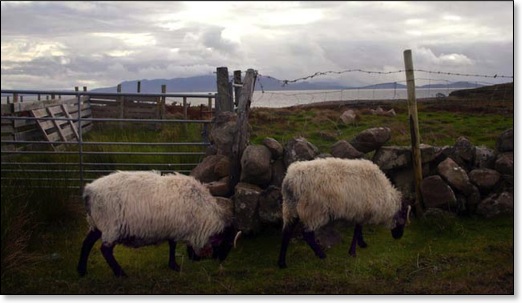
But some sheep REALLY like to pose.
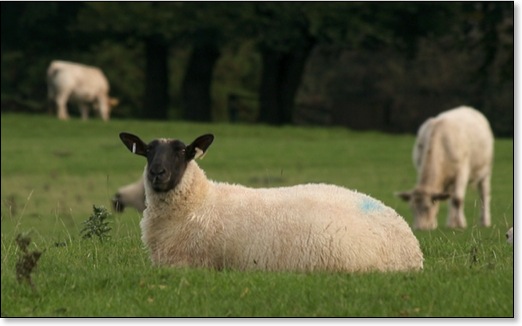
Some, in fact, look positively blissful when they pose.
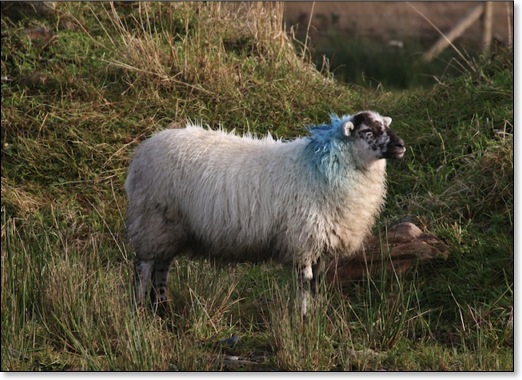
Some like to look directly into the lens . . .
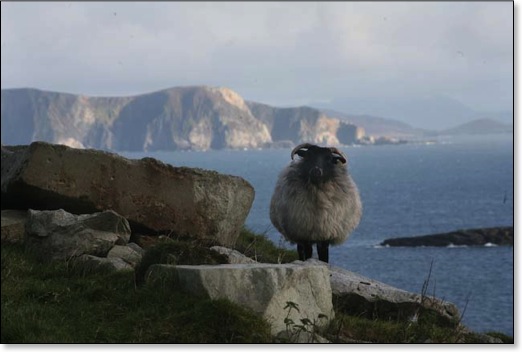
. . . while others prefer to show off their distinguished profiles.
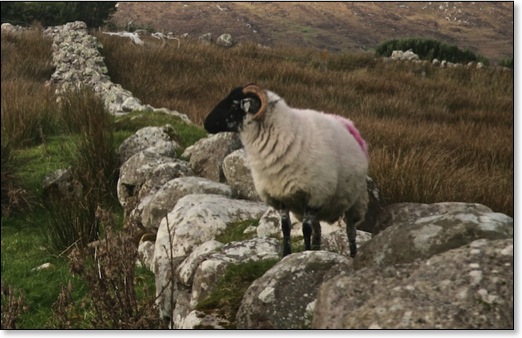
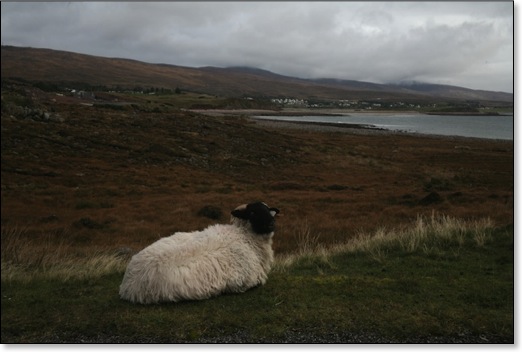
Many are most comfortable while posing in their natural environment.
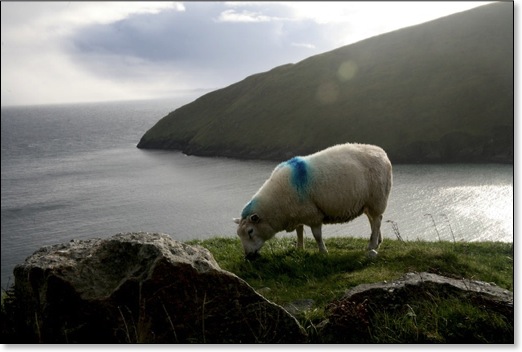
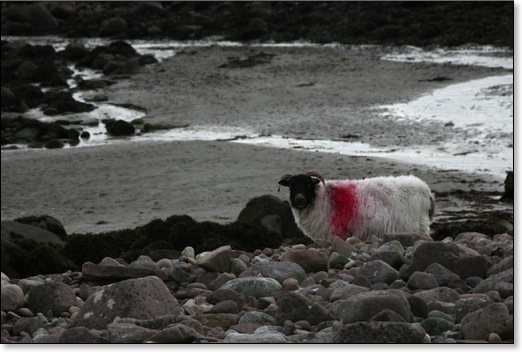
And in case you are wondering about the different colors sprayed on the sheep . . . this is a branding technique. When it come times to round up the sheep, their ownership can be sorted out by their colors. Some sheep are sprayed with a single color, others with two, and some truly border on the psychedelic.
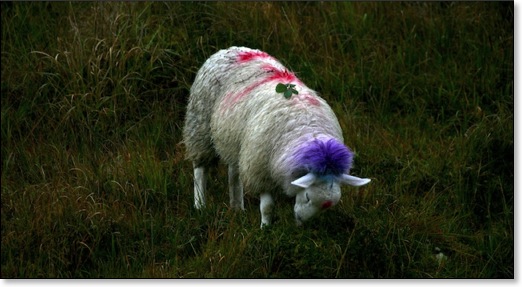
Whatever their colors, some sheep like to pose all by themselves . . .
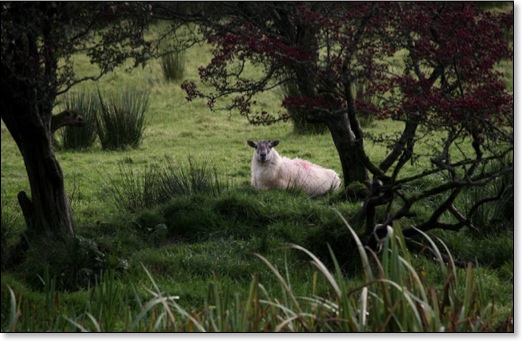
. . . while others prefer group portraits.
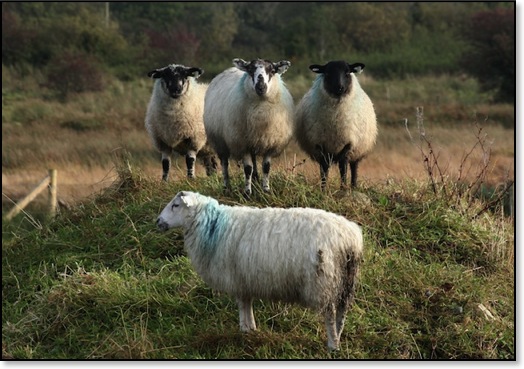
But occasionally, one is so shy that he will do anything to avoid the camera.
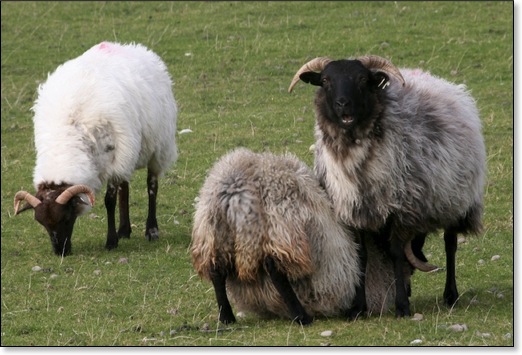
Posers usually have a way of making themselves known; just look for the one sheep in the group who pays attention to what you are doing. I find they like to hear you talk to them.
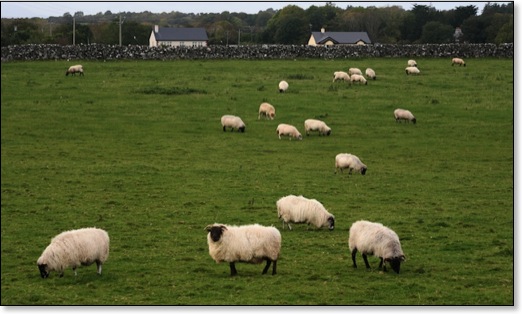
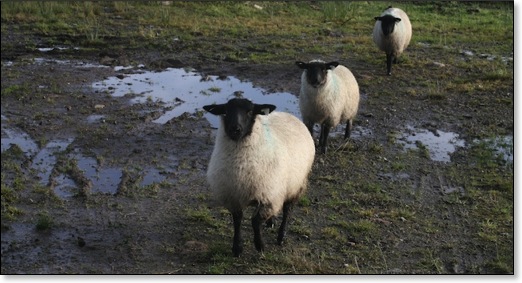
Some will be so happy to have human companionship that they'll come right to you . . . and bring their friends with them.
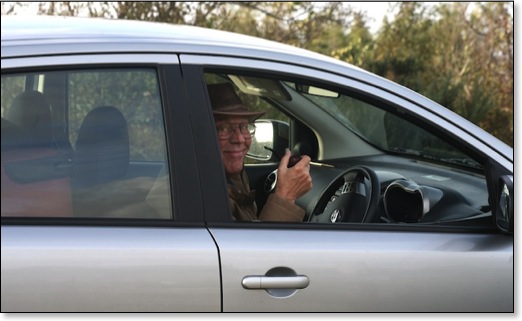
So as you can see, I've become pretty invested in this sheep thing, and I'm really looking forward to hitting the road again next year in Ireland in search of posing sheep. Of course I couldn't have found so many without Jim's expert driving ability and willingness to sit by the side of the road while I was sheep hunting. From the photo below, I'm not certain whether he's laughing at me or at the sheep. Either way, I'm grateful for his help.
I'm also grateful to everyone who has written to me about enjoying my blog posts on this year's adventures in Ireland. I'll be taking some time off from the blog to get caught up on the vacation backlog. But I'll be baaaa . . .ck!
It was a spectacular trip, and I'm so thankful to all the photographers, B&B hosts, and pub friends who made us feel so welcome.
Now about the sheep: Somewhere along our journey, I became addicted to photographing sheep. I'm not totally sure when it happened, but I have to admit I'm hooked.
Maybe it occurred when I was out there in the rain with all those perpetually wet sheep in Donegal. I really admire the way they never seemed to fret about the rain.
Perhaps it had something to do with seeing how loyal they are to their friends from other species.
Maybe I was impressed with how giving sheep are because of all that wool I saw at the Leenane Sheep Museum . . .
. . . or how patient they were at the Ram Fair.
Or perhaps it was just a matter of learning that some sheep really like to pose for the camera. Honestly they do. Granted that most sheep will run off when you approach them.
And some who are munching away on grass may not move, but they won't look into the camera even if you set off a firecracker to get their attention.
But some sheep REALLY like to pose.
Some, in fact, look positively blissful when they pose.
Some like to look directly into the lens . . .
. . . while others prefer to show off their distinguished profiles.
Many are most comfortable while posing in their natural environment.
And in case you are wondering about the different colors sprayed on the sheep . . . this is a branding technique. When it come times to round up the sheep, their ownership can be sorted out by their colors. Some sheep are sprayed with a single color, others with two, and some truly border on the psychedelic.
Whatever their colors, some sheep like to pose all by themselves . . .
. . . while others prefer group portraits.
But occasionally, one is so shy that he will do anything to avoid the camera.
Posers usually have a way of making themselves known; just look for the one sheep in the group who pays attention to what you are doing. I find they like to hear you talk to them.
Some will be so happy to have human companionship that they'll come right to you . . . and bring their friends with them.
So as you can see, I've become pretty invested in this sheep thing, and I'm really looking forward to hitting the road again next year in Ireland in search of posing sheep. Of course I couldn't have found so many without Jim's expert driving ability and willingness to sit by the side of the road while I was sheep hunting. From the photo below, I'm not certain whether he's laughing at me or at the sheep. Either way, I'm grateful for his help.
I'm also grateful to everyone who has written to me about enjoying my blog posts on this year's adventures in Ireland. I'll be taking some time off from the blog to get caught up on the vacation backlog. But I'll be baaaa . . .ck!
A Taste of the Connemara
October/21/2008 Ireland
Journal
If you want
to do some serious landscape photography, it can't
get much better than the Connemara, which comprises
the entire area northwest of Galway city, Lough
Corrib and Lough Mask. Nothing could have prepared me
for the dramatic beauty of the hypnotic environment
that we traveled through as we drove from Westport
along the Atlantic coast through Louisburgh to
Leenane. I'm not much of a landscape photographer; I
typically prefer to photograph outdoor environments
that include people, animals or architecture, but I
was thrilled with a chance to do even a little
photography of the unspoiled Connemara. I had heard
that it takes at least a week to visit all the most
scenic areas of the region, and that is definitely
true. But even in the small area where I was
photographing, the terrain is so diverse—ranging from
lush to austere—with the ever-changing light adding
to the drama. I shot over 3,000 images, so it will
take a while to sort them out, but here are just a
few that show the range of scenery I found in the
Delphi Valley area, starting in southwest County Mayo
between the Mweelrea Mountains, the Sheffrey Hills
and Ben Gorm Mountain, and our Leenane, County
Galway, destination. Along the way we passed two
lakes: Finlough (Bright Lake) and Doolough (Dark
Lake), with Bundorragh River connecting the two
before entering the sea at Killary. The village of
Leenane lies nestled between the Mwelrea, Devil's
Mother and Maamturk Mountains and overlooks Killary
Harbor, Ireland's only fjord.
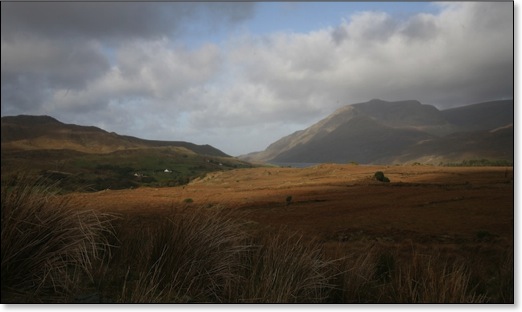
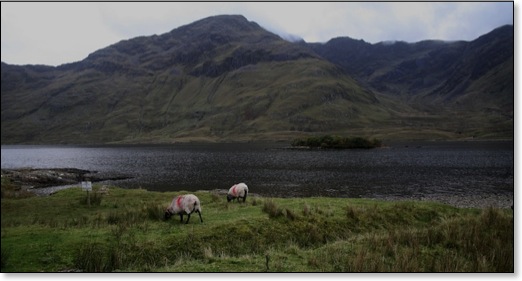
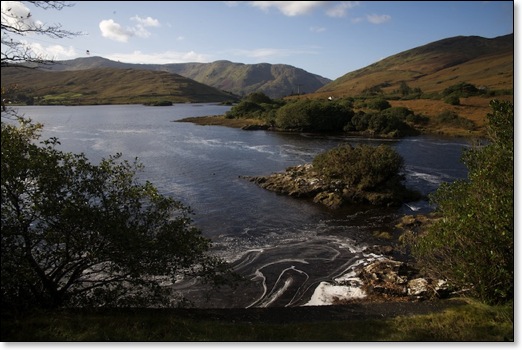
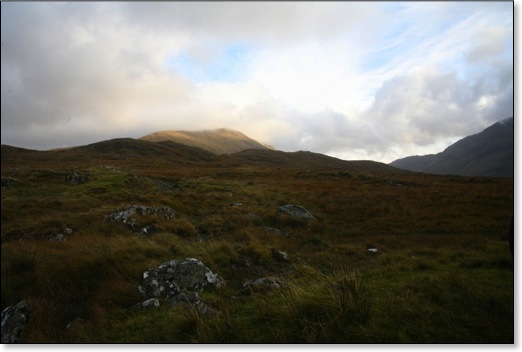
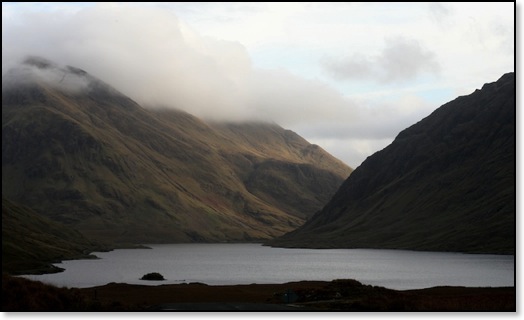
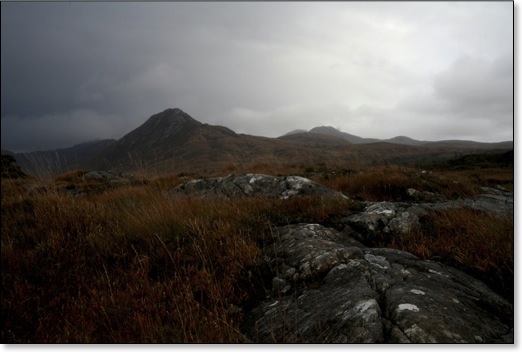
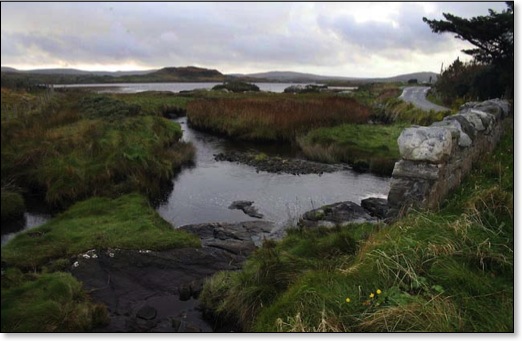
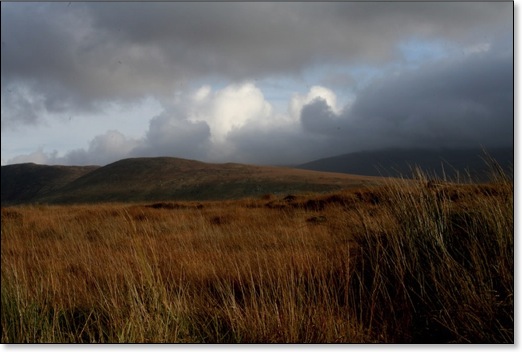
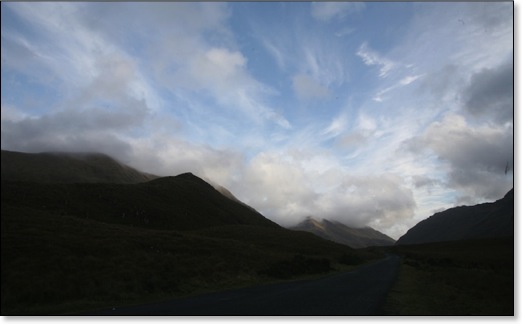
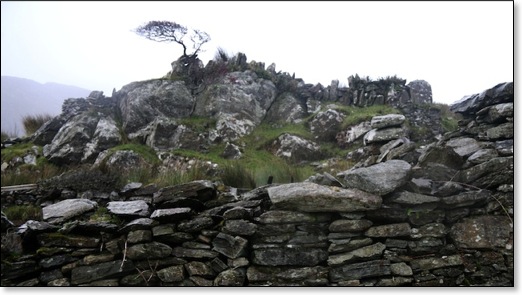
May and June are the months that have the least amount of rain in the Connemara, but to be there in October, when there were virtually no tourists, was an unmatched experience. Stretches of time as long as ten minutes would go by when there were absolutely NO cars on the road except ours. All you could hear were sounds of nature—mainly the rush of streams, the whistle of wind, and the occasional bleating of sheep.
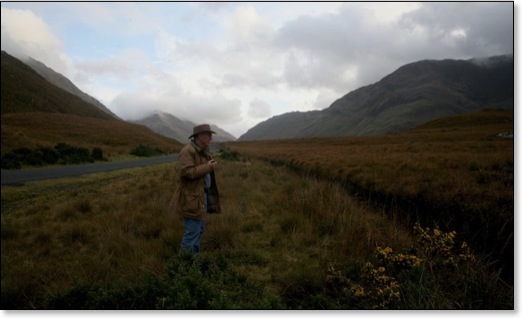
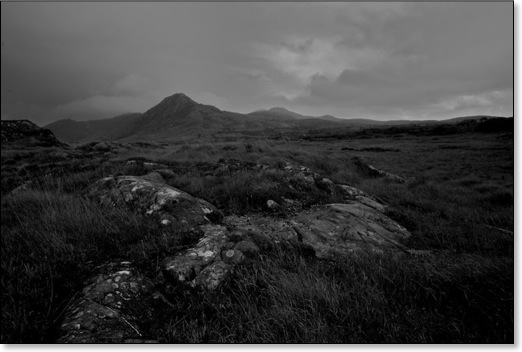
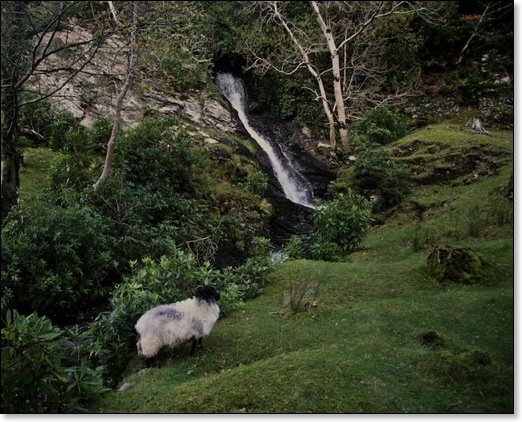
As we drew closer to the village of Leenane, the landscape became more lush . . .
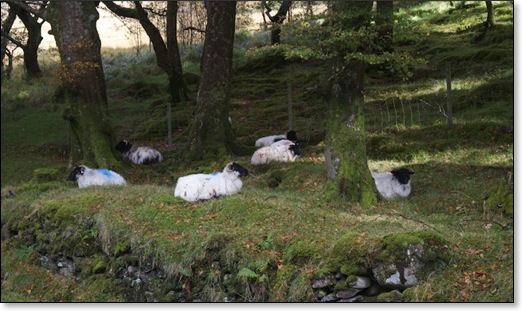
. . . there were more sheep . . .
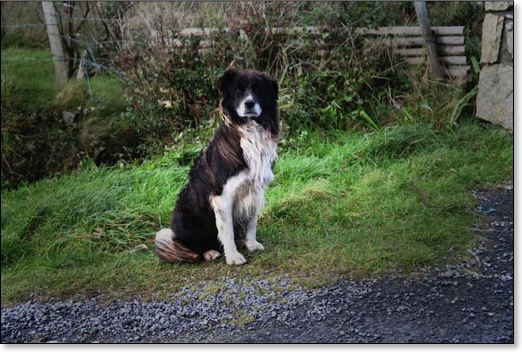
. . . and an occasional sheepdog on duty.
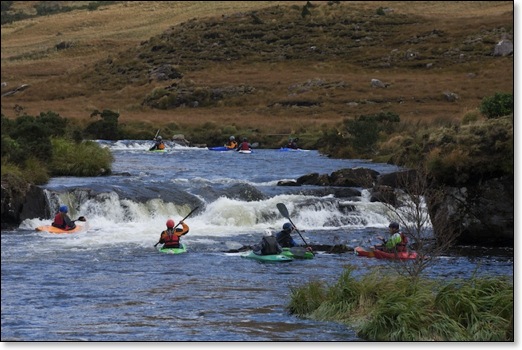
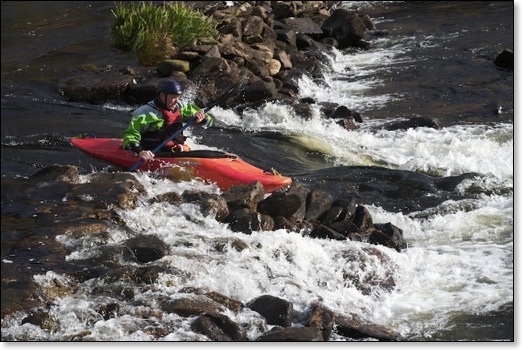
We also passed some kayakers navigating the rapids on Bundorragha River. Adventure sports facilities are now bringing more tourism to the area, which has to be a help to the local economy.
Jim figures that fishing the Bundorragha will be a day well spent, and he is already making plans.
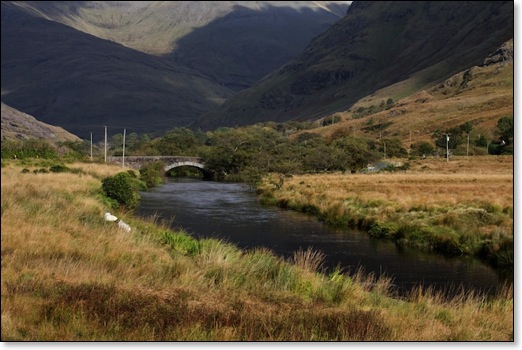
So if you love nature—participating in it or photographing it—then put Connemara on your list. Here are two websites that will help you start making plans: www.connemara.ie has an excellent video on its home page, and www.goconnemara.com provides directions for navigating "The Connemara Loop," with information about all of the villages along the way. We're already planning our return to the area next year, and I'm determined to visit each of these villages and the land in between. Connemara has truly cast its spell on me.
May and June are the months that have the least amount of rain in the Connemara, but to be there in October, when there were virtually no tourists, was an unmatched experience. Stretches of time as long as ten minutes would go by when there were absolutely NO cars on the road except ours. All you could hear were sounds of nature—mainly the rush of streams, the whistle of wind, and the occasional bleating of sheep.
As we drew closer to the village of Leenane, the landscape became more lush . . .
. . . there were more sheep . . .
. . . and an occasional sheepdog on duty.
We also passed some kayakers navigating the rapids on Bundorragha River. Adventure sports facilities are now bringing more tourism to the area, which has to be a help to the local economy.
Jim figures that fishing the Bundorragha will be a day well spent, and he is already making plans.
So if you love nature—participating in it or photographing it—then put Connemara on your list. Here are two websites that will help you start making plans: www.connemara.ie has an excellent video on its home page, and www.goconnemara.com provides directions for navigating "The Connemara Loop," with information about all of the villages along the way. We're already planning our return to the area next year, and I'm determined to visit each of these villages and the land in between. Connemara has truly cast its spell on me.
The Day the Rams Came to Town
October/20/2008 Ireland
Journal
Given my
attraction to photographing sheep in Ireland—Jim says
I won't be satisfied until I've photographed EVERY
sheep in Ireland—it was pretty amusing to learn that
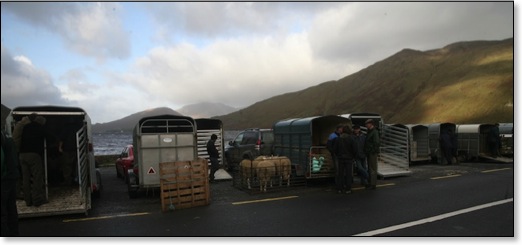
the annual Blackface Ram Fair would be hosted right
in the road in front of our B&B, starting at 5:00
A.M. today. The purpose of the fair is to allow
farmers to purchase rams from different blood lines
to keep their herds from becoming inbred. In addition
to the commerce that takes place, the event is a huge
social occasion, and I had a ball photographing the
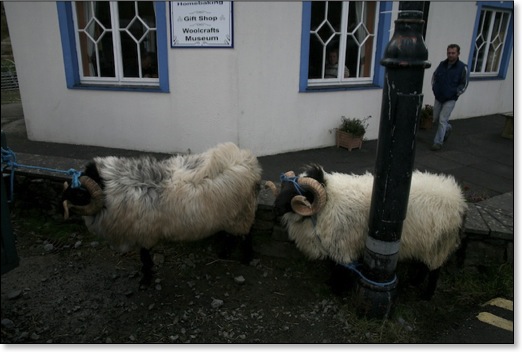
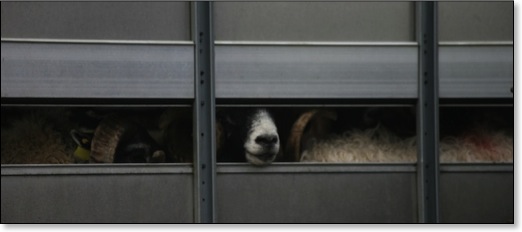
action and learning about Blackface Rams.
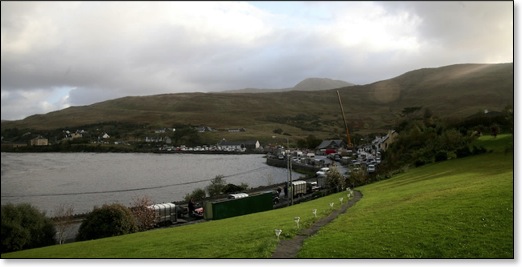
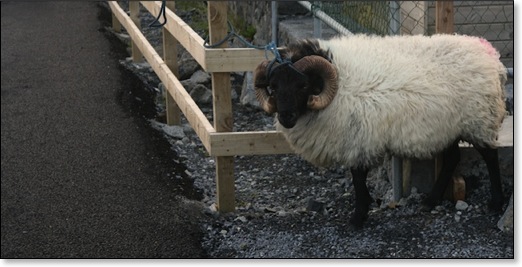
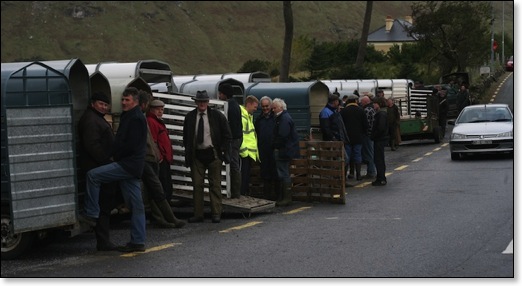
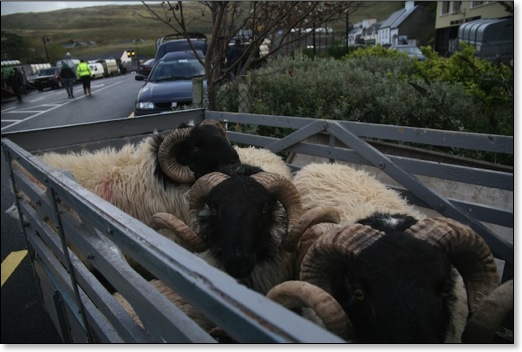
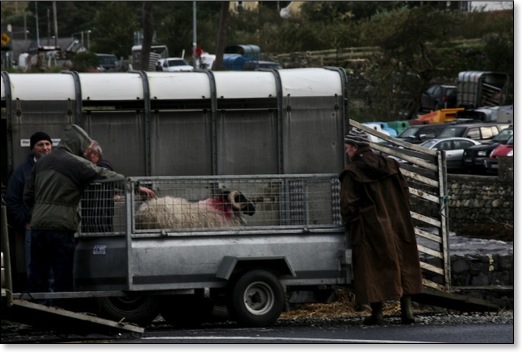
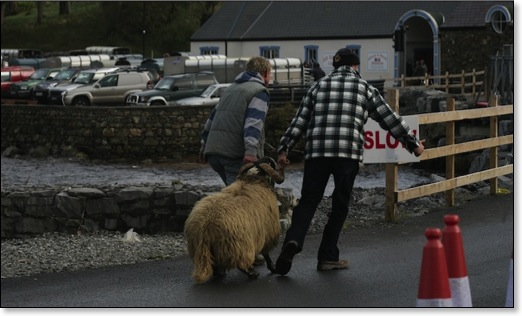
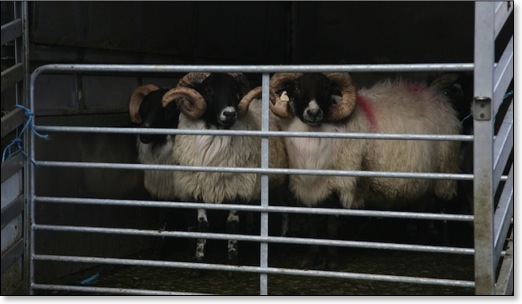
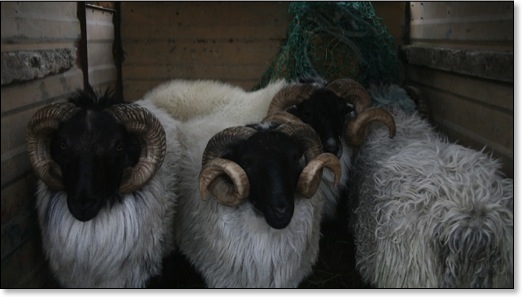
This gentleman asked me to photograph his rams and to put it on the Internet and tell everyone that these are fine examples of Blackface Rams. So I did. i hope he had a great day at the Fair. I certainly did!
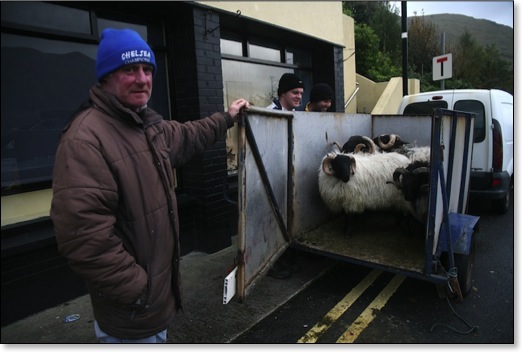
This gentleman asked me to photograph his rams and to put it on the Internet and tell everyone that these are fine examples of Blackface Rams. So I did. i hope he had a great day at the Fair. I certainly did!
Leenane, Sheep, and the Magnificent Kylemore Abby
October/19/2008 Ireland
Journal
The last stop
on our journey was the small fishing harbor of
Leenane, which would be our base for three days of
exploring the Connemara. I immediately fell in love
with Leenane, in spite of a day-and-a half of the
worst weather I've experienced in Ireland. But even
that was interesting; I've never been awakened by a
sea-blown gale with 80 mph gusts that rattled the
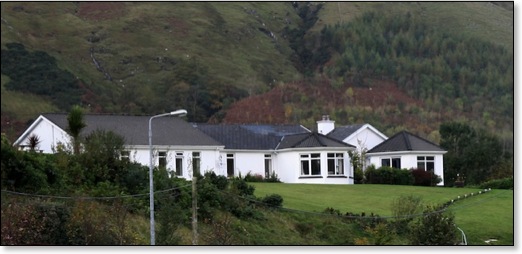
windows. We were quite cosy at Portfinn Lodge (shown
below), our B&B accommodation that overlooks the
harbor and hosts one of the best restaurants in the
Connemara. I truly enjoyed a day of editing images
and watching the waves. Leenane has an
excellent website
where you
can learn more about this picturesque community.
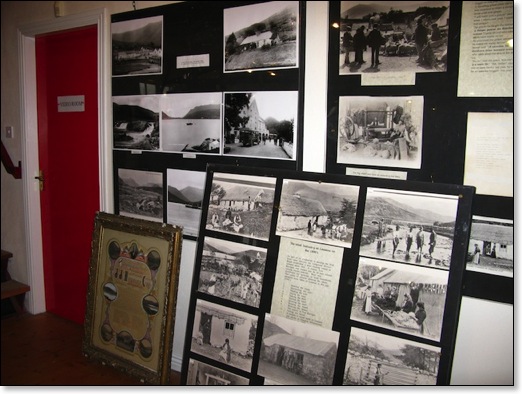
Once the wind finally died down, we ventured out to Leenane's fascinating Sheep & Wool Museum, Cafe and Gift Shop.
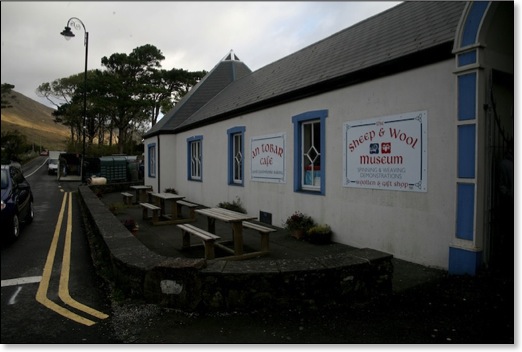
No . . . the Gift Shop was not the main attraction, although it was great; we found a wealth of information about the rich history of sheep commerce in the Connemara . . .
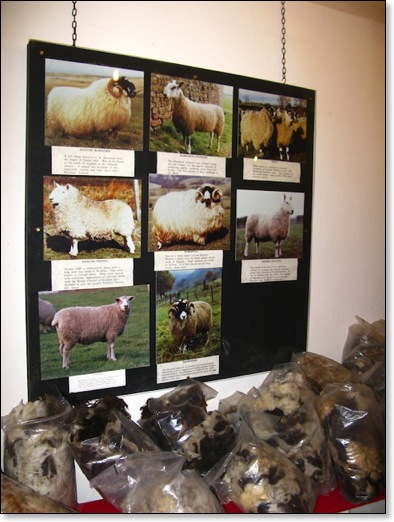
. . . the many and varied breeds of sheep (who knew?) . . .
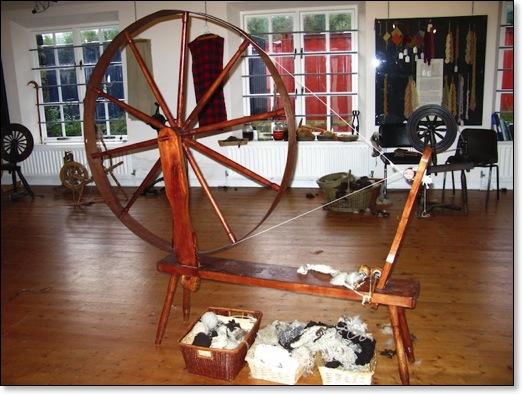
. . . and the traditional means of spinning the wool . . .
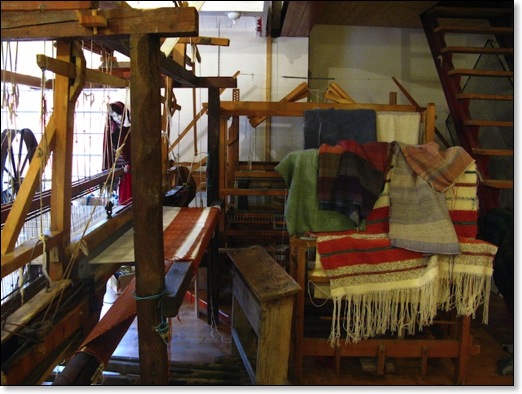
. . . and weaving different kinds of cloth.
From there, we moved on to nearby Kylemore Abbey, which is one of those not-to-miss places in the Connemara. Kylemore Castle was built in 1867-1871 by Mitchell Henry, a wealthy surgeon, as the centerpiece of his 13,000 acre estate. As a landloard, Mitchell was well thought of by the local farmers. Upon the untimely death of his wife in 1874, he built a neo-Gothic Church in her memory. In 1920 the castle and 10,000 acres were purchased by the Benedictine Nuns for 45,000 pounds. Today Kylemore Abbey is the monastic home of the nuns and includes their international school for girls, with about 70 boarders and 100 local students. The nuns run a small farm, but most of the lands have been deeded to the tenants of the estate.
Photographers seem to be obsessed with photographing Kylemore, and I can see why. There are many vantages from which to view the castle, and the scene changes dramatically as the light moves in and out of the clouds. Here are my two favorites from today.
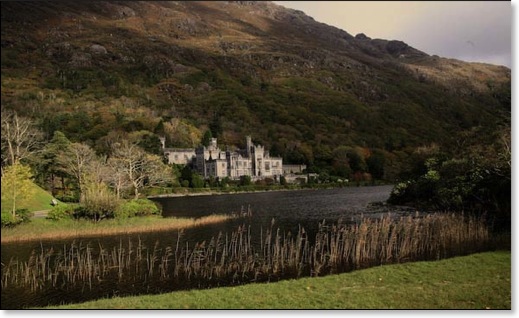
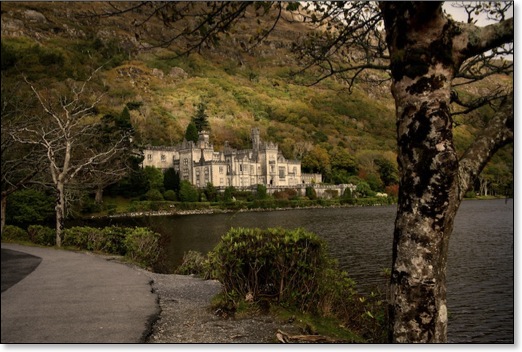
Here's the view from the front of Kylemore Abbey . . .
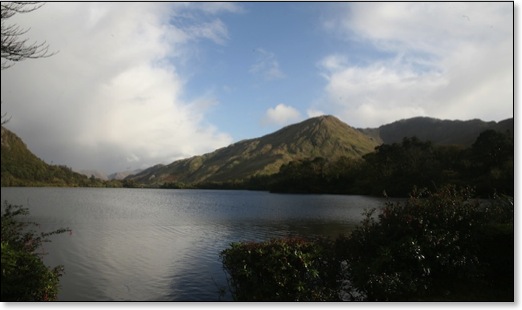
. . . and here's Jim enjoying the view. Looks like he owns the places doesn't he?
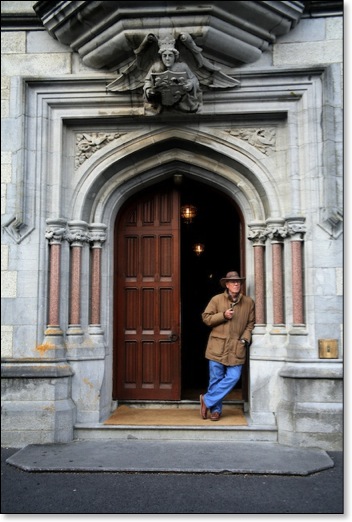
Photography is permitted inside the public rooms of the Abbey, so here's a look at some of the fabulous interiors of this magnificent building.
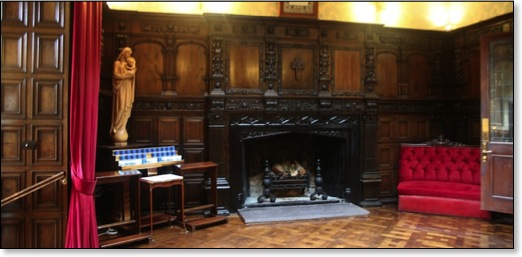
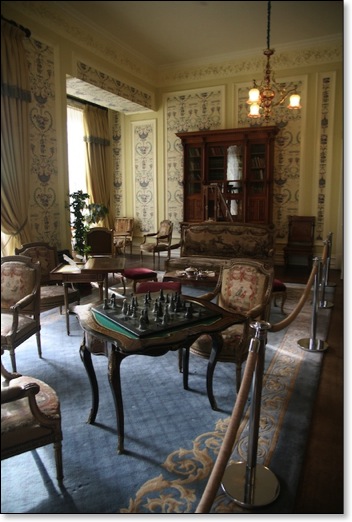
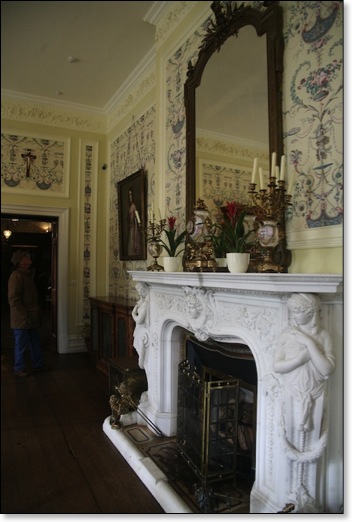
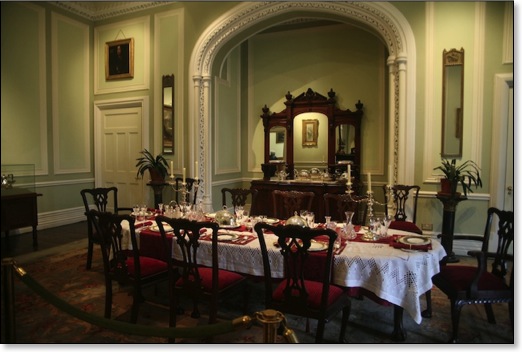
Both of us just loved the dining room, and Jim has come to the conclusion that the Benedictine Nuns are excellent investors and business managers. I wouldn't be surprised, because their Craft & Retail Shop and Restaurant at the Visitor Centre is the best I've seen. And they were having a 20% off sale today. Even Jim couldn't resist that! We had to buy an extra suitcase to get home. It is truly worth a trip to Ireland just to visit Kylemore Abbey.
Once the wind finally died down, we ventured out to Leenane's fascinating Sheep & Wool Museum, Cafe and Gift Shop.
No . . . the Gift Shop was not the main attraction, although it was great; we found a wealth of information about the rich history of sheep commerce in the Connemara . . .
. . . the many and varied breeds of sheep (who knew?) . . .
. . . and the traditional means of spinning the wool . . .
. . . and weaving different kinds of cloth.
From there, we moved on to nearby Kylemore Abbey, which is one of those not-to-miss places in the Connemara. Kylemore Castle was built in 1867-1871 by Mitchell Henry, a wealthy surgeon, as the centerpiece of his 13,000 acre estate. As a landloard, Mitchell was well thought of by the local farmers. Upon the untimely death of his wife in 1874, he built a neo-Gothic Church in her memory. In 1920 the castle and 10,000 acres were purchased by the Benedictine Nuns for 45,000 pounds. Today Kylemore Abbey is the monastic home of the nuns and includes their international school for girls, with about 70 boarders and 100 local students. The nuns run a small farm, but most of the lands have been deeded to the tenants of the estate.
Photographers seem to be obsessed with photographing Kylemore, and I can see why. There are many vantages from which to view the castle, and the scene changes dramatically as the light moves in and out of the clouds. Here are my two favorites from today.
Here's the view from the front of Kylemore Abbey . . .
. . . and here's Jim enjoying the view. Looks like he owns the places doesn't he?
Photography is permitted inside the public rooms of the Abbey, so here's a look at some of the fabulous interiors of this magnificent building.
Both of us just loved the dining room, and Jim has come to the conclusion that the Benedictine Nuns are excellent investors and business managers. I wouldn't be surprised, because their Craft & Retail Shop and Restaurant at the Visitor Centre is the best I've seen. And they were having a 20% off sale today. Even Jim couldn't resist that! We had to buy an extra suitcase to get home. It is truly worth a trip to Ireland just to visit Kylemore Abbey.
The Beauty of Achill Island
October/18/2008 Ireland
Journal
I a so
grateful to Eamonn McCarthy for suggesting the trip
to Achill Island, and the route he sent us on was
perfect. It took us through the lovely town of
Newport, which we'll certainly want to explore more
thoroughly on another visit.
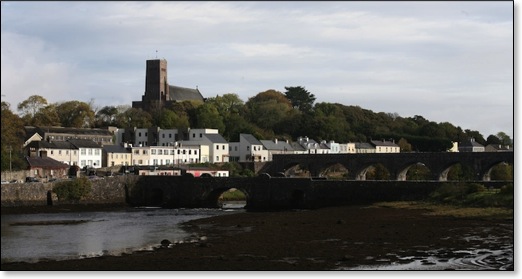
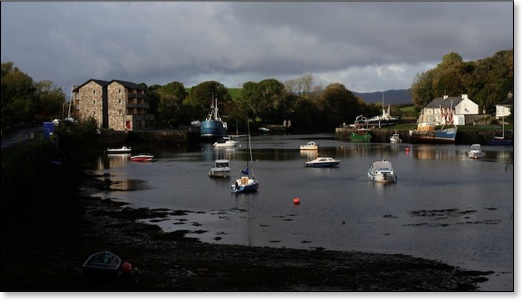
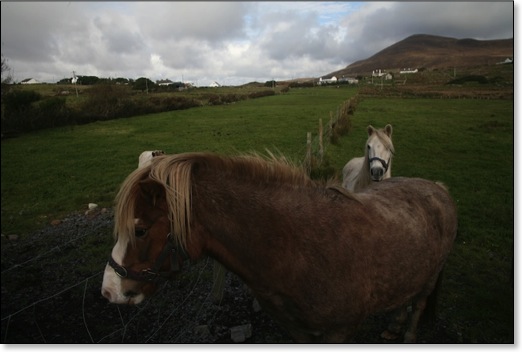
Along the way, we stopped to photograph some interesting "animal buddies" . . .
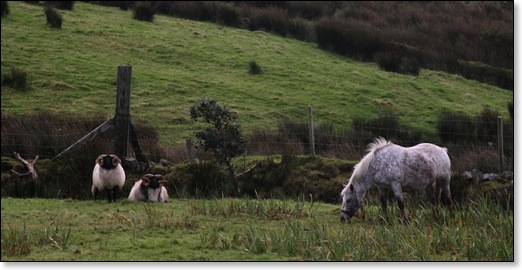
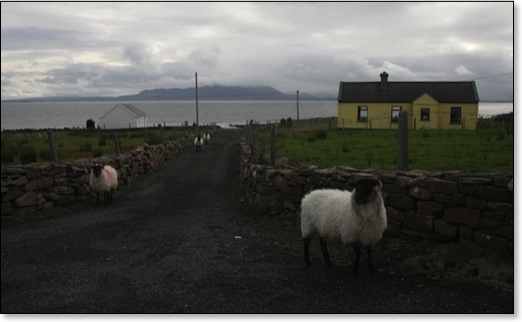
. . . and we even encountered some sheep who were standing watch over their home.
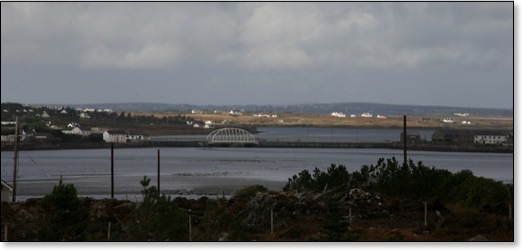
Then we came to the town of Mulranny, where a bridge connects the mainland with Achill, Ireland's largest island.
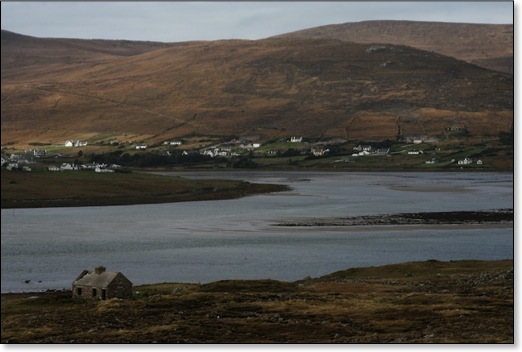
Almost immediately the landscape became more rugged, starting with the windswept beaches.
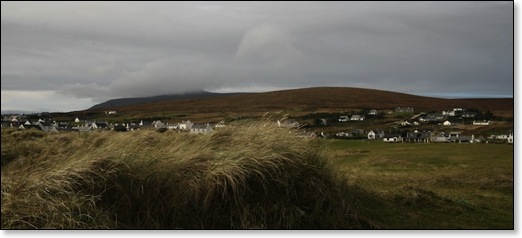
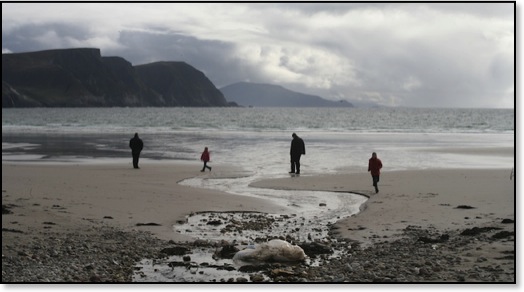
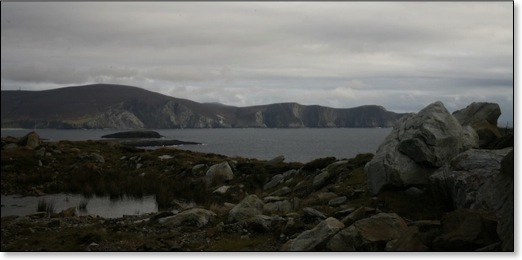
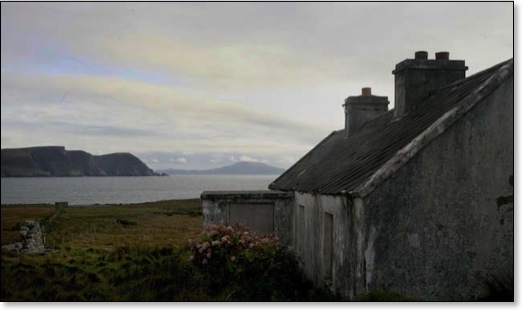
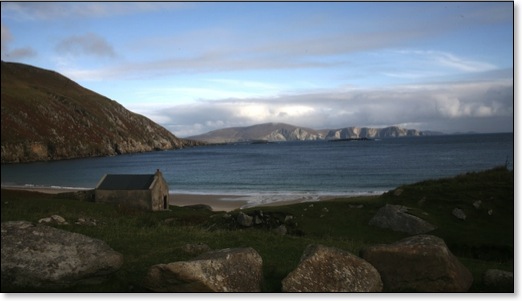
I was not surprised that all day we experienced typical coastal weather: rainy one minute and sunny the next. Unless it is blowing sideways, the rain isn't a problem when you are photographing in Ireland; you just need to be dressed appropriately. Luckily, by the time we reached land's end at Keem Beach, the sun was out, so we spent some time soaking in the magnificent environment, deciding that this would be the perfect place to come for a picnic.
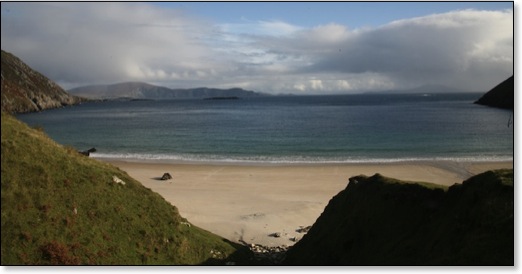
I really love Ireland in October, because you miss the usual crowds. We were almost alone at the beach . . .
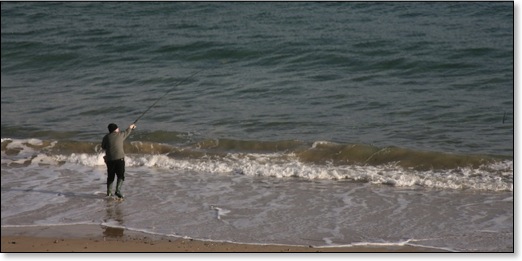
. . . except for a few surf fishermen . . .
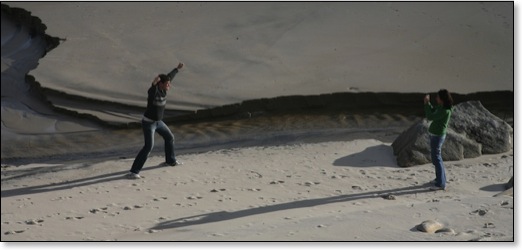
. . . and a young couple enjoying each other's company.
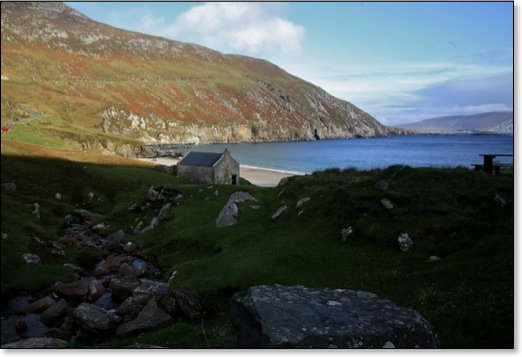
Finally we were ready to tackle the narrow mountain road that brought us down to the beach. Fortunately the trip up the mountain is much more comfortable, since your car is against the mountain, not hanging out over the cliffs, as you are going down because of the left-hand driving arrangement in Ireland.
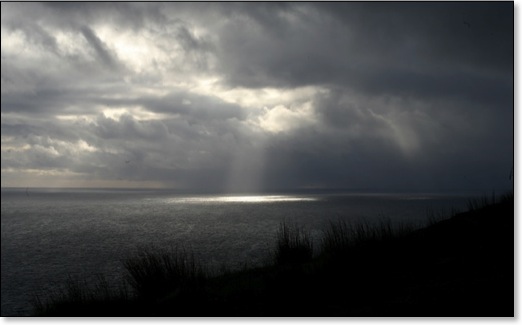
As we headed back to Westport, the clouds began to gather, but they made a wonderful picture out over the Atlantic.
Along the way, we stopped to photograph some interesting "animal buddies" . . .
. . . and we even encountered some sheep who were standing watch over their home.
Then we came to the town of Mulranny, where a bridge connects the mainland with Achill, Ireland's largest island.
Almost immediately the landscape became more rugged, starting with the windswept beaches.
I was not surprised that all day we experienced typical coastal weather: rainy one minute and sunny the next. Unless it is blowing sideways, the rain isn't a problem when you are photographing in Ireland; you just need to be dressed appropriately. Luckily, by the time we reached land's end at Keem Beach, the sun was out, so we spent some time soaking in the magnificent environment, deciding that this would be the perfect place to come for a picnic.
I really love Ireland in October, because you miss the usual crowds. We were almost alone at the beach . . .
. . . except for a few surf fishermen . . .
. . . and a young couple enjoying each other's company.
Finally we were ready to tackle the narrow mountain road that brought us down to the beach. Fortunately the trip up the mountain is much more comfortable, since your car is against the mountain, not hanging out over the cliffs, as you are going down because of the left-hand driving arrangement in Ireland.
As we headed back to Westport, the clouds began to gather, but they made a wonderful picture out over the Atlantic.
Another "Ireland is a Small World" Moment
October/18/2008 Ireland
Journal
One of my
only disappointments about this trip was that our
timing was off in visiting Westport, as we would be
unable to meet Alan Hastings in his home town. We
have known Alan for many years, having first met when
he was working for a New York photographer who sent
him to a class that we taught in our Annville studio.
Alan and his wife Caroline eventually returned to
Ireland to raise their family, settling in Westport
where Alan opened his own studio. We renewed our
acquaintance last year at the Athlone IPPA meeting,
and Alan also attended my class in Galway last
Monday. But we knew we were going to miss each other
in Westport, because Alan was shooting an out-of-town
job on Friday, and he and Caroline, whom we have
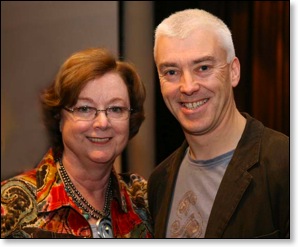
never met, had a wedding on Saturday. Here I am with
Alan at last year's IPPA meeting:
So what about that "Small World" issue? I had slowed down our progress to Achill Island by spending more time that I expected at Croagh Patrich, and Jim just rolled his eyes when I said I wanted to photograph the Famine Memorial and the border collies. Well . . . just as I was getting in the car to leave for Achill, I heard horns honking and a line of cars pulling into the beach right next to us. I said to Jim: "I bet it's a wedding. Wouldn't it be a riot if it turned out to be Alan's wedding?" Another eye roll from Jim. But I persuaded him to follow the wedding party, and—you guessed it—it was Alan and Caroline and the wedding party. We waited until the photography was underway, then we introduced ourselves to the limo driver to tell him what was up.
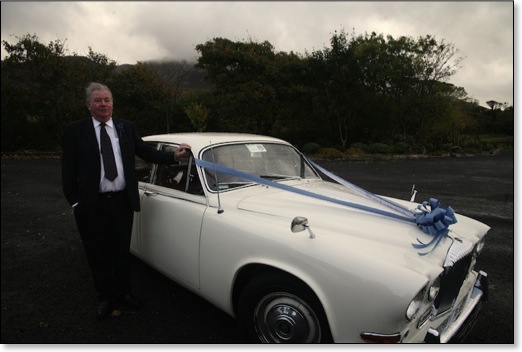
For the next 15 minutes or so, we watched as Alan and Caroline, selected and tidied up locations . . .
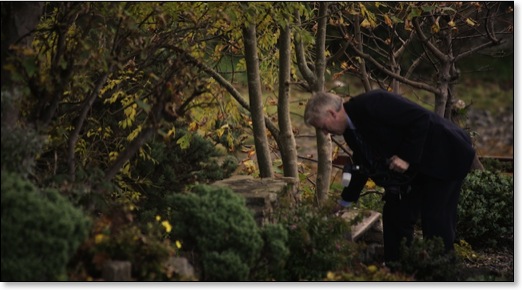
. . . gave directions for group pictures . . .
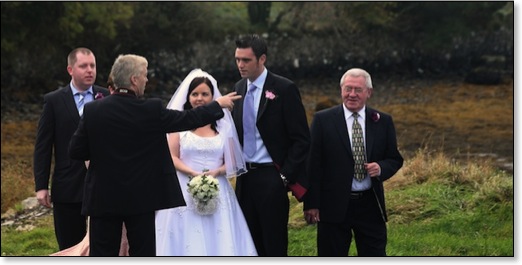
. . . and did a highly professional job with the photography.
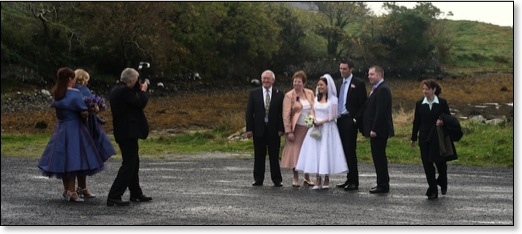
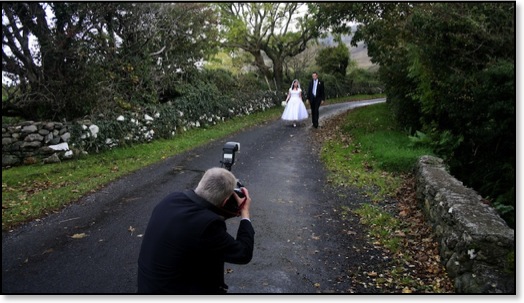
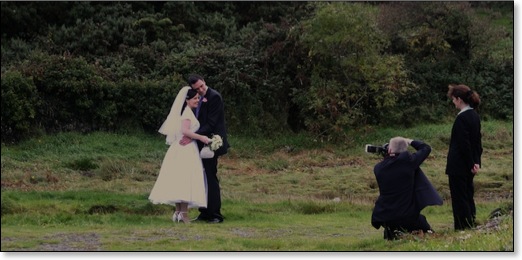
We didn't want to interrupt Alan, but eventually he spotted us, the Caroline came over and introduced herself. What an unexpected treat!
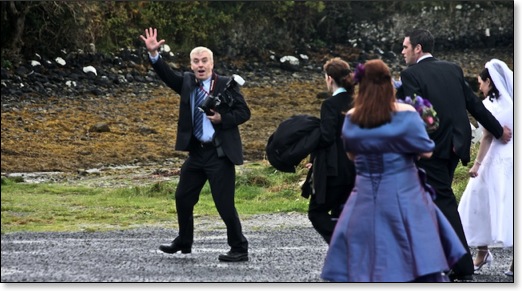
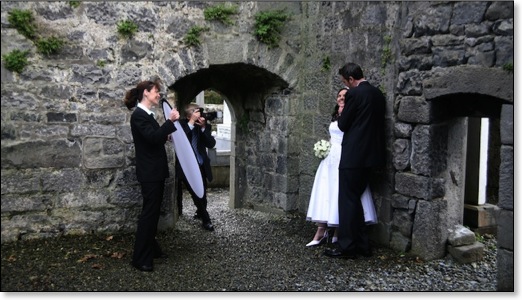
Now that we were busted, I followed Alan, Caroline, and the happy couple for a few images. Nothing like old Celtic ruins for a spectacular portrait setting!
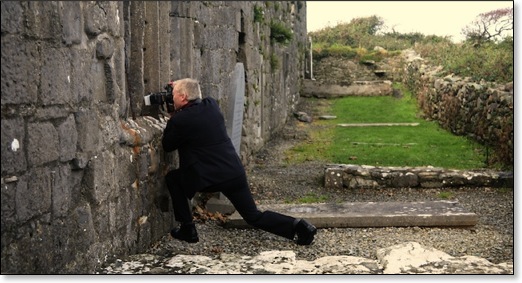
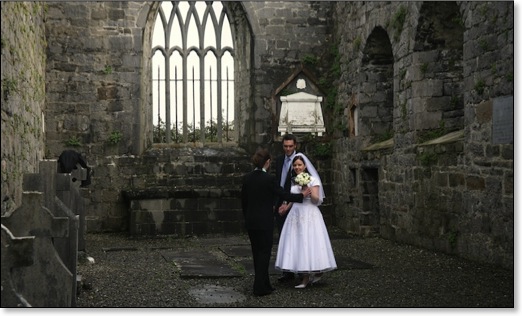
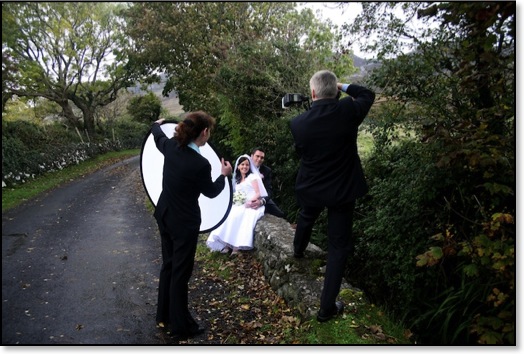
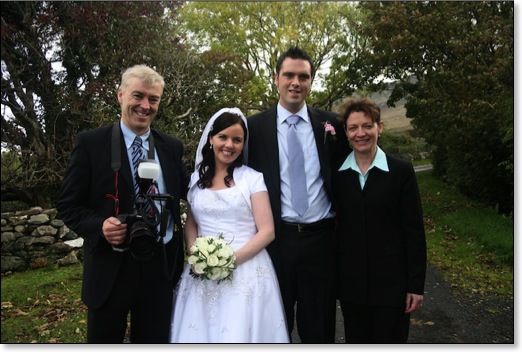
Finally, I got this quick photo of Alan, Caroline, and the bride and groom. We wished them a happy life together, and we were off to Achill Island. So our visit to Westport was now a complete success. A small world indeed!
So what about that "Small World" issue? I had slowed down our progress to Achill Island by spending more time that I expected at Croagh Patrich, and Jim just rolled his eyes when I said I wanted to photograph the Famine Memorial and the border collies. Well . . . just as I was getting in the car to leave for Achill, I heard horns honking and a line of cars pulling into the beach right next to us. I said to Jim: "I bet it's a wedding. Wouldn't it be a riot if it turned out to be Alan's wedding?" Another eye roll from Jim. But I persuaded him to follow the wedding party, and—you guessed it—it was Alan and Caroline and the wedding party. We waited until the photography was underway, then we introduced ourselves to the limo driver to tell him what was up.
For the next 15 minutes or so, we watched as Alan and Caroline, selected and tidied up locations . . .
. . . gave directions for group pictures . . .
. . . and did a highly professional job with the photography.
We didn't want to interrupt Alan, but eventually he spotted us, the Caroline came over and introduced herself. What an unexpected treat!
Now that we were busted, I followed Alan, Caroline, and the happy couple for a few images. Nothing like old Celtic ruins for a spectacular portrait setting!
Finally, I got this quick photo of Alan, Caroline, and the bride and groom. We wished them a happy life together, and we were off to Achill Island. So our visit to Westport was now a complete success. A small world indeed!
The Tidy Town of Westport
October/18/2008 Ireland
Journal
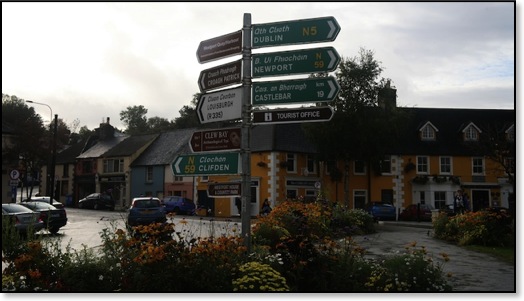
All roads, it seems, lead to Westport. This County Mayo town is located on the west coast at the south-east corner of beautiful Clew Bay, an inlet of the Atlantic Ocean. One of the few planned towns in the country, it was designed by James Wyatt in 1780. Among its picturesque features are its tree-lined and flower-decorated promenande and several stone bridges over the river Carrow Beg.
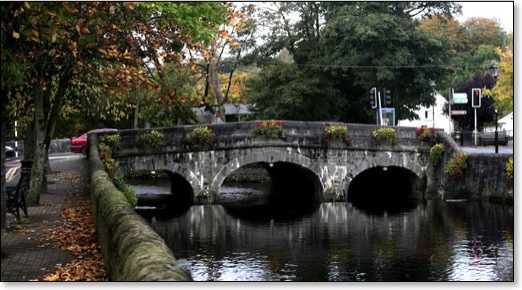
Westport is designated as a "Heritage Town" and recently won the prestigious National Tidy Towns title. We could see why yesterday when we took a walking tour of the town, where we were attracted to its delightfully decorated squares, shops and cafes.
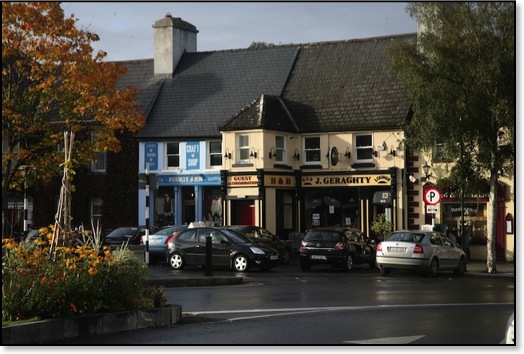
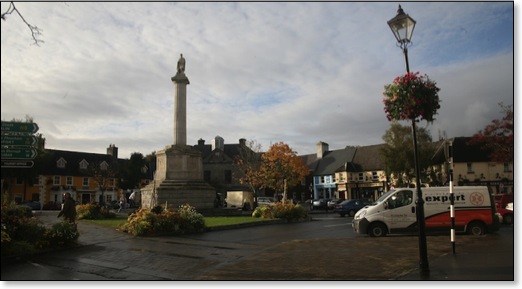
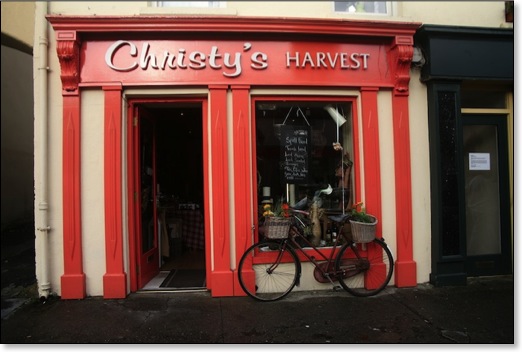
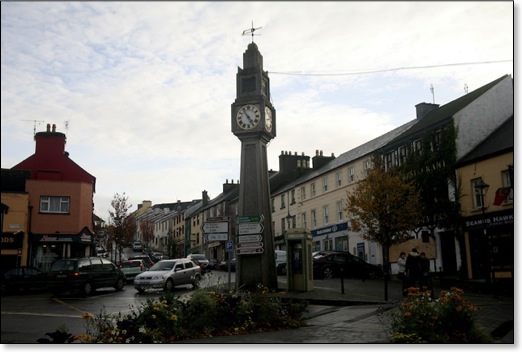
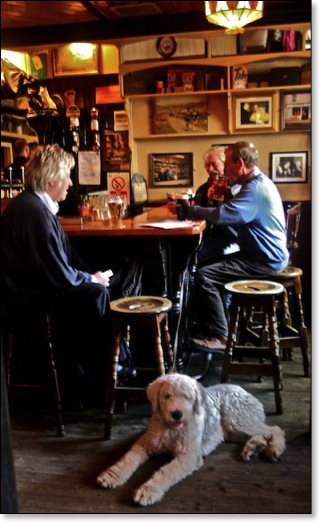
Westport's visual charisma, breathtaking landscapes and continental flavor have made it one of the country's most popular holiday destinations, and it has a great selection of hotels, restaurants and pubs. Speaking of pubs . . . we got quite a surprise when we dropped in at one of the older pubs in town: The surprise was named Rebel, and he's a full-grown old English sheep dog, who is a frequent visitor with his owner, a transplanted American from Atlanta. Dogs are allowed in Irish pubs if no food is served.
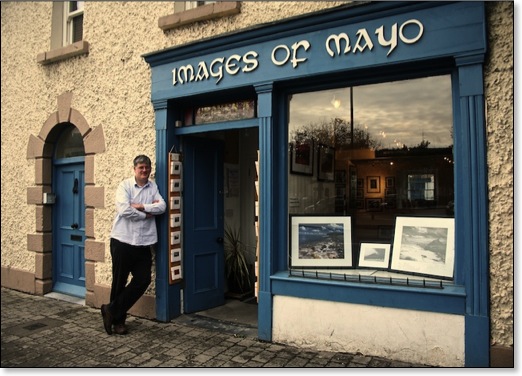
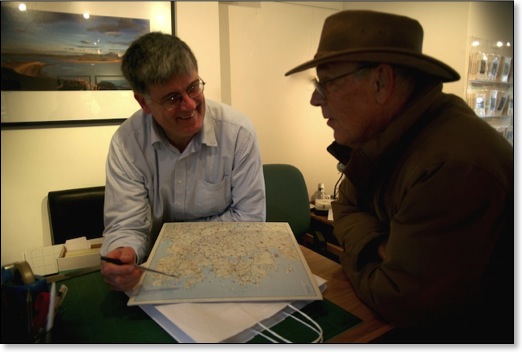
Another delightful surprise was an impromptu visit with talented landscape photographer Eamonn McCarthy. During our visit to Cong, I had purchased a set of notecards featuring Eamonn's wonderful photography, so I wanted to look him up while we were in Westport. Turns out his gallery was only a few doors down from our hotel, so we stopped in to purchase an original. Happily, Eamonn was there, not out shooting the vast County Mayo landscape. I was very impressed with how much Eamonn has accomplished with his business, which, like many of us, began as a hobby. I'm certain you will enjoy seeing Eamonn's outstanding work when you visit his website. Eamonn also teaches classes on digital photography, and I know I certainly could benefit from studying with him. Maybe next time!
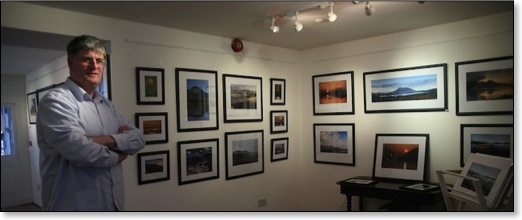
One of the reasons we had come to Westport was that it is the perfect gateway for the beautiful Connemara region of Ireland. I wanted to spend some time photographing there, and Eamonn was kind enough to make some suggestions about where to visit. He told us not to miss Achill Island, so we decided to set out for Achill the next day.
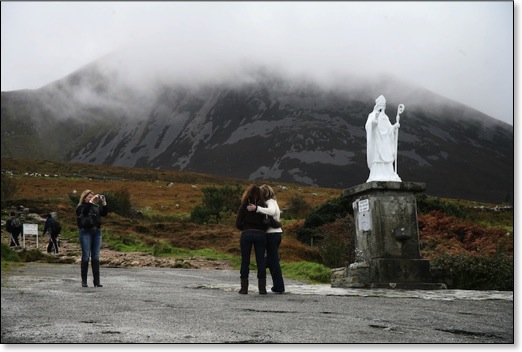
Today, before heading for Achill Island, we decided to stop at one of Westport's most beloved attractions, Croagh Patrich, known as Ireland's pilgrimage mountain, along the south shore of Clew Bay. According to Christian tradition, St. Patrick went up the sacred mountain at festival time in 441 AD. After fasting at the summit for 40 days, he banished all the snakes and demons from Ireland. Each year as many as one million pilgrims and visitors make the trek to the top of the 2,510 foot tall mountain to pray at the stations of the cross, participate in Mass, or just enjoy the spectacular view. I made it only as far as the statue of St. Patrick, but I was rewarded by a lovely view of the Clew Bay.
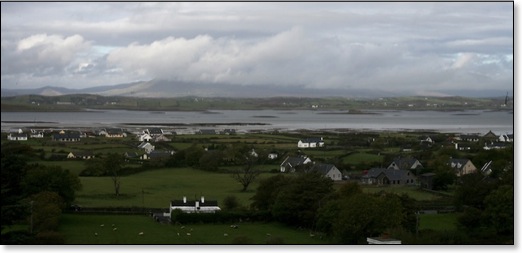
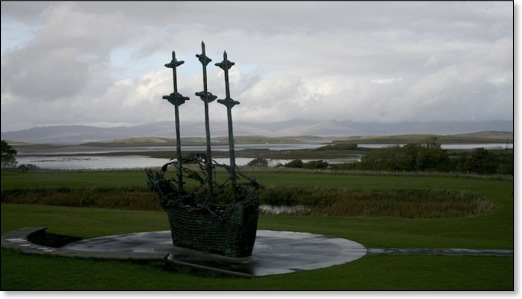
I wanted to get one more photograph before we left for Achill: Just across the road is the national Famine Ship Memorial, a magnificently haunting sculpture along Clew Baby. The country's largest bronze sculpture, it recalls the horror of the Great Hunger that decimated Ireland in the 1840s. Metal skeletons are intertwined to form the ship, which overlooks the bay from which thousands sailed for America, Australia and Canada.
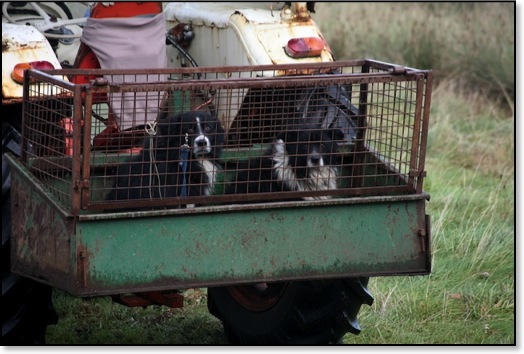
We were about to leave when I spotted these fellows who were waiting for their master to return from the beach where he was harvesting mussels. Their "crate" was attached to the back end of a tractor and could be raised and lowered. I suspect they were either coming from or going to sheep-herding duty. It's a good thing that I got sidetracked with making the photo of the dogs, as we were about to experience another "Ireland is a Small World" moment. Read on . . .
A Lovely Day at Lissadell
October/16/2008 Ireland
Journal
On our last
day in Sligo, we toured one of the most compelling
stately homes I have ever visited: Lissadell House
and Gardens, which only recently was saved from ruin
by two lawyers from Dublin who are restoring it from
the ground up, including purchasing many of the
fabulous furnishings that had been sold off when the
house was in decline. It is now the family home of
Edward Walsh and his wife Constance Cassidy and their
seven children. What they have accomplished in three
year's time is remarkable. Although you can tour the
public rooms of the mansion, photographs are not
permitted because it is a private home. However, you
can see excellent photographs of the marvelous
restoration on the very interesting
Lissadell
website.
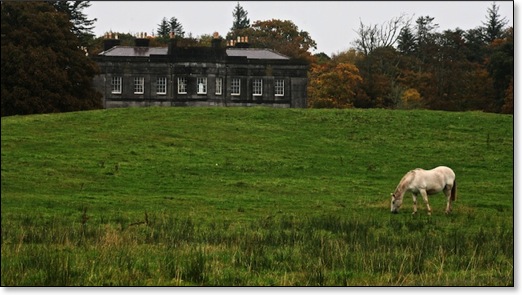
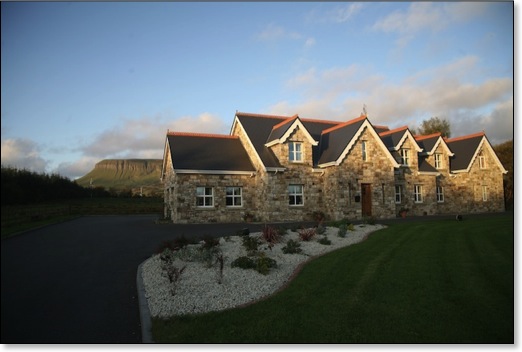
Lissadell was built in 1833 by Sir Robert Gore Booth, and it served as the Gore-Booth family home until 2003. The house fronts the Atlantic Ocean and is set among the Knocknarea mountains and majestic Ben Belben. Designed by Francis Goodwin, it is a magnificent country house built in the Greek revival style. Lissadell is famous as the childhood home of Constance Markievicz, her sister Eva Gore Booth, and her brother Josslyn Gore Booth. Constance was one of the leaders of the 1916 Rising, and eventually became the first woman to be elected to the Dail Eirean, the Irish legislature, and to the House of Commons in Westminster, where she declined to take her seat in protest against British policies toward Ireland. Eva was a poet of distinction and an active suffragist. Josslyn created at Lissadell one of the premiere horticultural estates in Europe, and that enterprise is now being recreated by the new owners. The home also served as an inspirational retreat for poet William Butler Yeats, who stayed at Lissadell in 1893 and 1894, and who immortalized Lissadell and the Gore Booth sisters in his poetry.
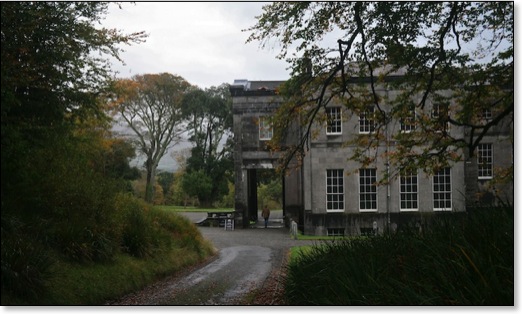
After our tour of the home, we headed for the newly restored Coach House, which is now home to the Heritage and Garden Shop.
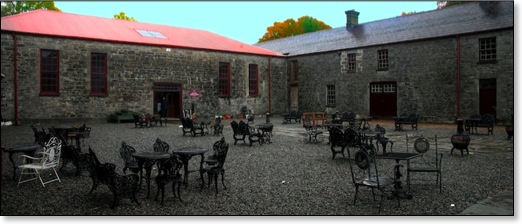
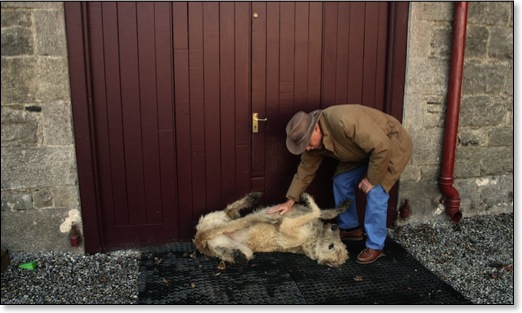
We were met in the courtyard by "Honey," the family's Irish wolf hound.
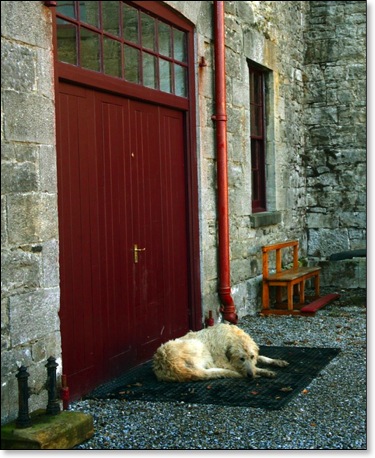
Honey, quite clearly, is NOT a watch dog!
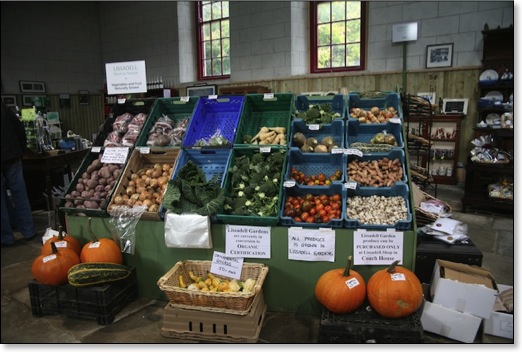
The Gift Shop not only features very appealing merchandise, it also is a wonderful resource for fresh vegetables grown in the restored gardens of the estate. We did our part in stimulating the local economy at this wonderful gift shop!
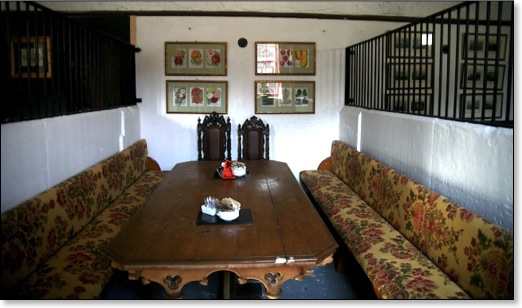
The adjacent Tea Rooms have seating for 80, including comfortable tables and banquettes that are cleverly fitted into Coach House box stalls.
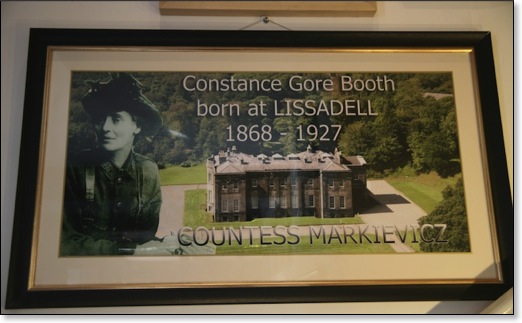
In the Heritage Center's Markievecz Exhibition Hall, you can view a celebration of the fascinating life of Constance Gore Booth (Countess Markievecz), who was once sentenced to death for her part in the 1916 Easter Rising, but who went on to become the first women member of a legislature in a European democracy. I'm in the midst of reading the biography of this fascinating woman, and I am convinced that the story of her life and times would make a great Hollywood production.
Like her sister, Eva, Constance was an accomplished artist, and many of her paintings and drawings are on display at the Heritage Center. Other family artworks and those of local artists, including the outstanding work of Jack Yeats, brother of W.B. and that of their father, are lovingly preserved in the restored basement rooms of Lissadell House.
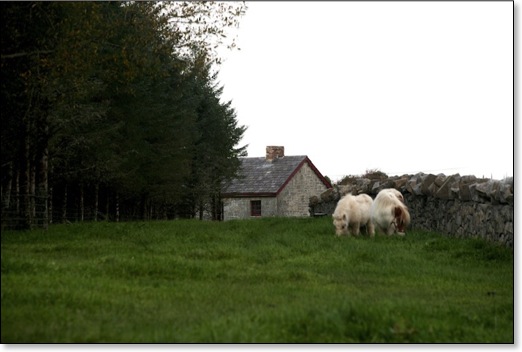
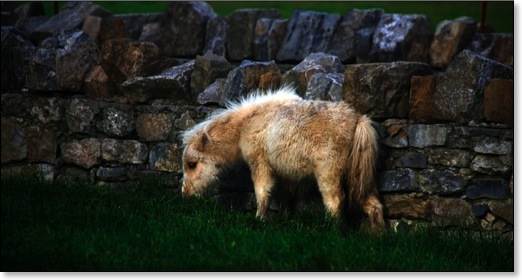
The house is surrounded by over 400 acres of land including picnic areas, a beach, and woodlands. As we were leaving the estate, we spied these two miniature horses, who came over to be petted. I suspect they must be part of the petting zoo that is being planned for children.
I expect to return to Lissadell House and Gardens again, as it was too rainy to visit the restored Alpine Garden and Kitchen Gardens. It will be a pleasure to see how much more the Walsh-Cassidy family have accomplished in their quest to restore this magnificent gem of history, architecture, horticulture and art. I enjoy every place I visit in Ireland, but there is something very special about Lissadell House and Yates Country. They are not to be missed!
Lissadell was built in 1833 by Sir Robert Gore Booth, and it served as the Gore-Booth family home until 2003. The house fronts the Atlantic Ocean and is set among the Knocknarea mountains and majestic Ben Belben. Designed by Francis Goodwin, it is a magnificent country house built in the Greek revival style. Lissadell is famous as the childhood home of Constance Markievicz, her sister Eva Gore Booth, and her brother Josslyn Gore Booth. Constance was one of the leaders of the 1916 Rising, and eventually became the first woman to be elected to the Dail Eirean, the Irish legislature, and to the House of Commons in Westminster, where she declined to take her seat in protest against British policies toward Ireland. Eva was a poet of distinction and an active suffragist. Josslyn created at Lissadell one of the premiere horticultural estates in Europe, and that enterprise is now being recreated by the new owners. The home also served as an inspirational retreat for poet William Butler Yeats, who stayed at Lissadell in 1893 and 1894, and who immortalized Lissadell and the Gore Booth sisters in his poetry.
After our tour of the home, we headed for the newly restored Coach House, which is now home to the Heritage and Garden Shop.
We were met in the courtyard by "Honey," the family's Irish wolf hound.
Honey, quite clearly, is NOT a watch dog!
The Gift Shop not only features very appealing merchandise, it also is a wonderful resource for fresh vegetables grown in the restored gardens of the estate. We did our part in stimulating the local economy at this wonderful gift shop!
The adjacent Tea Rooms have seating for 80, including comfortable tables and banquettes that are cleverly fitted into Coach House box stalls.
In the Heritage Center's Markievecz Exhibition Hall, you can view a celebration of the fascinating life of Constance Gore Booth (Countess Markievecz), who was once sentenced to death for her part in the 1916 Easter Rising, but who went on to become the first women member of a legislature in a European democracy. I'm in the midst of reading the biography of this fascinating woman, and I am convinced that the story of her life and times would make a great Hollywood production.
Like her sister, Eva, Constance was an accomplished artist, and many of her paintings and drawings are on display at the Heritage Center. Other family artworks and those of local artists, including the outstanding work of Jack Yeats, brother of W.B. and that of their father, are lovingly preserved in the restored basement rooms of Lissadell House.
The house is surrounded by over 400 acres of land including picnic areas, a beach, and woodlands. As we were leaving the estate, we spied these two miniature horses, who came over to be petted. I suspect they must be part of the petting zoo that is being planned for children.
I expect to return to Lissadell House and Gardens again, as it was too rainy to visit the restored Alpine Garden and Kitchen Gardens. It will be a pleasure to see how much more the Walsh-Cassidy family have accomplished in their quest to restore this magnificent gem of history, architecture, horticulture and art. I enjoy every place I visit in Ireland, but there is something very special about Lissadell House and Yates Country. They are not to be missed!
In Yeats Country
October/15/2008 Ireland
Journal
This is Yeats
Lodge, the B&B establishment that we booked for
our stay in Sligo. We have found Irish B&Bs to be
wonderful accommodations, and this one was no
exception. The public rooms were spacious, and our
bedroom with ensuite bath was extremely comfortable.
Our host, Geraldine, is a fisherman, so she filled
Jim in on the trout and salmon fishing options in the
area, as he is seriously considering a fishing trip
next year. And her breakfasts were outstanding! Irish
breakfasts start the day out right, and most of the
time you don't need to eat again until supper time .
. . perhaps just a scone at tea time to hold you
over. Part of the fun of a trip to Ireland is
searching the Internet for B&Bs to see what the
area has to offer.
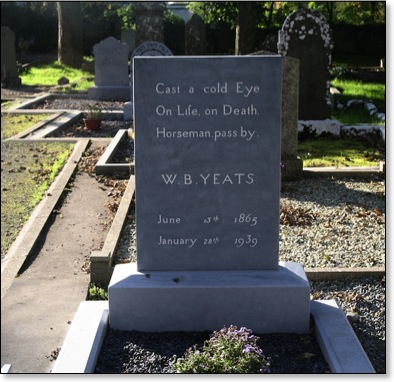
I gravitate toward establishments with personality, many of which are slightly off the beaten path. In this case, however, I was delighted that Yeats Lodge was just off the main north-south motorway, because Yeats's grave was just a mile a way. In addition the sea coast, my attraction to this part of Sligo was its fame as "Yeats Country," as the poet is closely identified with the area around Drumcliff.
As an English major in college, William Butler Yates became one of my three favorite poets, and I completed many papers on his poetry. He wrote with such precision, and his poetic illusions have always painted word pictures for me. So I knew that seeing at least some of the places from which he gained inspiration would be a special treat.
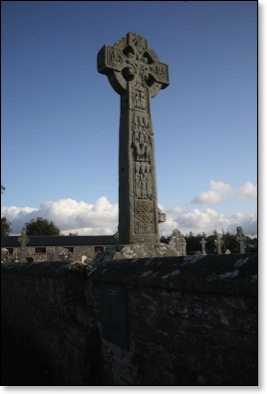
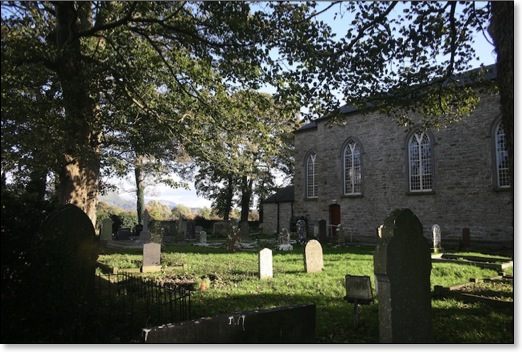
We began our trip through Yates Country at the nearby church where he is buried: Drumcliff Church. (St. Columba's Parish Church, Church of Ireland), where his great-grandfather had served as Rector. Yates spent much of his childhood with his mother's family in Sligo, where he explored the land and learned folk tales. The Celtic cross, shown below, greets you at the churchyard. It was part of the original monastery and is presumed to be from the 11th century.
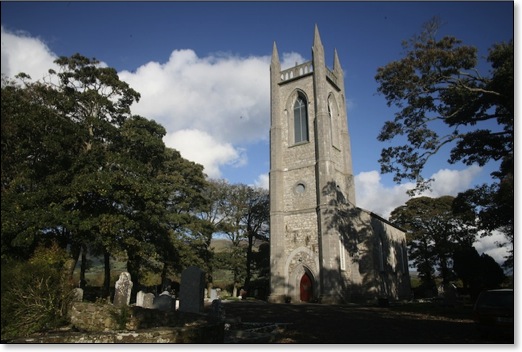
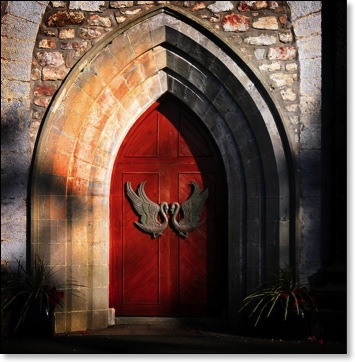
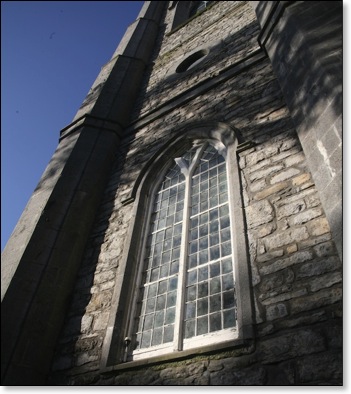
The country church and graveyard is lovely and tranquil, surrounded by the visually stunning mountains that Yeats so often reference in his work. It was a beautiful Indian summer day, so we lingered for a time just soaking up the beauty of this quiet setting.
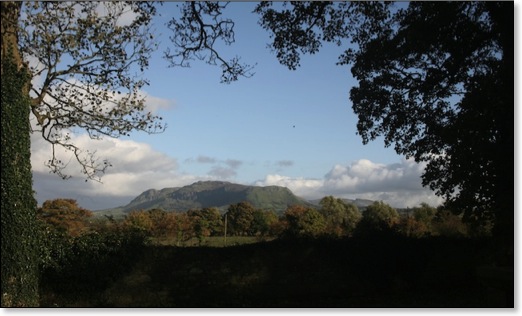
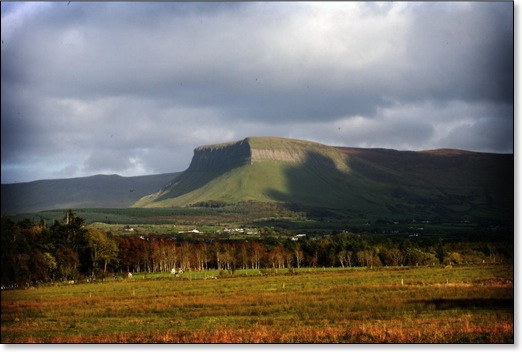
Back at the Yates Lodge we stayed in the "Ben Bulben Room," aptly named because it had a view of the massive "Table Mountain," one of Ireland's most beautiful mountains. Its distinctive outline results from different responses to erosion of the limestone and shale of which the mountain is formed.
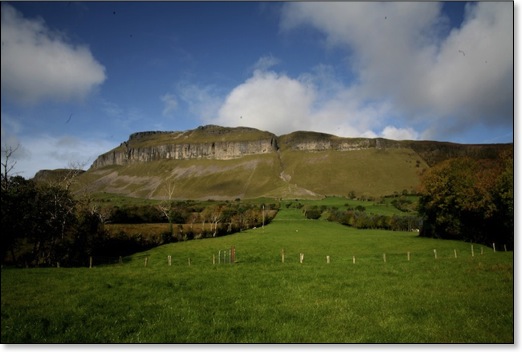
Ben Bulben simply dominates the landscape from all directions, and it is fascinating to watch the mountain face change as the light comes and goes with the movement of cloud formations.
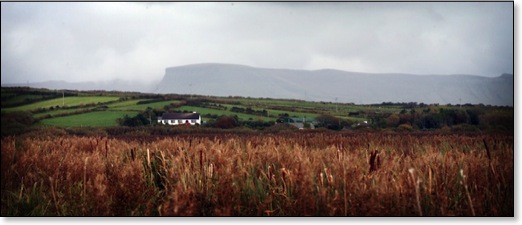
You can even see Ben Bulben in the mist of this image that we took as we explored the coastal area around Drumcliff.
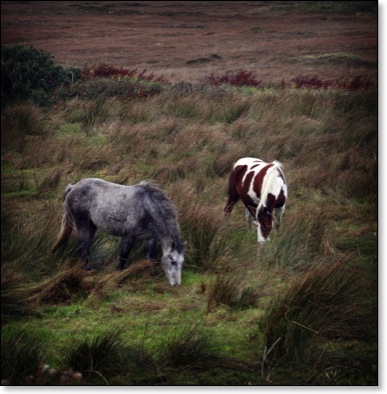
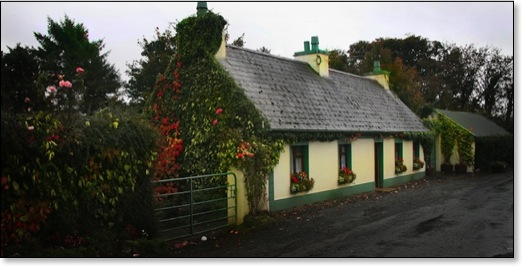
Next, we turned inland to head east where we could explore the road that lies at the base of Ben Bulben. There we saw picturesque cottages . . .
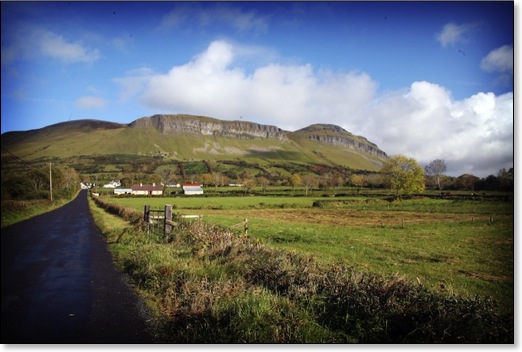
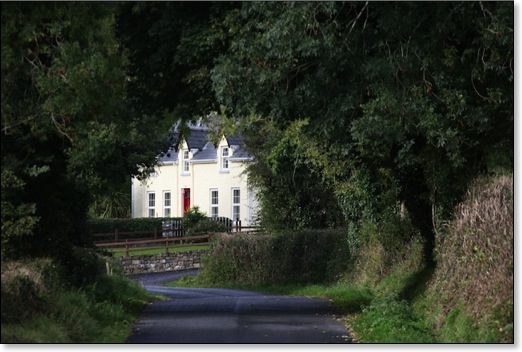
. . . and grand country homes.
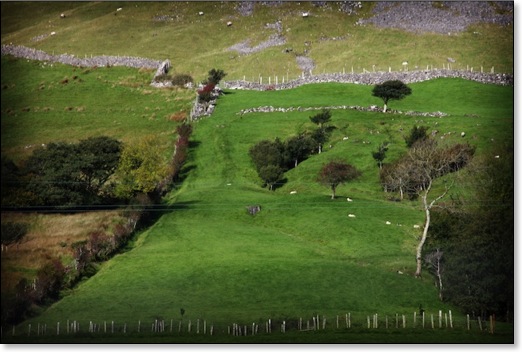
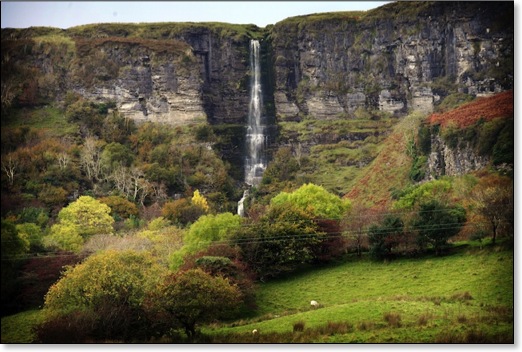
All along the way, we saw beautiful vistas that helped to explain how this rich visual environment informed the imagery of Yeats's poetry.
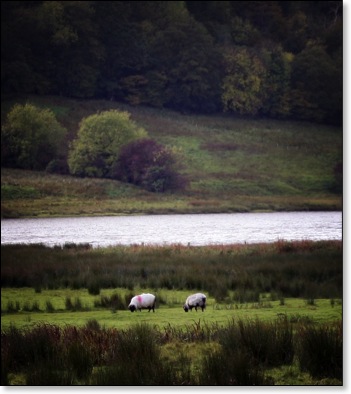
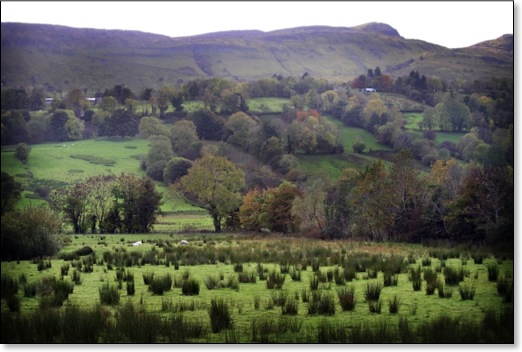
Finally we arrived at Glencar Lake, one of Yates's favorite locales.
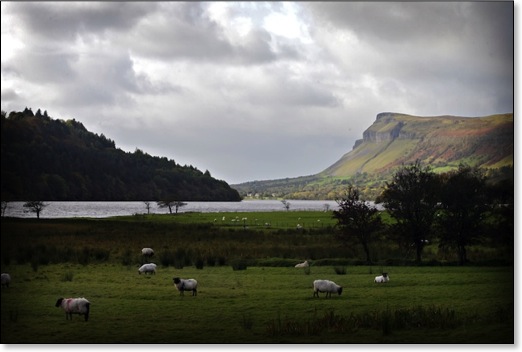
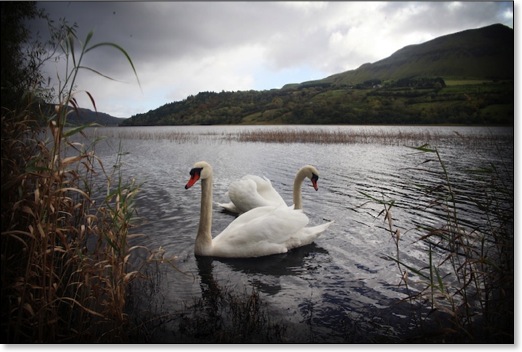
As we were driving along the edge of the lake, I caught sight of a swan.
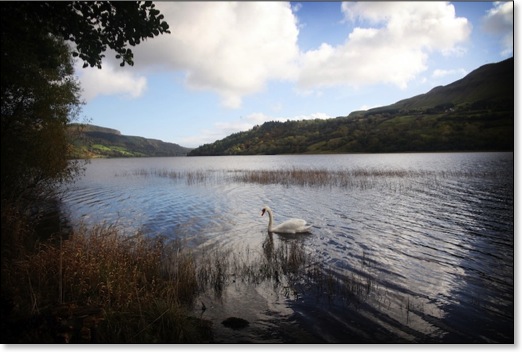
Fortunately I had some crackers, so I quickly attracted him and eventually his mate.
As we were heading back to the lodge, a rain shower blew in. But it did not spoil our day. In fact, it just made it better, as you can see below.
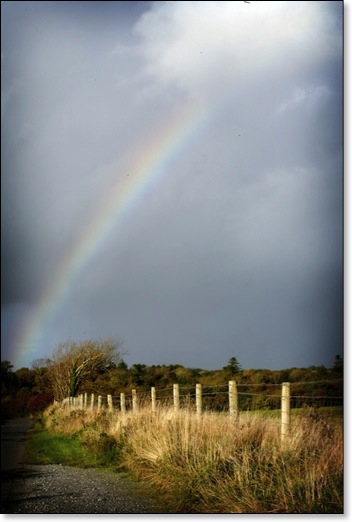
I never felt so lucky to be a photographer after this unforgettably perfect day in Yates County.
I gravitate toward establishments with personality, many of which are slightly off the beaten path. In this case, however, I was delighted that Yeats Lodge was just off the main north-south motorway, because Yeats's grave was just a mile a way. In addition the sea coast, my attraction to this part of Sligo was its fame as "Yeats Country," as the poet is closely identified with the area around Drumcliff.
As an English major in college, William Butler Yates became one of my three favorite poets, and I completed many papers on his poetry. He wrote with such precision, and his poetic illusions have always painted word pictures for me. So I knew that seeing at least some of the places from which he gained inspiration would be a special treat.
We began our trip through Yates Country at the nearby church where he is buried: Drumcliff Church. (St. Columba's Parish Church, Church of Ireland), where his great-grandfather had served as Rector. Yates spent much of his childhood with his mother's family in Sligo, where he explored the land and learned folk tales. The Celtic cross, shown below, greets you at the churchyard. It was part of the original monastery and is presumed to be from the 11th century.
The country church and graveyard is lovely and tranquil, surrounded by the visually stunning mountains that Yeats so often reference in his work. It was a beautiful Indian summer day, so we lingered for a time just soaking up the beauty of this quiet setting.
Back at the Yates Lodge we stayed in the "Ben Bulben Room," aptly named because it had a view of the massive "Table Mountain," one of Ireland's most beautiful mountains. Its distinctive outline results from different responses to erosion of the limestone and shale of which the mountain is formed.
Ben Bulben simply dominates the landscape from all directions, and it is fascinating to watch the mountain face change as the light comes and goes with the movement of cloud formations.
You can even see Ben Bulben in the mist of this image that we took as we explored the coastal area around Drumcliff.
Next, we turned inland to head east where we could explore the road that lies at the base of Ben Bulben. There we saw picturesque cottages . . .
. . . and grand country homes.
All along the way, we saw beautiful vistas that helped to explain how this rich visual environment informed the imagery of Yeats's poetry.
Finally we arrived at Glencar Lake, one of Yates's favorite locales.
As we were driving along the edge of the lake, I caught sight of a swan.
Fortunately I had some crackers, so I quickly attracted him and eventually his mate.
As we were heading back to the lodge, a rain shower blew in. But it did not spoil our day. In fact, it just made it better, as you can see below.
I never felt so lucky to be a photographer after this unforgettably perfect day in Yates County.
An Evening by the Sea in Sligo
October/14/2008 Ireland
Journal
From Galway,
we headed to County Sligo, where we would stay at The
Yates Lodge in the town of Drumcliff, where the famed
poet William Butler Yates once lived and where he is
buried. More about Yates Country later. But first, I
must recall Mary McCollough's prediction that I would
have more than one "Ireland is a Small World"
experience during our trip. The second one came when
I mentioned to Frances Muldoon, a member of the
"Irish Six," that I hoped her home would be close
enough so that we could have a visit when Jim and I
got to Sligo. Turns out her town of Rosses Point is
just a few minutes drive from Yates Lodge. A small
world indeed!
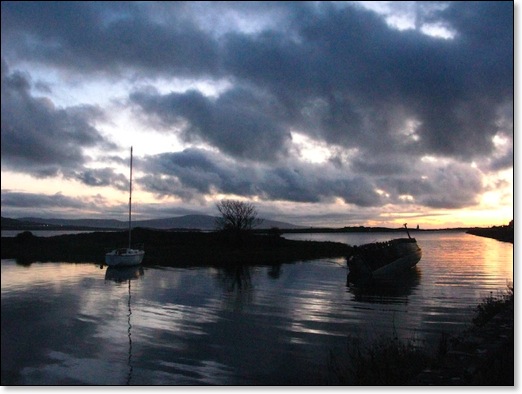
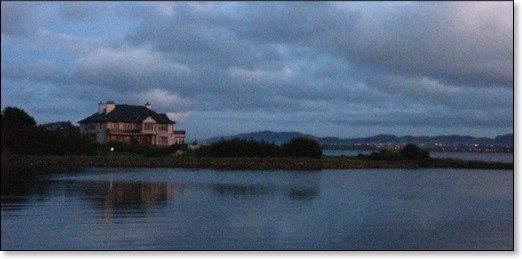
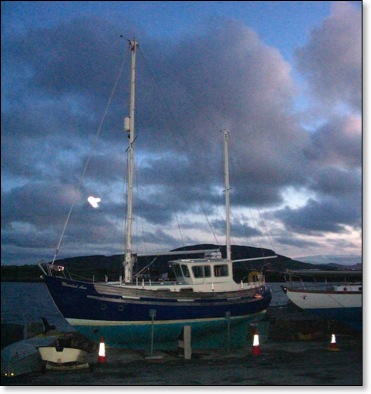
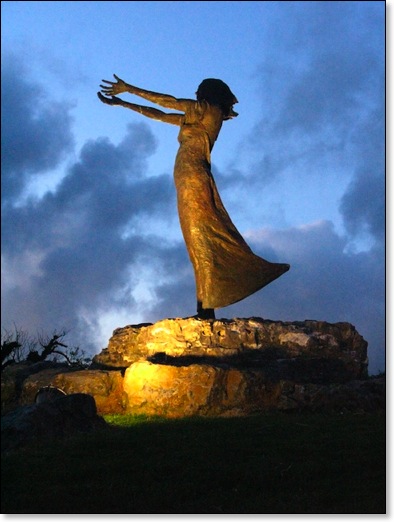
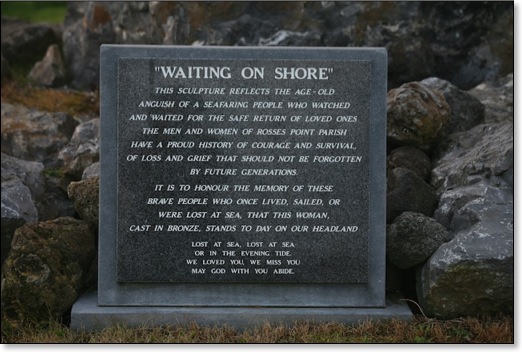
Frances took us an wonderful sunset tour of her unforgettably beautiful village, which lies hard against Sligo Bay. Every picture I made in Rosses Point speaks to the beauty of the sea and the town's connection with it, but nothing is more poignant than the exquisite sculpture of a woman with her arms outstretched to the sea. It commemorates the loved ones of seafarers who watched and waited for them to return safely to their home ports.
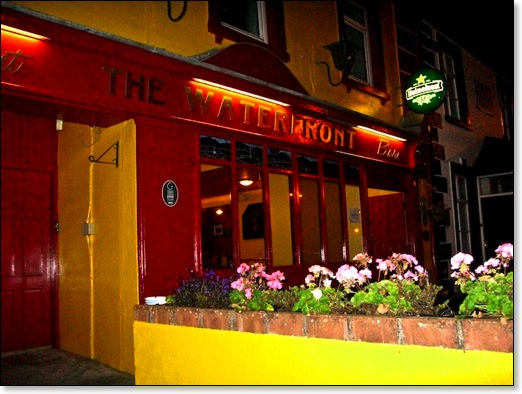
From there, Frances took us to her favorite restaurant and pub, The Waterfront, and I can see why it is. The seafood was as good as it gets!
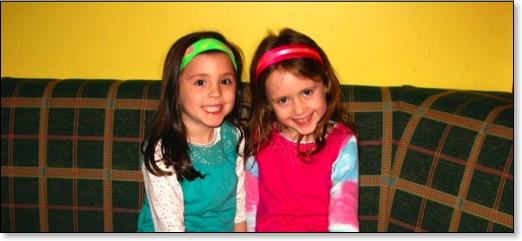
The evening was especially enjoyable because we had the pleasure of dining with the darling Muldoon twins, Rosisin and Joyce. Dad Sean, whom we met at the Kilkenny IPPA meeting, was at soccer practice with older brother Jordan.
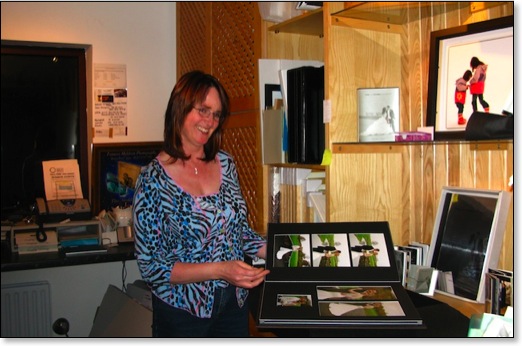
After dinner we took a quick trip to the Muldoon's lovely home where Frances has her studio. I was delighted to get a firsthand look Sean's fine carpentry and Frances's beautifully designed wedding albums . . .
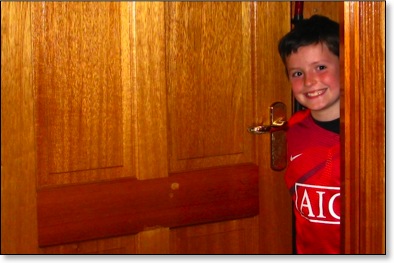
. . . and to meet handsome Jordan—quite a footballer I hear—who was back from practice with Dad . . .
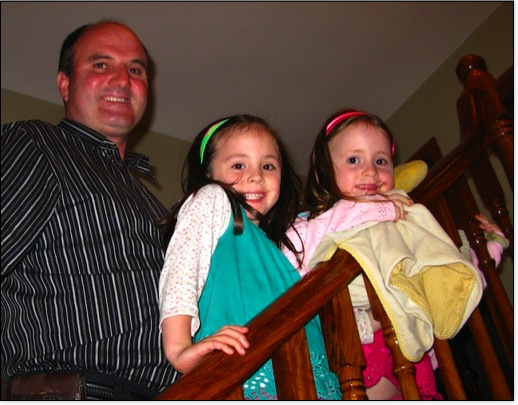
. . . who took over bedtime duty with his girls.
Jim and I hope to return to Rosses Point on a future trip . . . to catch up with the Muldoons and to spend some more time exploring Rosses Point and Sligo Bay.
Before we left, I took one final photo of a beautiful harvest moon on the headland of Rosses Point.
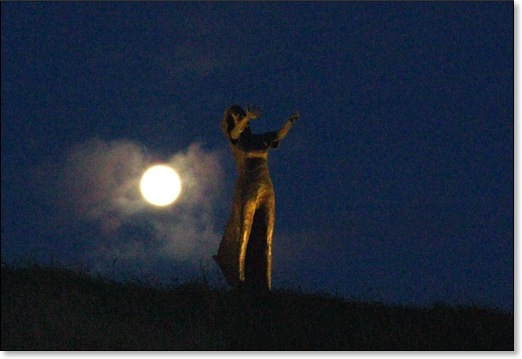
Frances took us an wonderful sunset tour of her unforgettably beautiful village, which lies hard against Sligo Bay. Every picture I made in Rosses Point speaks to the beauty of the sea and the town's connection with it, but nothing is more poignant than the exquisite sculpture of a woman with her arms outstretched to the sea. It commemorates the loved ones of seafarers who watched and waited for them to return safely to their home ports.
From there, Frances took us to her favorite restaurant and pub, The Waterfront, and I can see why it is. The seafood was as good as it gets!
The evening was especially enjoyable because we had the pleasure of dining with the darling Muldoon twins, Rosisin and Joyce. Dad Sean, whom we met at the Kilkenny IPPA meeting, was at soccer practice with older brother Jordan.
After dinner we took a quick trip to the Muldoon's lovely home where Frances has her studio. I was delighted to get a firsthand look Sean's fine carpentry and Frances's beautifully designed wedding albums . . .
. . . and to meet handsome Jordan—quite a footballer I hear—who was back from practice with Dad . . .
. . . who took over bedtime duty with his girls.
Jim and I hope to return to Rosses Point on a future trip . . . to catch up with the Muldoons and to spend some more time exploring Rosses Point and Sligo Bay.
Before we left, I took one final photo of a beautiful harvest moon on the headland of Rosses Point.
Cong, County Mayo: Movie Magic and High Society
October/14/2008 Ireland
Journal
You would
probably say I was exaggerating if I said that Jim
stopped going to movies after John Wayne died. Well,
he did actually go to two, but he slept through one
and fidgeted through the other, so that was the end
of my asking him to go with me. To say the very
least, Jim is still a John Wayne fan thanks to
endless TV reruns. We both agree that
The Quiet Man was one of his best, so
we decided to stay at Cong, where much of the movie's
location scenes were shot.
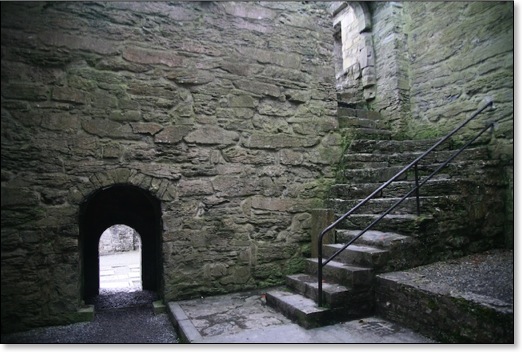
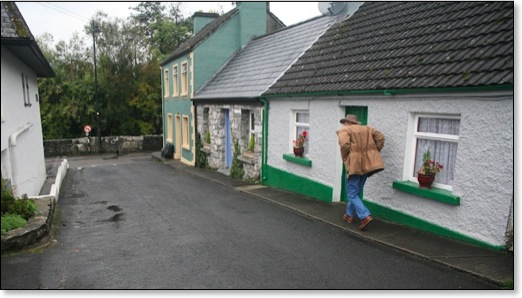
It doesn't take long to see the village, just a short walk and you can take in some wonderful scenery, ranging from the trout-stocked river that flows next to the ruins of Cong Abbey, built in the 12th century by Augustinian monks . . .
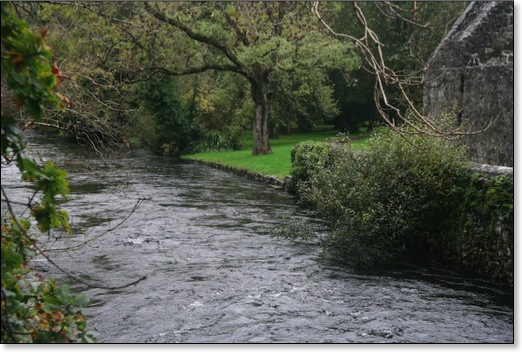
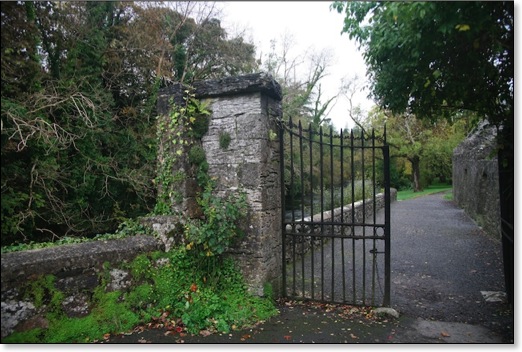
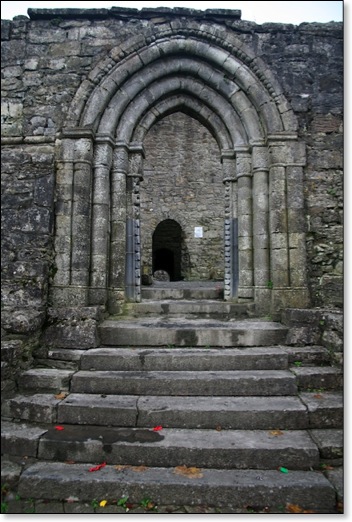
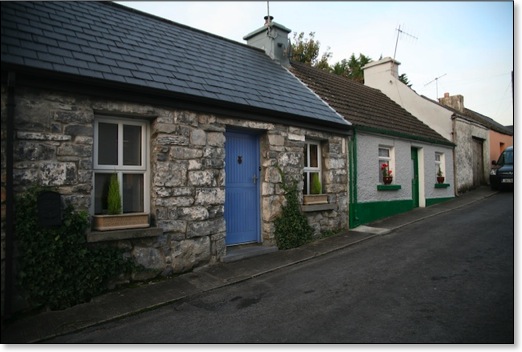
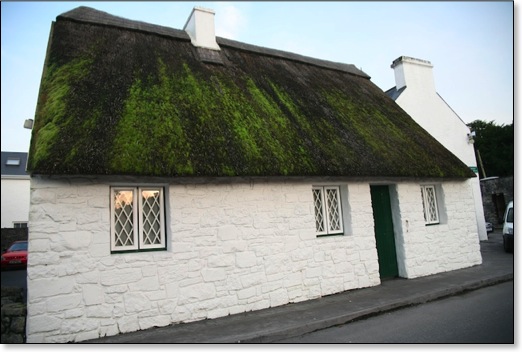
. . . to charming country cottages . . .
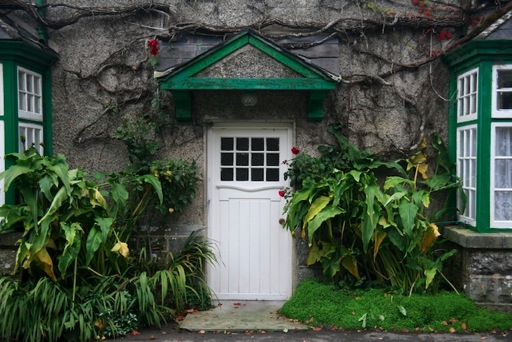
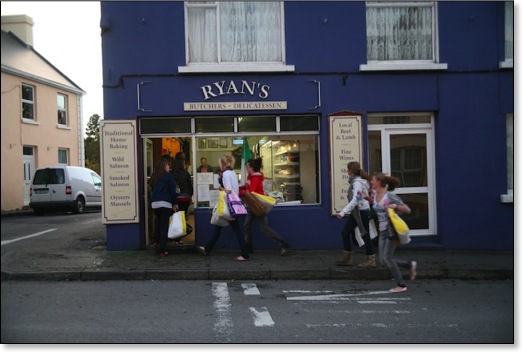
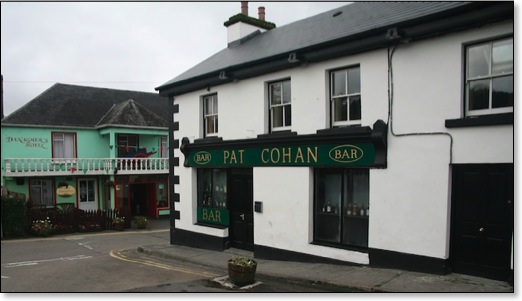
. . . colorful village businesses . . .
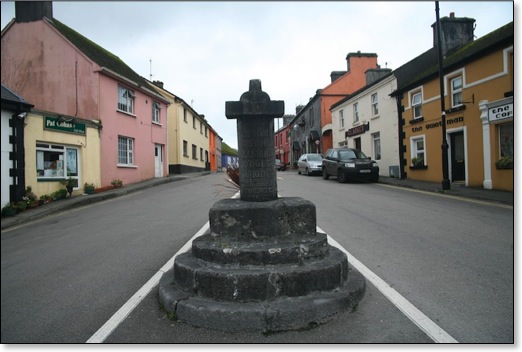
. . . and the famous Market Cross.
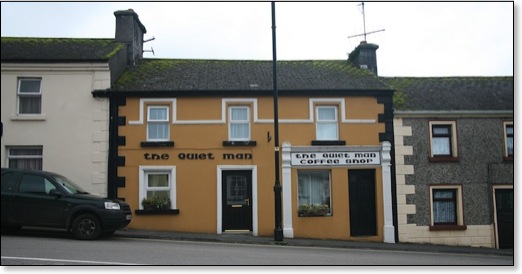
Everywhere there are reminders of The Quiet Man, which has helped to support town enterprises since its filming in 1951, but fortunately for visitors and townspeople alike, tourism hasn't spoiled the village's magical atmosphere.
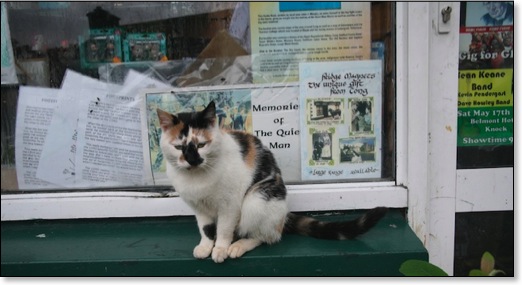
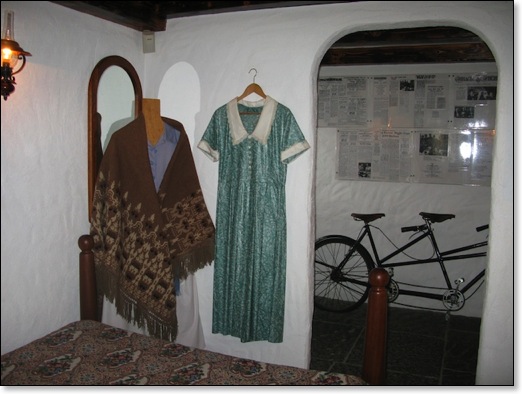
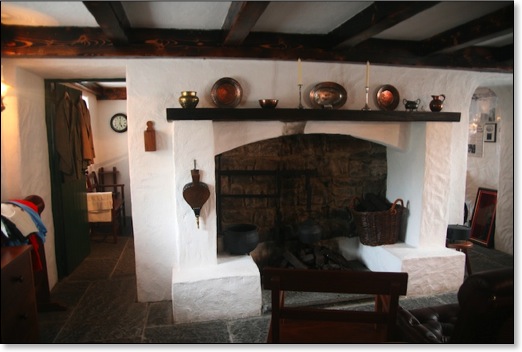
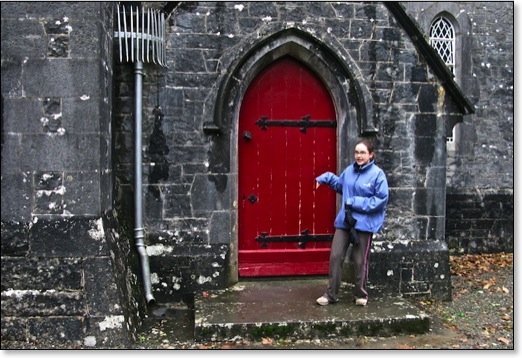
At the Quiet Man Heritage Center we viewed some of the props used in the film and recreations of several key set designs.
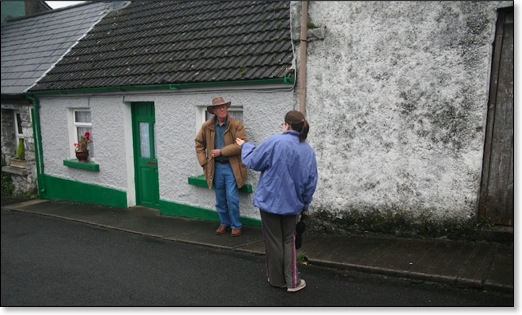
Then we took an enjoyable walking tour with an extremely knowledgeable guide who had members of our tour group act out several key scenes from the movie to demonstrate how the action unfolded. She chose Jim to play the part of "the dying man," who rose from his deathbed and runs down the street when he heard that the fight was on between Sean (John Wayne) and antagonist Red Will Danaher. That's the fastest I've seen Jim move in many years :-).
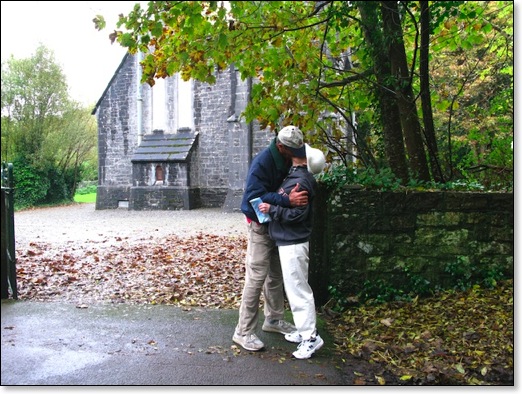
Next, she chose a couple from Califonia to reenact the famous "kiss scene" between Mary Kate (Maureen O'Hara) and Sean by the gate to Ashford Church.
I think they turned in the most enthusiastic performance of the day!
I'd recommend the tour to anyone who loves the film. Buy the DVD before you come, because you'll want to see it again to review the settings where you've walked in the steps of The Quiet Man cast.
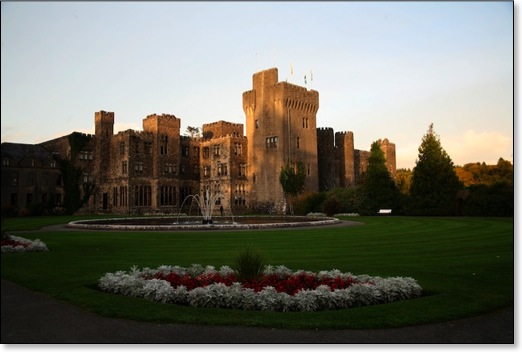
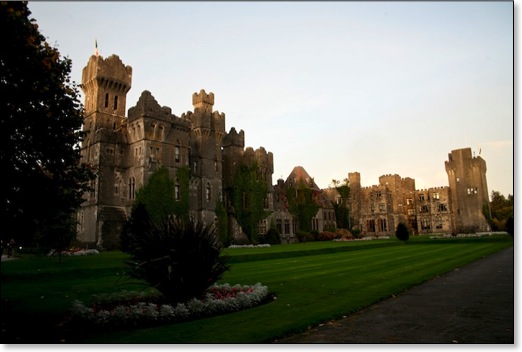
We'll come back to Cong again, to visit some of the other film locations in Counties Galway and Mayo, and we'll spend several nights at the simply astonishing Ashford Castle, the gates of which literally back up to the village and where some of The Quiet Man scenes were filmed. As you enter the gates, you are flanked on each side by forest lands that darken your passage . . .
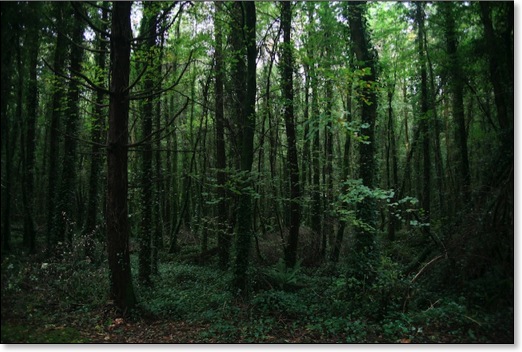
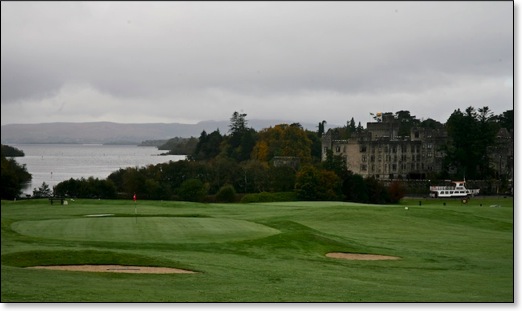
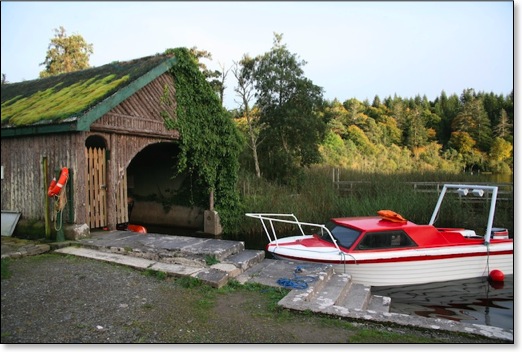
. . . until you emerge onto the rolling hills that now constitute the golf course that fronts the spectacular castle with a 700-year history that in 1985 was transformed by a group of Irish-American investors into one of the "Top 50 Resort Properties in Europe. You can see why, when you walk the grounds of this magnificent property, which is set on the northern shores of Lough Corrib.
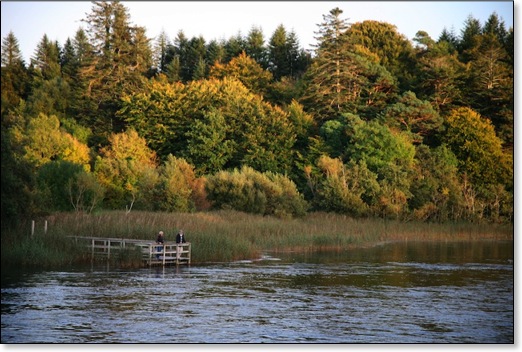
Back in 1951, many of the The Quiet Man stars stayed at Ashford Castle, which had become an hotel operation in 1935. So . . . today you can live even more luxuriously than the stars by staying at Ashford Castle. Check out the wesite by clicking here.
It doesn't take long to see the village, just a short walk and you can take in some wonderful scenery, ranging from the trout-stocked river that flows next to the ruins of Cong Abbey, built in the 12th century by Augustinian monks . . .
. . . to charming country cottages . . .
. . . colorful village businesses . . .
. . . and the famous Market Cross.
Everywhere there are reminders of The Quiet Man, which has helped to support town enterprises since its filming in 1951, but fortunately for visitors and townspeople alike, tourism hasn't spoiled the village's magical atmosphere.
At the Quiet Man Heritage Center we viewed some of the props used in the film and recreations of several key set designs.
Then we took an enjoyable walking tour with an extremely knowledgeable guide who had members of our tour group act out several key scenes from the movie to demonstrate how the action unfolded. She chose Jim to play the part of "the dying man," who rose from his deathbed and runs down the street when he heard that the fight was on between Sean (John Wayne) and antagonist Red Will Danaher. That's the fastest I've seen Jim move in many years :-).
Next, she chose a couple from Califonia to reenact the famous "kiss scene" between Mary Kate (Maureen O'Hara) and Sean by the gate to Ashford Church.
I think they turned in the most enthusiastic performance of the day!
I'd recommend the tour to anyone who loves the film. Buy the DVD before you come, because you'll want to see it again to review the settings where you've walked in the steps of The Quiet Man cast.
We'll come back to Cong again, to visit some of the other film locations in Counties Galway and Mayo, and we'll spend several nights at the simply astonishing Ashford Castle, the gates of which literally back up to the village and where some of The Quiet Man scenes were filmed. As you enter the gates, you are flanked on each side by forest lands that darken your passage . . .
. . . until you emerge onto the rolling hills that now constitute the golf course that fronts the spectacular castle with a 700-year history that in 1985 was transformed by a group of Irish-American investors into one of the "Top 50 Resort Properties in Europe. You can see why, when you walk the grounds of this magnificent property, which is set on the northern shores of Lough Corrib.
Back in 1951, many of the The Quiet Man stars stayed at Ashford Castle, which had become an hotel operation in 1935. So . . . today you can live even more luxuriously than the stars by staying at Ashford Castle. Check out the wesite by clicking here.
Time Out for Teaching
October/13/2008 Ireland
Journal
I was
absolutely delighted when I was invited to teach a
day-long program to members of the Irish PPA through
an affiliation with a government-sponsored Skillsnet
program, which is designed to advance professional
training opportunities.
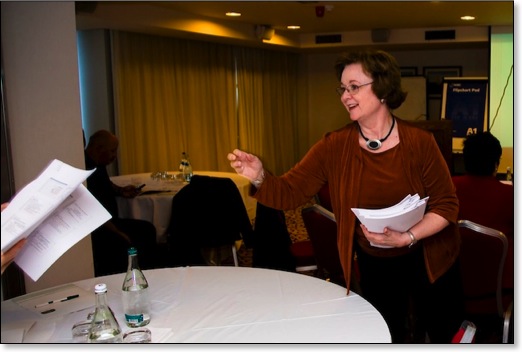
I recognized quite a few photographers whom I met last year at the Athlone conference, but there were many few new faces in the group of 45, which I am told is a good turnout for the Skillsnet programs. What I know for sure is that I got great questions from the obviously serious group, which was especially interested in management issues because of the "new economy" that photographers everywhere are facing because of the worldwide banking crisis.
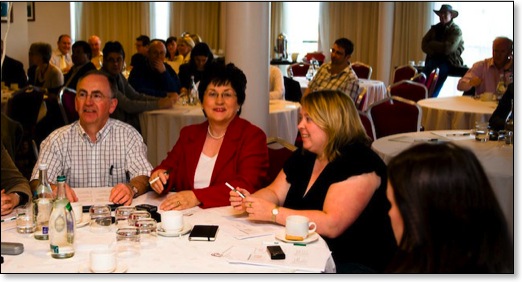
The official photographer for the event was Dublin photographer Robert Allen, who did a wonderful job capturing Jim.
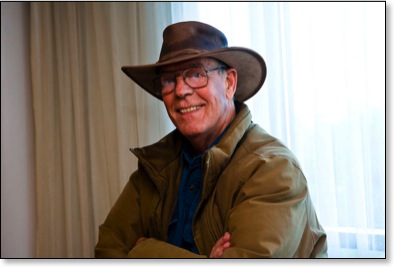
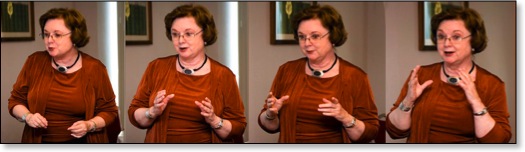
And I was also amazed when he sent a series of of photos of me on the job. Talk about talking with your hands . . .
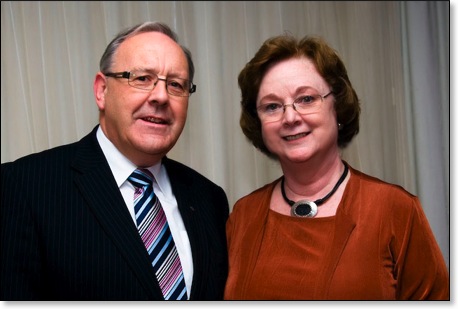
Here I am with Robert after our official duties we done for the day. Thanks to him for sharing these great images, and thanks also to the members of the Irish PPA for their continued interest and friendship, and to Mary O'Driscoll and Padraic Deasy for helping me with arrangements.
I recognized quite a few photographers whom I met last year at the Athlone conference, but there were many few new faces in the group of 45, which I am told is a good turnout for the Skillsnet programs. What I know for sure is that I got great questions from the obviously serious group, which was especially interested in management issues because of the "new economy" that photographers everywhere are facing because of the worldwide banking crisis.
The official photographer for the event was Dublin photographer Robert Allen, who did a wonderful job capturing Jim.
And I was also amazed when he sent a series of of photos of me on the job. Talk about talking with your hands . . .
Here I am with Robert after our official duties we done for the day. Thanks to him for sharing these great images, and thanks also to the members of the Irish PPA for their continued interest and friendship, and to Mary O'Driscoll and Padraic Deasy for helping me with arrangements.
A Glorious Galway Sunday
October/12/2008 Ireland
Journal
On each of
our visits to Ireland, we have run out of time to
visit Galway, the capital of the West of Ireland. It
is a thriving modern city that dates back to the 13th
century, when the medieval city grew up inside a
great encircling wall. Since we only had a day to see
the city, we decided to take a leisurely walking
tour, beginning on Kirwin's Lane, which is full of
shops and pubs. We were assured that this is where
the action is on Sunday.
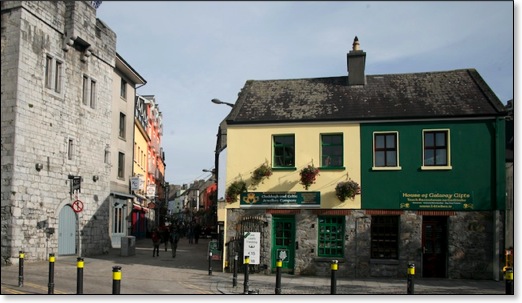
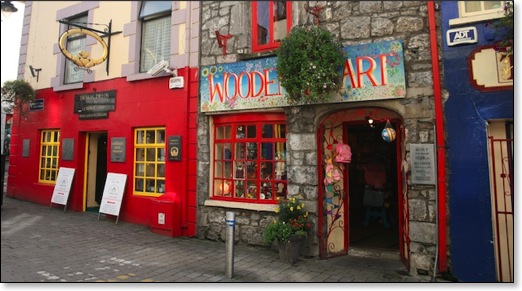
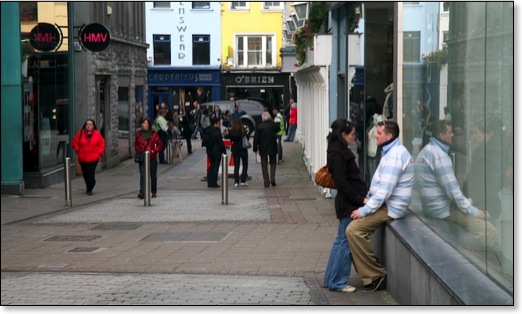
Action indeed! With no automotive traffic allowed, the lane was filled with people enjoying the mild fall weather . . .
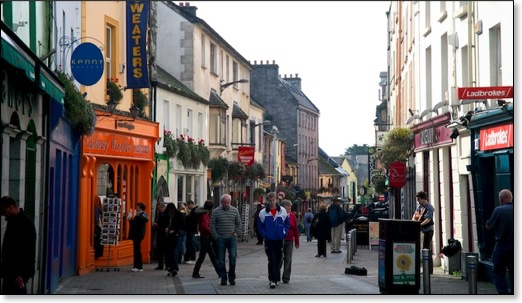
. . . visiting the quaint shops . . .
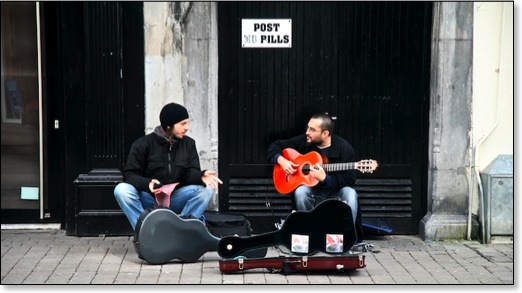
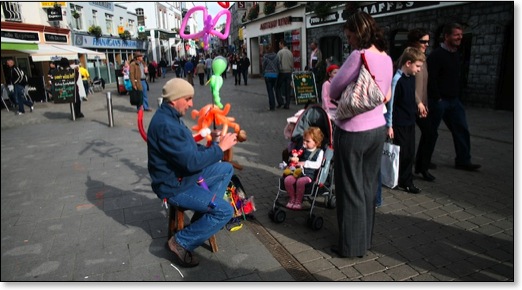
. . . and enjoying entertainment for all ages . . .
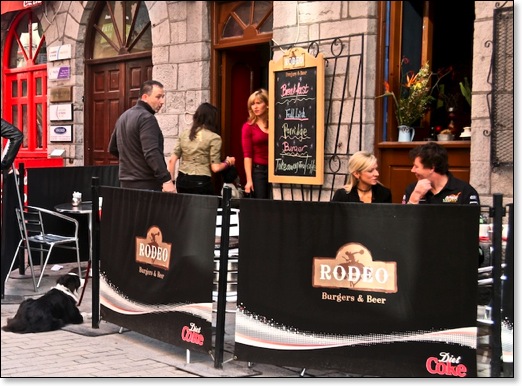
. . . and just hanging out together.
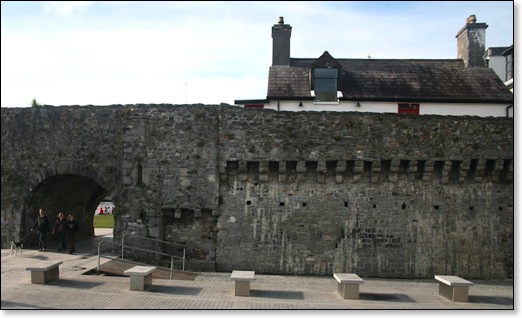
Our next stop was the Spanish Arch area. The arch, built in 1519 at the south section of the town hall, was named for the frequent visits from Spanish ships that traded with Galway.
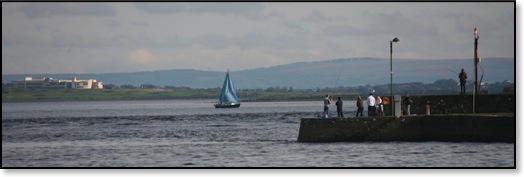
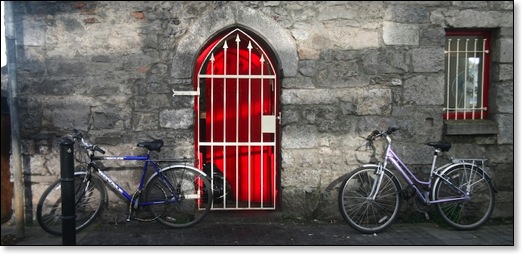
We spent the rest of the afternoon exploring the Long Walk, from which we could see the famed Galway Bay, as well as photographing in other nearby streets and alleyways in the oldest section of the city.
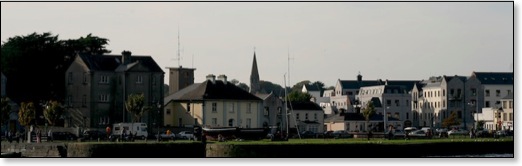
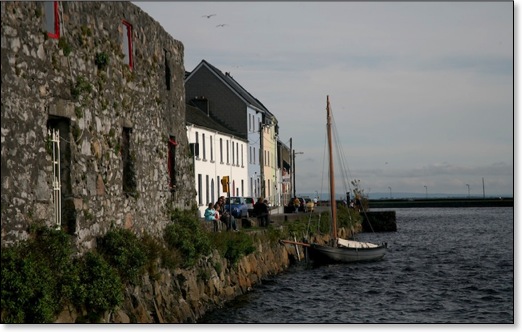
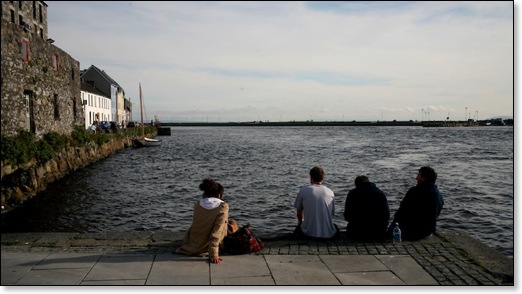
The bay was a magnet to young people enjoying a day off . . .
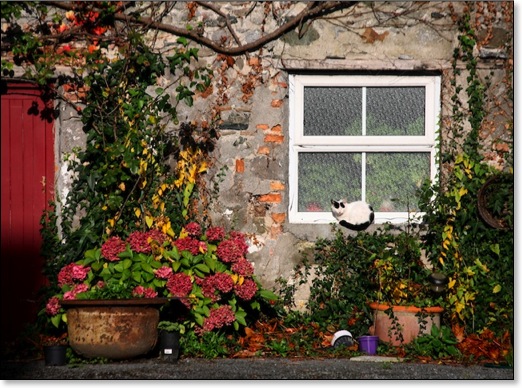
. . . and I even caught a cat napping in the warm Sunday sun.
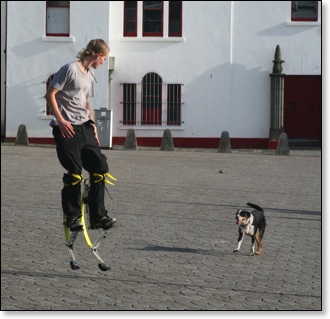
Finally, we stopped a while at the Fish Market, where women once peddled fish to the townspeople of Galway. Today it is a gathering place for those who want to enjoy the sights and sounds of a bustling city. Here's one of the most interesting encounters we spotted: dog vs. man on springing stilts. Both managed to survive.
Late in the day we had a special treat courtesy of Galway photographer Neil Warner, whom I met last year at the Athlone Irish PPA Convention, where he presented an excellent program on marketing. Neil and his wife, Mary, had kindly offered to take Jim and me on a walking trip, then treat us to a pint at one of the city's oldest pubs. Recently Neil was elected president of the European Federation of Professional Photography, and he holds a boatload of titles and awards, including European Commercial Photographer of the year in 2006 and Fellowships in the British Institute of Professional Photography, the Irish PPA, and the British Master Photographers Association. So we enjoyed discussing association issues, but mostly we loved hearing fascinating stories about Galway and enjoying Neil's witty observations.
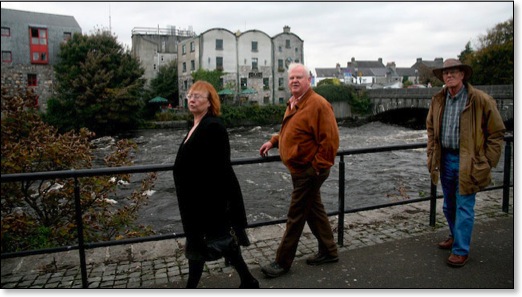
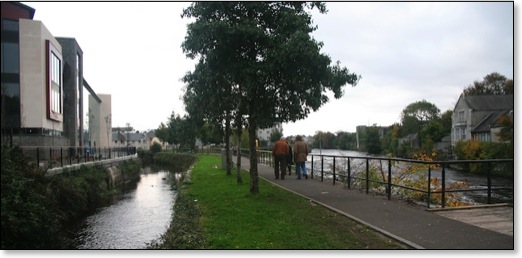
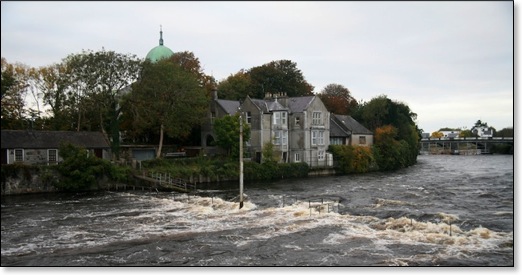
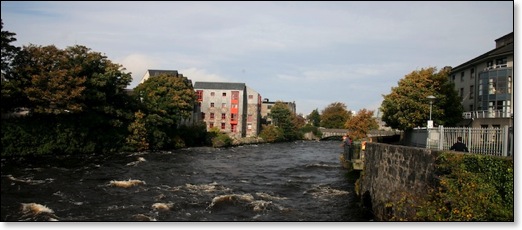
Here are Mary, Neil and Jim walking along the Corrib River, where Neil explained how power was generated for the city's early linen mills through the ingenious use of a series of canals that were dug along side the river.
Through a system of locks on the canals, the water could be raised and lowered and made to increase the current of the river to drive power to the plants.
One of the most interesting stops on our walking trip (besides the pub), was at St. Nicholas's Church, which was completed around 1324 and is the oldest parish church still in use in the west of Ireland.
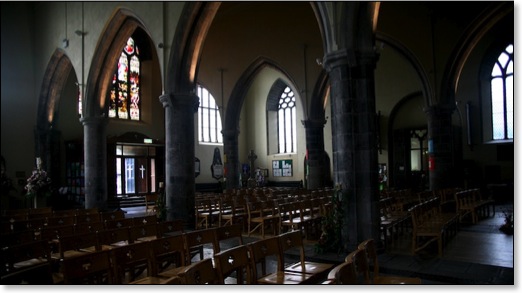
Among many of the fascinating facts about the church that Neil revealed is that one of the most famous visitors to the church was Christopher Columbus, who prayed there before journeying on to the New World. According to Neil, the first individual to set foot on the Americas was actually a dog that belonged to the ship's carpenter. Furthermore, the ship's carpenter hailed from Galway. Who knew?
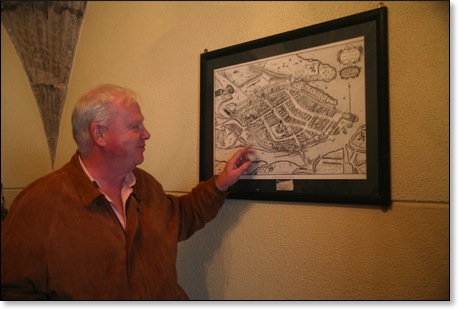
Here Neil points to our location on a medieval map of the city.
One thing for sure . . . a day in Galway is not long enough, so we'll be back again next year to learn more about this fascinating city. And thanks to Neil and Mary for helping to bring history to life!
Action indeed! With no automotive traffic allowed, the lane was filled with people enjoying the mild fall weather . . .
. . . visiting the quaint shops . . .
. . . and enjoying entertainment for all ages . . .
. . . and just hanging out together.
Our next stop was the Spanish Arch area. The arch, built in 1519 at the south section of the town hall, was named for the frequent visits from Spanish ships that traded with Galway.
We spent the rest of the afternoon exploring the Long Walk, from which we could see the famed Galway Bay, as well as photographing in other nearby streets and alleyways in the oldest section of the city.
The bay was a magnet to young people enjoying a day off . . .
. . . and I even caught a cat napping in the warm Sunday sun.
Finally, we stopped a while at the Fish Market, where women once peddled fish to the townspeople of Galway. Today it is a gathering place for those who want to enjoy the sights and sounds of a bustling city. Here's one of the most interesting encounters we spotted: dog vs. man on springing stilts. Both managed to survive.
Late in the day we had a special treat courtesy of Galway photographer Neil Warner, whom I met last year at the Athlone Irish PPA Convention, where he presented an excellent program on marketing. Neil and his wife, Mary, had kindly offered to take Jim and me on a walking trip, then treat us to a pint at one of the city's oldest pubs. Recently Neil was elected president of the European Federation of Professional Photography, and he holds a boatload of titles and awards, including European Commercial Photographer of the year in 2006 and Fellowships in the British Institute of Professional Photography, the Irish PPA, and the British Master Photographers Association. So we enjoyed discussing association issues, but mostly we loved hearing fascinating stories about Galway and enjoying Neil's witty observations.
Here are Mary, Neil and Jim walking along the Corrib River, where Neil explained how power was generated for the city's early linen mills through the ingenious use of a series of canals that were dug along side the river.
Through a system of locks on the canals, the water could be raised and lowered and made to increase the current of the river to drive power to the plants.
One of the most interesting stops on our walking trip (besides the pub), was at St. Nicholas's Church, which was completed around 1324 and is the oldest parish church still in use in the west of Ireland.
Among many of the fascinating facts about the church that Neil revealed is that one of the most famous visitors to the church was Christopher Columbus, who prayed there before journeying on to the New World. According to Neil, the first individual to set foot on the Americas was actually a dog that belonged to the ship's carpenter. Furthermore, the ship's carpenter hailed from Galway. Who knew?
Here Neil points to our location on a medieval map of the city.
One thing for sure . . . a day in Galway is not long enough, so we'll be back again next year to learn more about this fascinating city. And thanks to Neil and Mary for helping to bring history to life!
On the Road Again
October/11/2008 Ireland
Journal
Our next
destination was Cong, in County Mayo. We plan to take
in the sights of rural County Mayo and to visit the
picturesque village where the movie classic, "The
Quiet Man," was filmed. Cong, we reckoned, was close
enough to Galway, where we wanted to spend a full day
touring before I presented a Monday program in that
city to the members of the Irish PPA. Then we would
spend a final day in Cong seeing the sights before we
moved on.
Since we didn't have time to stop and photograph the scenery on our trip from Kilkenny to Donegal, we decided to make it a leisurely day of travel and picture-taking as we retraced our steps on the way to Galway. Fortunately the weather was on our side, so we had a really wonderful day of travel.
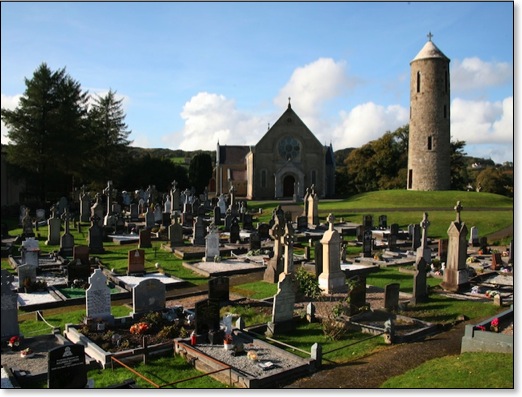
Our first stop was in the Donegal village of Bruckles, where I photographed this picturesque church, tower, and graveyard.
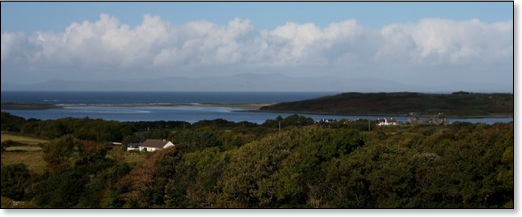
Then we paused to take one last look at the Donegal coastline before we headed inland.
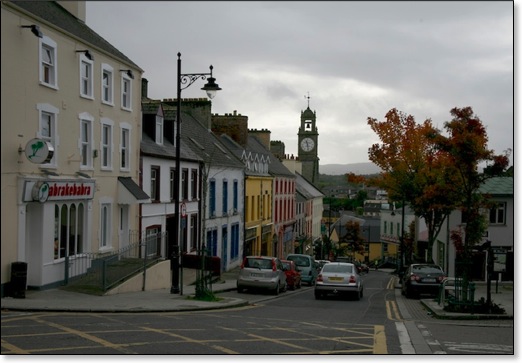
On a whim, we decided to take a brief detour into the village of Ballyshannon, just because it had such a pretty name. We were rewarded when we found Ballyshannon to be set on a hill with a main street that wound through the town.
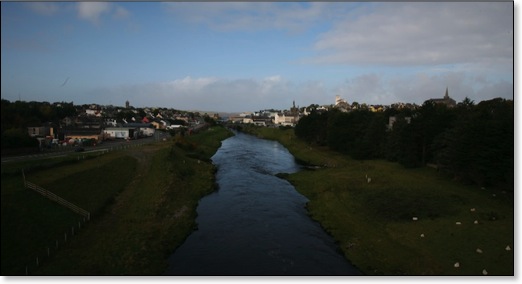
And on the outskirts of town, I was able to capture this photo of the town taken from a bridge over the river the bisects it.
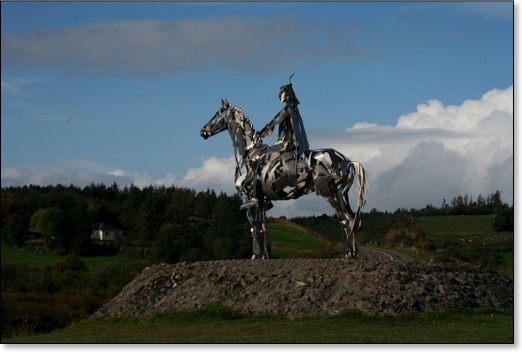
When we reached County Roscommon on the main north-south motorway, we spotted the unusual sculpture of a man on a horse, which stood on a hill by the side of the road. We had wondered about it when we passed it on our way to Donegal, so we decided to pull into the lay by where the sculpture is located.
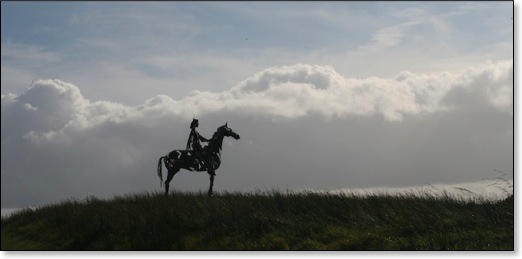
Turns out that this exquisite life-size metal sculpture was called "The Gaelic Chieftain," and it was inspired by the Battle of Curlews, fought in 1599.
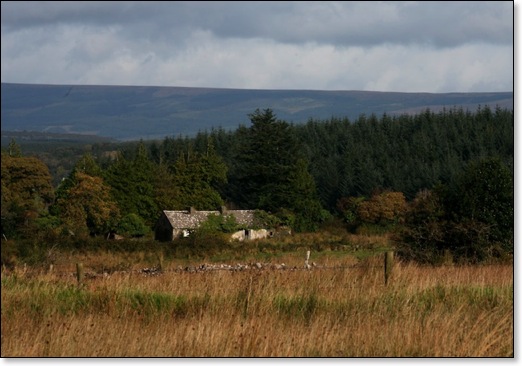
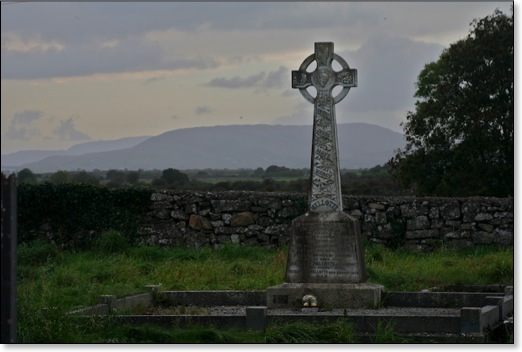
Just as we were leaving the car park, I grabbed this shot of stone cottage with the mountains in the background.
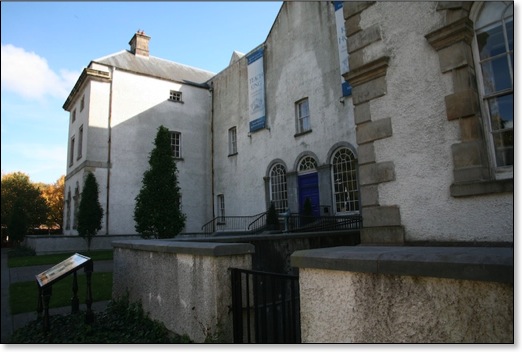
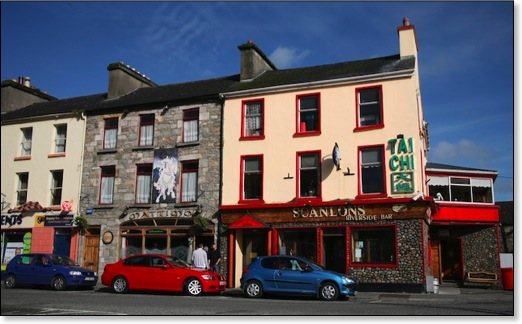
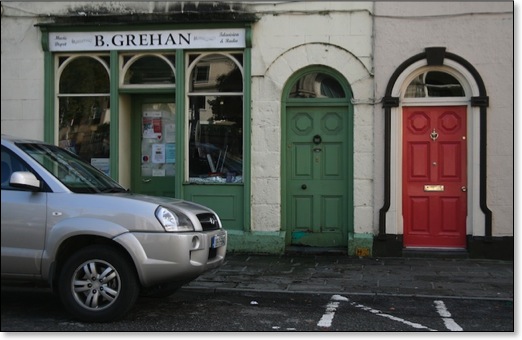
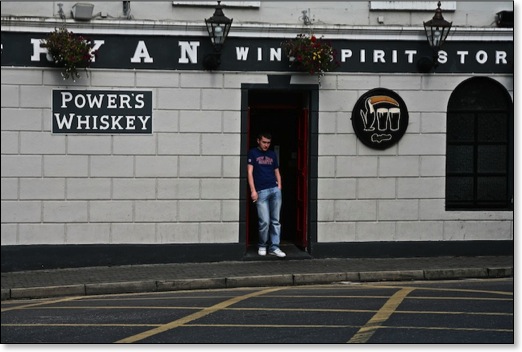
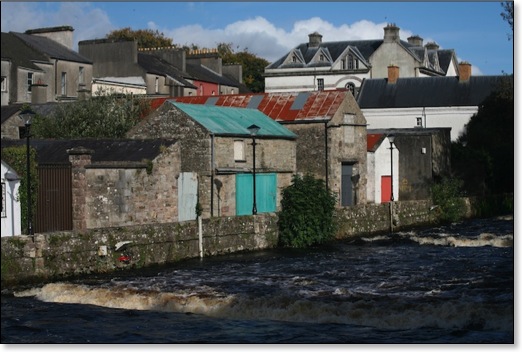
On our long drive to Donegal, we passed through the County Roscommon town of Boyle, but we didn't have time to stop for photos. So on this trip we took time to look around this very appealing town, which I was sure would be full of lots of interesting pictures.
We decided to have lunch at the King House Shop and Tearoom, even though the house itself was not open to visitors after September. After viewing the grounds of the house and reading about this fully restored Georgian mansion and museum, I know we'll come again to tour the interior and visit the interpretive galleries.
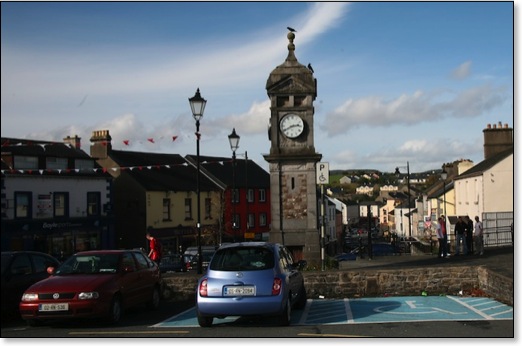
After lunch we spent an hour or so just walking the streets of this wonderfully colorful town, catching pictures along the way.
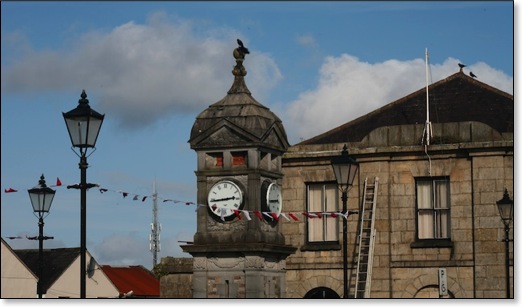
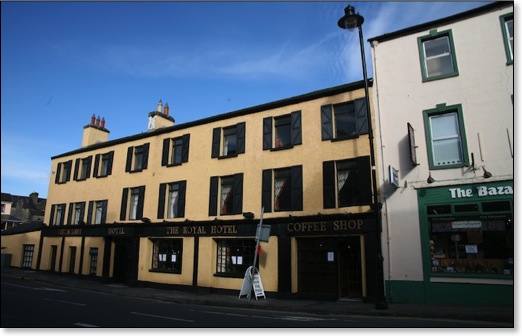
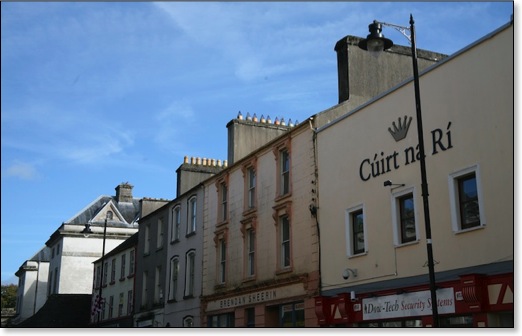
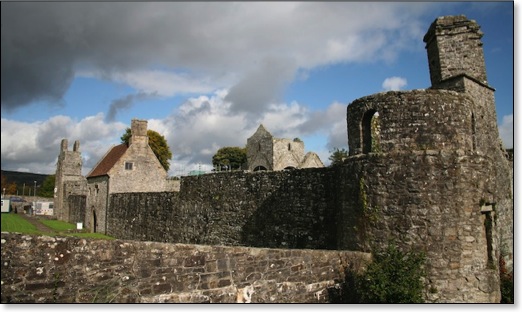
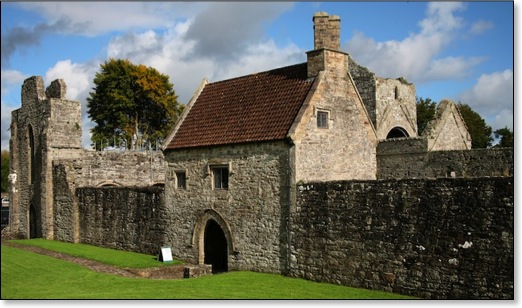
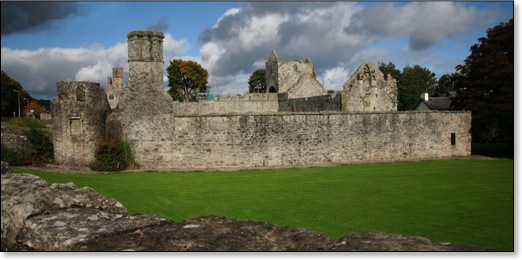
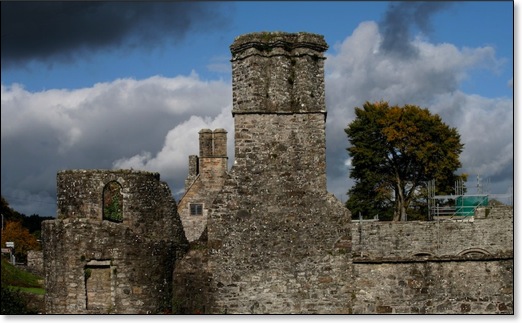
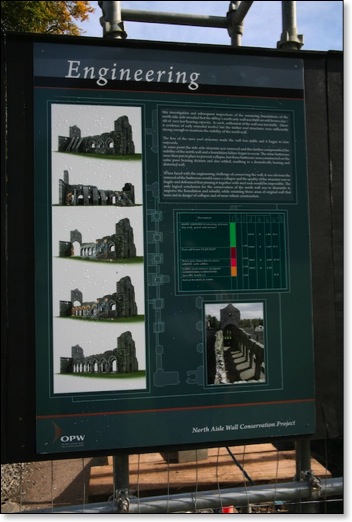
Before we left, we took a walk around the Boyle Cistercian Abbey, which was founded by Maurice O'Dufy in 1161. These magnificent ruins are still undergoing restoration, and we got a good look at the process of literally relaying stone-by-numbered stone. I look forward to visiting this great structure again, as its atmosphere is extremely compelling.
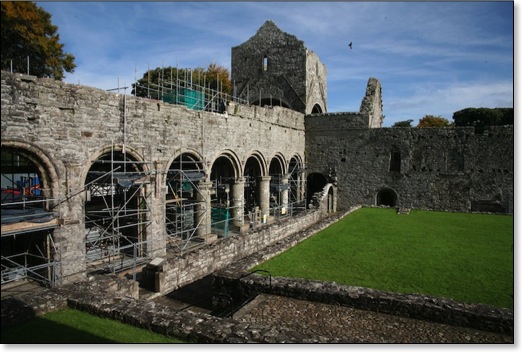
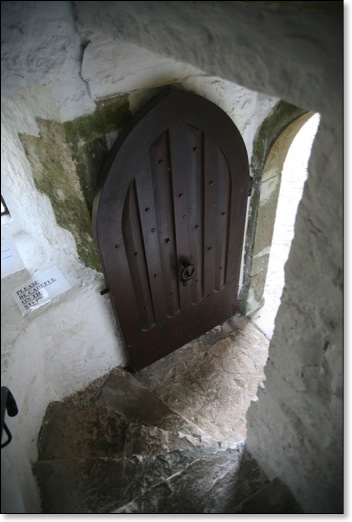
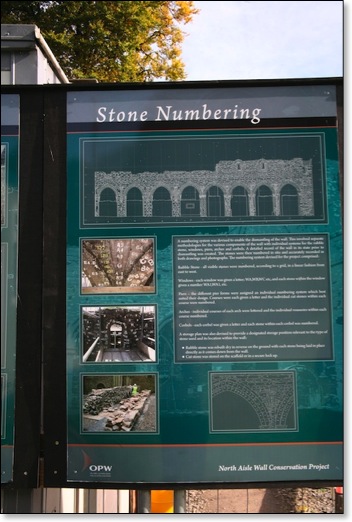
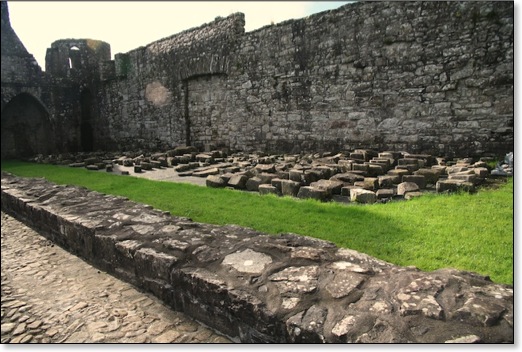
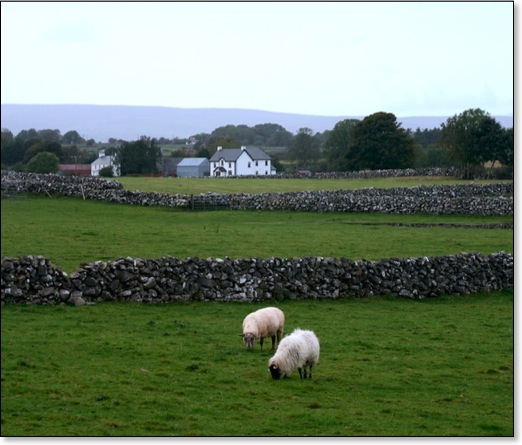
As we drove into County Mayo, we could see the landscape becoming more pastoral. And everywhere there were sheep. Jim says this was the beginning of my desire to photograph every sheep in Ireland. Possibly so!
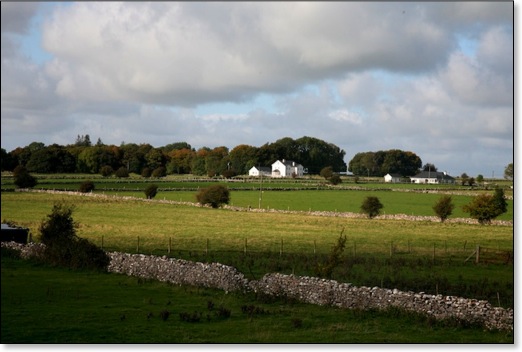
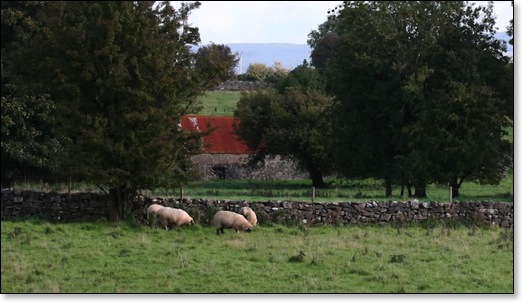
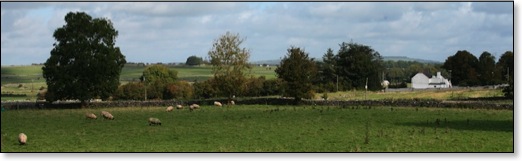
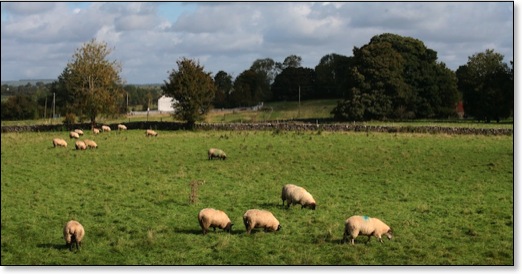
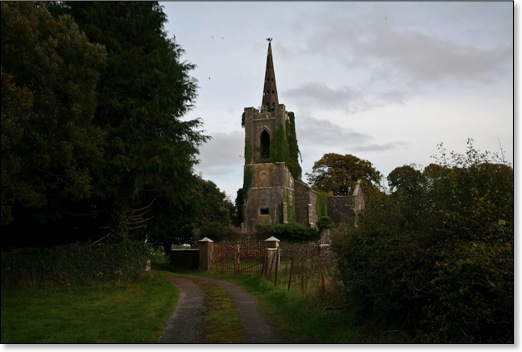
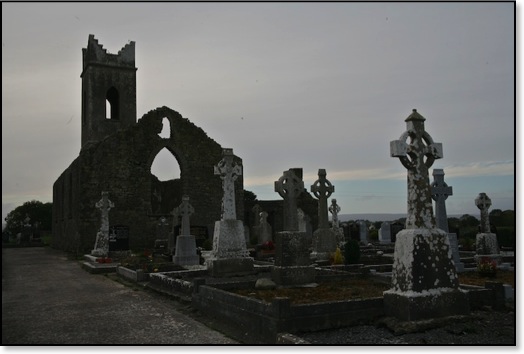
As we neared our destination of Cong, we were losing sun, but not more opportunities to photograph ruins . . . right along side of the road. Thank goodness for ASA 1600!
Since we didn't have time to stop and photograph the scenery on our trip from Kilkenny to Donegal, we decided to make it a leisurely day of travel and picture-taking as we retraced our steps on the way to Galway. Fortunately the weather was on our side, so we had a really wonderful day of travel.
Our first stop was in the Donegal village of Bruckles, where I photographed this picturesque church, tower, and graveyard.
Then we paused to take one last look at the Donegal coastline before we headed inland.
On a whim, we decided to take a brief detour into the village of Ballyshannon, just because it had such a pretty name. We were rewarded when we found Ballyshannon to be set on a hill with a main street that wound through the town.
And on the outskirts of town, I was able to capture this photo of the town taken from a bridge over the river the bisects it.
When we reached County Roscommon on the main north-south motorway, we spotted the unusual sculpture of a man on a horse, which stood on a hill by the side of the road. We had wondered about it when we passed it on our way to Donegal, so we decided to pull into the lay by where the sculpture is located.
Turns out that this exquisite life-size metal sculpture was called "The Gaelic Chieftain," and it was inspired by the Battle of Curlews, fought in 1599.
Just as we were leaving the car park, I grabbed this shot of stone cottage with the mountains in the background.
On our long drive to Donegal, we passed through the County Roscommon town of Boyle, but we didn't have time to stop for photos. So on this trip we took time to look around this very appealing town, which I was sure would be full of lots of interesting pictures.
We decided to have lunch at the King House Shop and Tearoom, even though the house itself was not open to visitors after September. After viewing the grounds of the house and reading about this fully restored Georgian mansion and museum, I know we'll come again to tour the interior and visit the interpretive galleries.
After lunch we spent an hour or so just walking the streets of this wonderfully colorful town, catching pictures along the way.
Before we left, we took a walk around the Boyle Cistercian Abbey, which was founded by Maurice O'Dufy in 1161. These magnificent ruins are still undergoing restoration, and we got a good look at the process of literally relaying stone-by-numbered stone. I look forward to visiting this great structure again, as its atmosphere is extremely compelling.
As we drove into County Mayo, we could see the landscape becoming more pastoral. And everywhere there were sheep. Jim says this was the beginning of my desire to photograph every sheep in Ireland. Possibly so!
As we neared our destination of Cong, we were losing sun, but not more opportunities to photograph ruins . . . right along side of the road. Thank goodness for ASA 1600!
Rain's OK in Donegal!
October/10/2008 Ireland
Journal
We were
thrilled that our B&B establishment, Shannonbrae,
was located on a cliff that dropped off sharply to
the sea, so we couldn't be much closer to the ocean
than that.
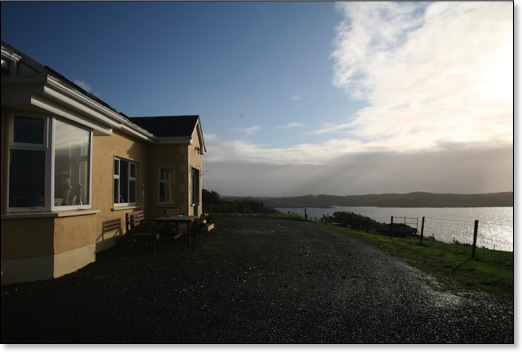
The wild ocean views from the front yard were simply spectacular!
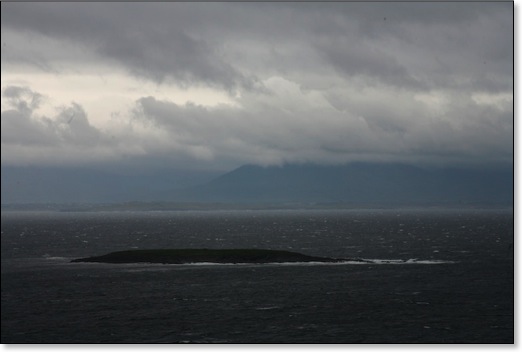
We could even see sheep grazing in their pens from the front door of our host Jillian's lovely home.
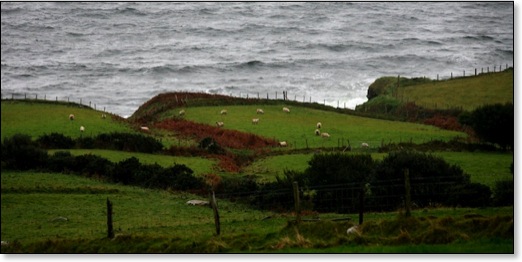
The day started well with only a few fluffy clouds in the sky, but by the time we were ready to make our way west around around the peninsula, a soft rain had begun to fall. What I soon discovered is that while it does spoil those fluffy cloud formations that look so good in landscapes, the rain –- unless is it blowing sideways into your face -- merely serves to freshen the landscape and bring out all those many shades of Irish green that you hear about in song and story. So for several hours, we drove west from ShannonBrae House through the towns of Kilcar and Carrick, photographing sheep, catttle, cottages, flowers, graveyards, and a most extraordinary football pitch (scoccer field) set directly on the doorstep of the Atlantic Ocean. What I learned during my several hours of shooting is that rain in Donegal is a gift to photographers. It simply freshens the beauty of this extraordinary stretch of County Donegal.
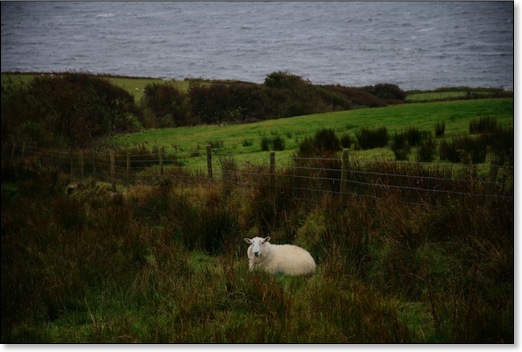
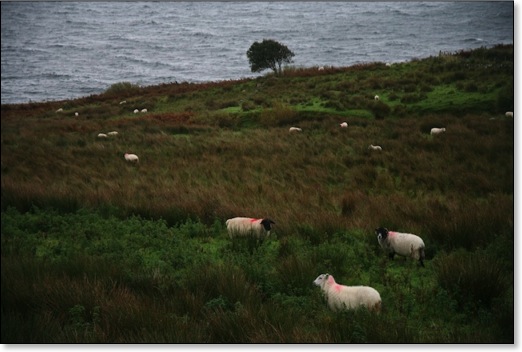
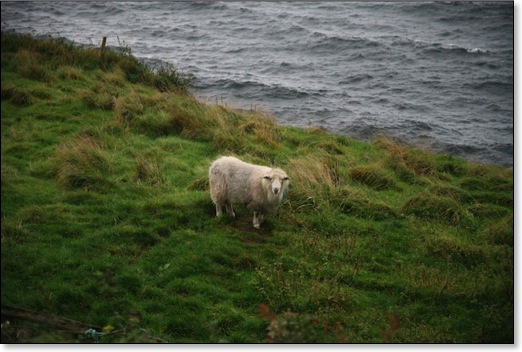
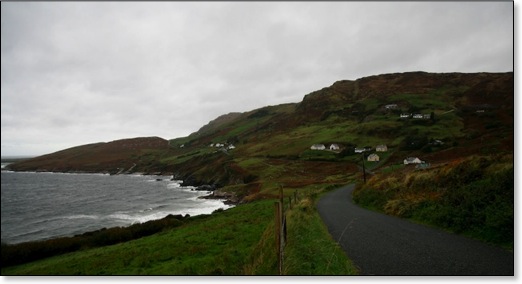
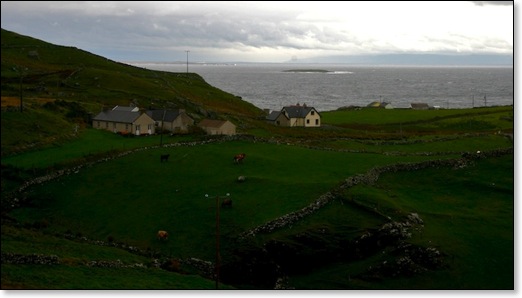
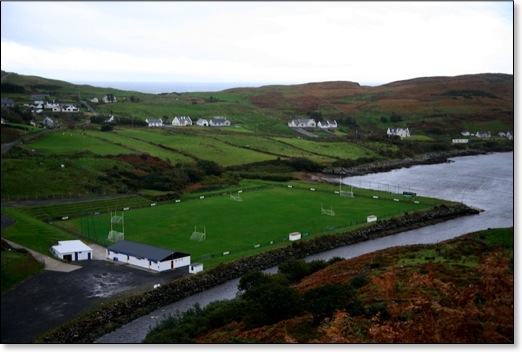
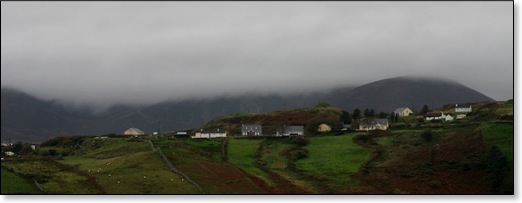
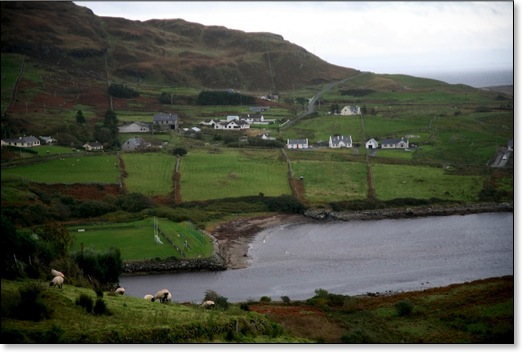
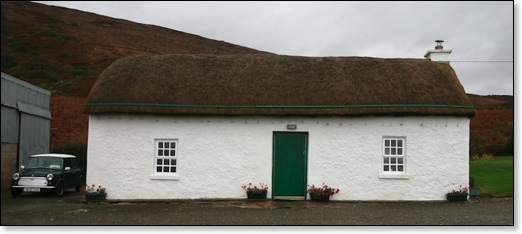
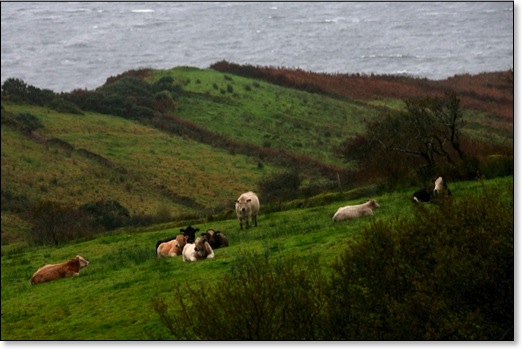
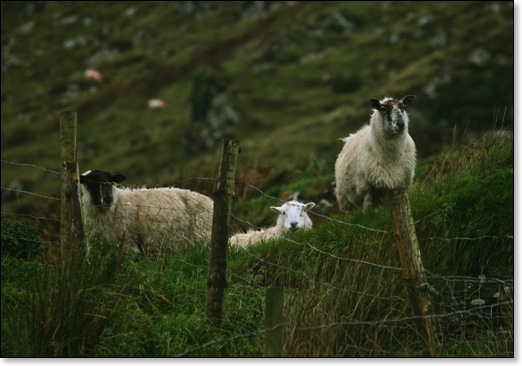
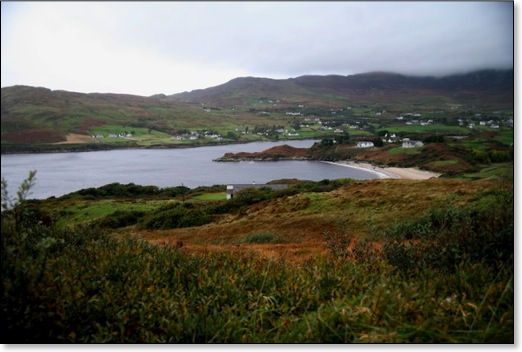
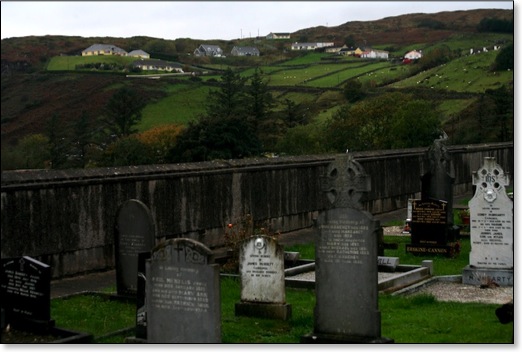
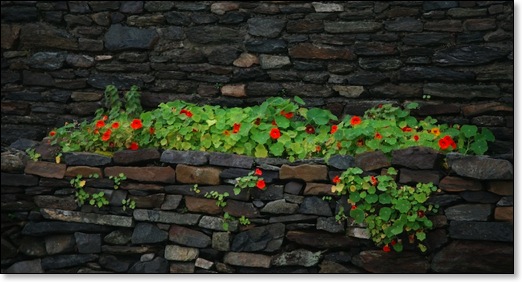
There's so much more of Donegal's fabulous sea coast to explore: I can't wait to come again to Killybegs!
The wild ocean views from the front yard were simply spectacular!
We could even see sheep grazing in their pens from the front door of our host Jillian's lovely home.
The day started well with only a few fluffy clouds in the sky, but by the time we were ready to make our way west around around the peninsula, a soft rain had begun to fall. What I soon discovered is that while it does spoil those fluffy cloud formations that look so good in landscapes, the rain –- unless is it blowing sideways into your face -- merely serves to freshen the landscape and bring out all those many shades of Irish green that you hear about in song and story. So for several hours, we drove west from ShannonBrae House through the towns of Kilcar and Carrick, photographing sheep, catttle, cottages, flowers, graveyards, and a most extraordinary football pitch (scoccer field) set directly on the doorstep of the Atlantic Ocean. What I learned during my several hours of shooting is that rain in Donegal is a gift to photographers. It simply freshens the beauty of this extraordinary stretch of County Donegal.
There's so much more of Donegal's fabulous sea coast to explore: I can't wait to come again to Killybegs!
Kicking Back in Killybegs
October/09/2008 Ireland
Journal
During our
visit in Donegal, I wanted to stay as close to the
water as we could get, and when I looked at the map
the name "Killybegs" really caught my attention.
Killybegs, I read, is a busy fishing port in an inlet
of Donegal Bay, so this seemed perfect: A town with a
great name, and an opportunity to see what life is
like in an Irish seaport.
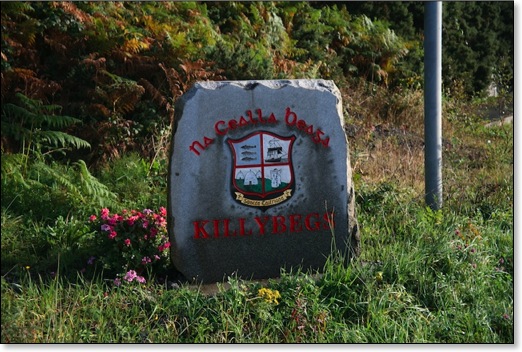
Turns out that we couldn't have made a better choice. There was lots of activity at the Killybegs Harbor, and lots of boats to see from small ocean-going craft to huge commercial fishing vessels.
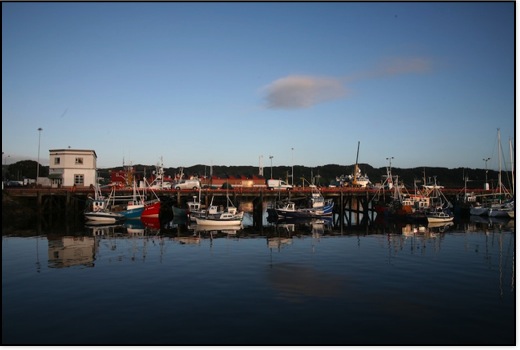
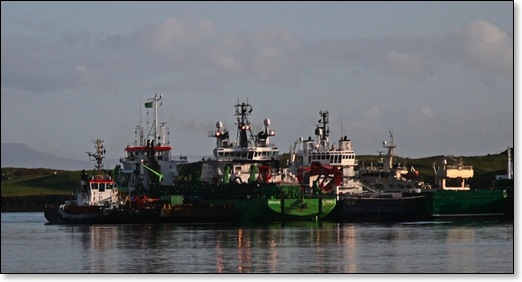
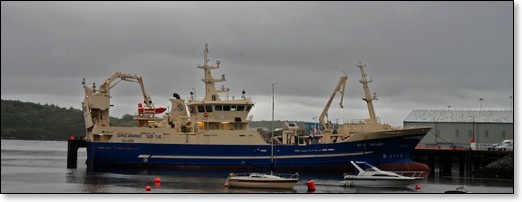
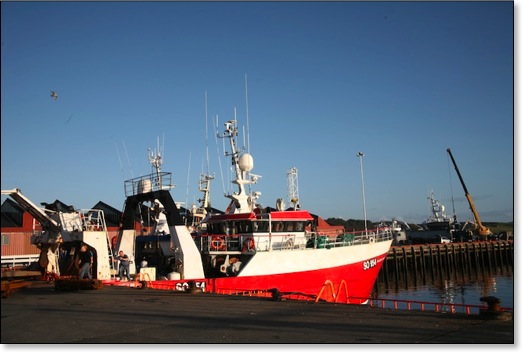
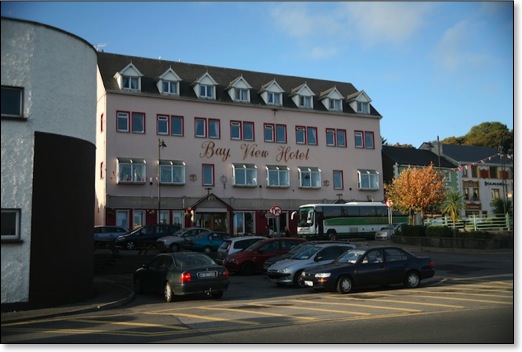
From the pub/dining room of the Bay View Hotel, we could kick back and witness life in Killybegs unfold before us.
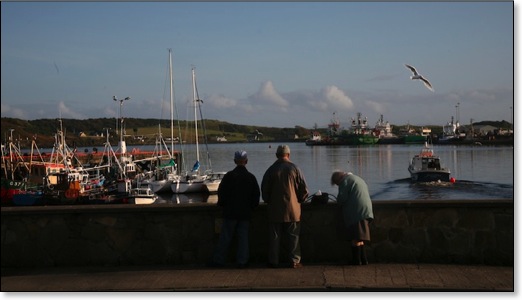
We weren't the only people kicking back in Killeybegs: This group of old friends spent hours just watching the comings and goings of the harbor. I felt that I was watching a Norman Rockwell painting coming to life!
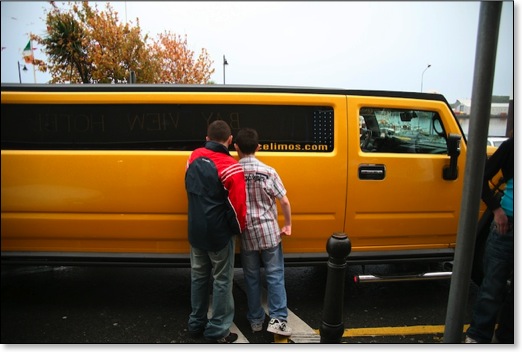
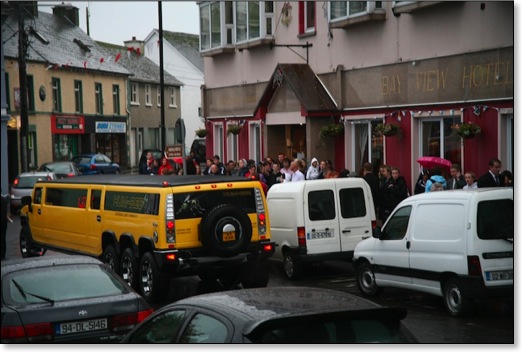
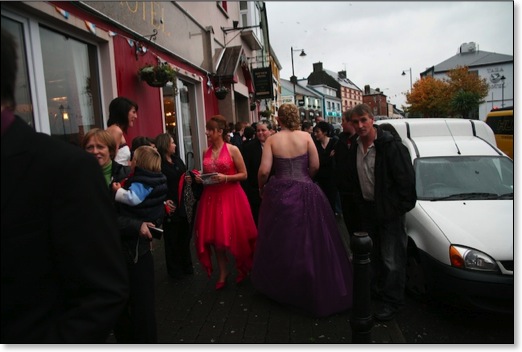
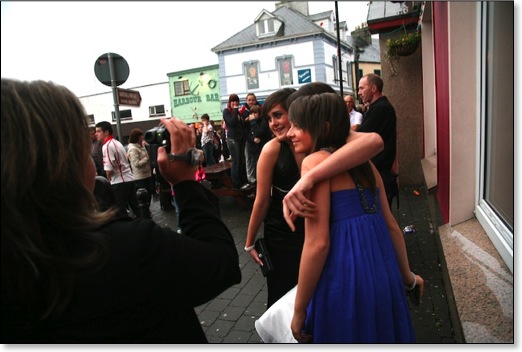
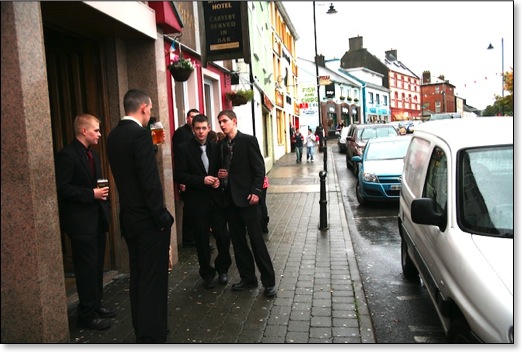
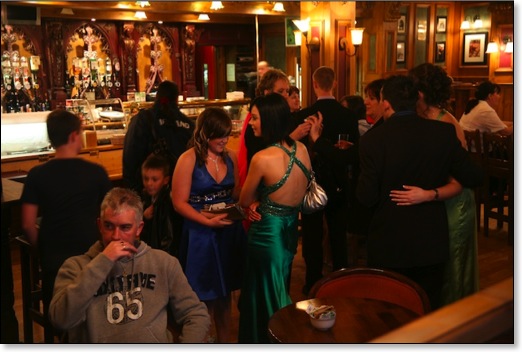
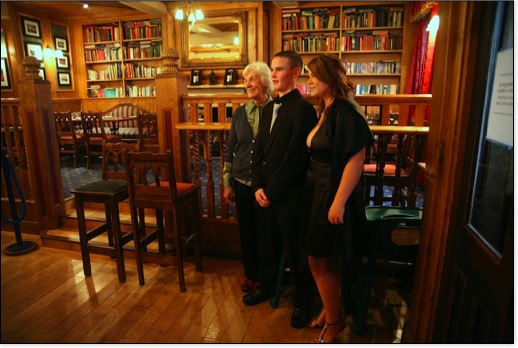
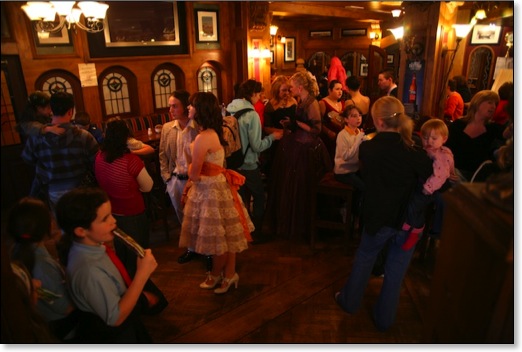
Later in the day . . . just around tea time . . . we were happily ensconced in the Bay View Hotel pub, when everything started happening at once: A Humvee stretch limo pulled up in the street, and it was immediately surrounded by kids of all ages and their families. Obviously, we wondered what was going on. Pub patrons informed us that this was the annual "Debs Dance" night, which is similar to our high school junior and senior proms. The major difference was the air of expectation as the girls and their dates, or girls in groups and guys in groups arrived . . . often with family members. I fully expected to see someone roll out a red carpet, because the scene truly did have the atmosphere of a Hollywood happening.
The crowd disbursed when it was time to head for the dance venue, but we still had enough daylight to photograph some more tranquil scenes along the harbor.
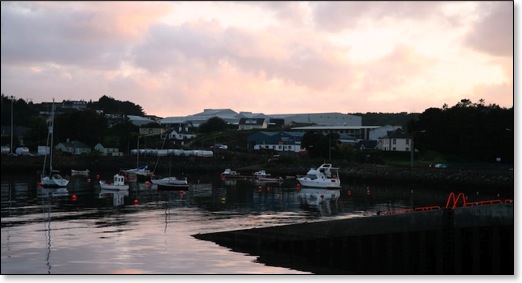
I took this one last shot as we headed back to our B&B to call it an evening. No dobut that Debs Dance was just warming up!
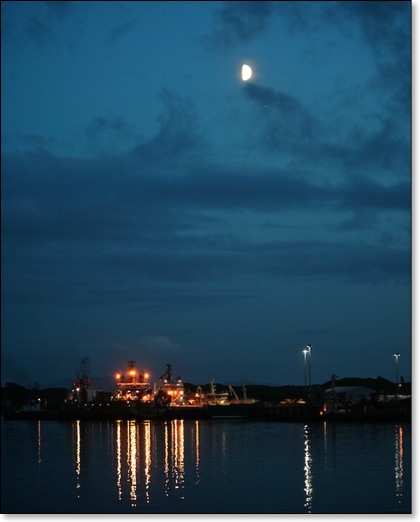
Turns out that we couldn't have made a better choice. There was lots of activity at the Killybegs Harbor, and lots of boats to see from small ocean-going craft to huge commercial fishing vessels.
From the pub/dining room of the Bay View Hotel, we could kick back and witness life in Killybegs unfold before us.
We weren't the only people kicking back in Killeybegs: This group of old friends spent hours just watching the comings and goings of the harbor. I felt that I was watching a Norman Rockwell painting coming to life!
Later in the day . . . just around tea time . . . we were happily ensconced in the Bay View Hotel pub, when everything started happening at once: A Humvee stretch limo pulled up in the street, and it was immediately surrounded by kids of all ages and their families. Obviously, we wondered what was going on. Pub patrons informed us that this was the annual "Debs Dance" night, which is similar to our high school junior and senior proms. The major difference was the air of expectation as the girls and their dates, or girls in groups and guys in groups arrived . . . often with family members. I fully expected to see someone roll out a red carpet, because the scene truly did have the atmosphere of a Hollywood happening.
The crowd disbursed when it was time to head for the dance venue, but we still had enough daylight to photograph some more tranquil scenes along the harbor.
I took this one last shot as we headed back to our B&B to call it an evening. No dobut that Debs Dance was just warming up!
Destination Donegal
October/08/2008 Ireland
Journal
Kilkenny is
located in the south east of Ireland, and when we
told some of the photographers at the IPPA Conference
in Kilkenny that we were leaving the next morning for
County Donegal, the northernmost county on the west
cost, several expressed concern about two issues: the
fact that it rains a lot in Donegal, and a concern
that we were undertaking such a lengthy trip. The
later issue was somewhat amusing to us, as a
five-hour journey is nothing much for U.S. travelers.
We made good time on the road, and the only thing
that was frustrating to me was having to miss out on
photographing a lot of beautiful scenery along the
way. But we wanted to get to our destination as early
as possible so that we could have a good look around.
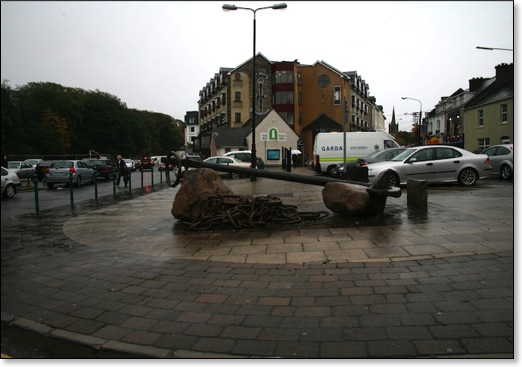
By the time we got to Donegal, sure enough it was raining. But that didn't stop our enjoyment of the town. Near the carpark (parking lot), only a block from the town square, we observed an immense anchor that honors the town's seafaring heritage.
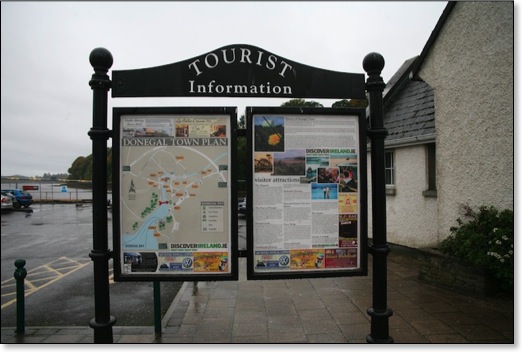
One of the nicest aspects of traveling in Ireland is the availability of tourist information posted in cities, towns, and villages. Like many seats of county government in Ireland, Donegal Town is a small town, and we could see from this sign board that it would be easy to see most of it on foot.
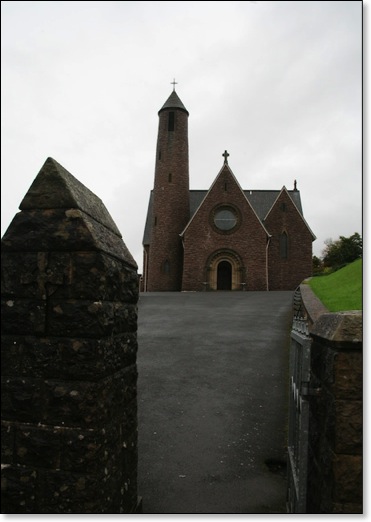
Irish churches are always interesting so we visited a few. This is St. Patrick's Church, which sits on a hill overlooking the upper main street. It was constructed from granite quarried from nearby mountains and is the main place of worship for the Catholic population of Donegal.
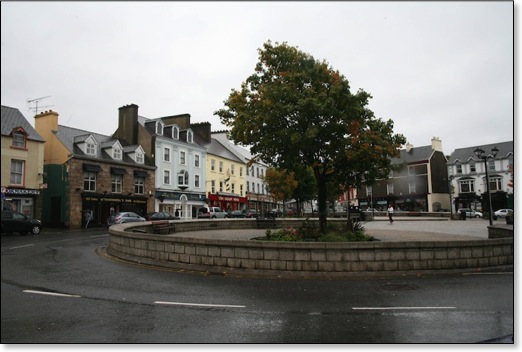
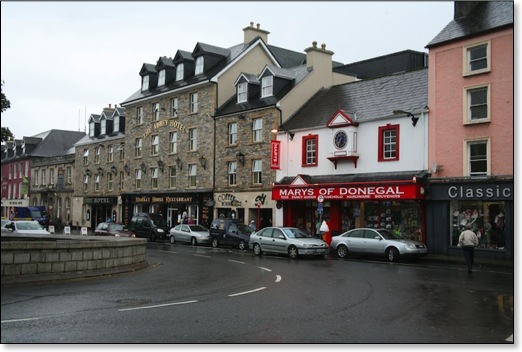
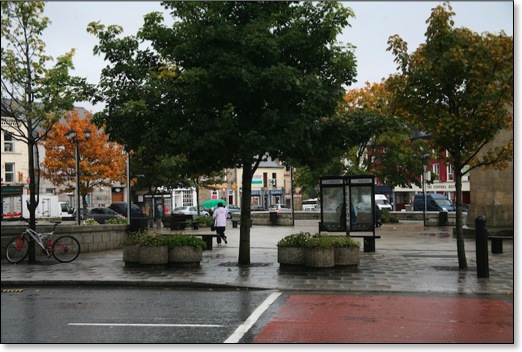
The Donegal town square is especially picturesque, and it was quite busy in spite of the rain.
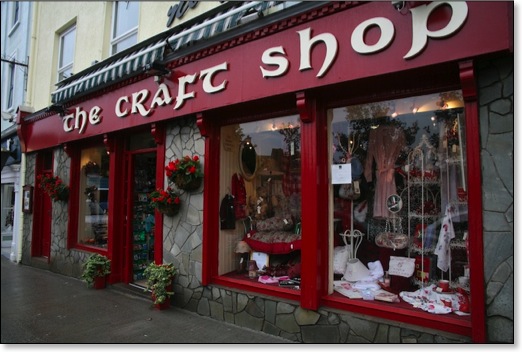
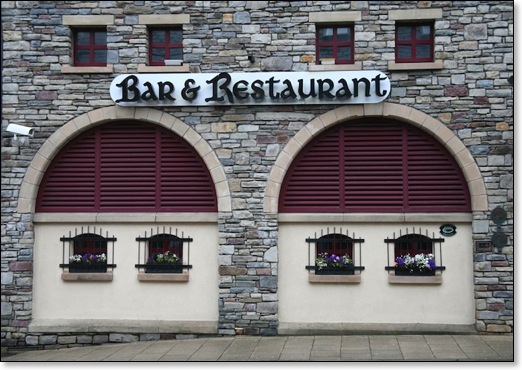
We were pleased to learn that Donegal has a wonderful castle that is undergoing restoration. Visiting castles is a delightful rainy-day activity: You learn some history, and you get some great photo ops. Donegal Castle did not disappoint!
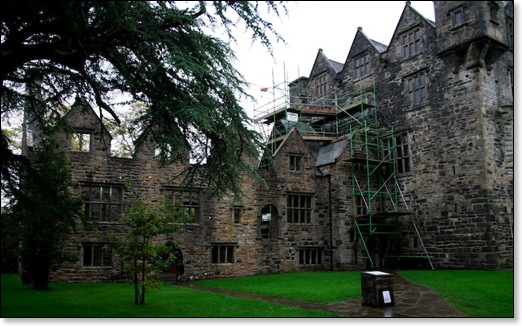
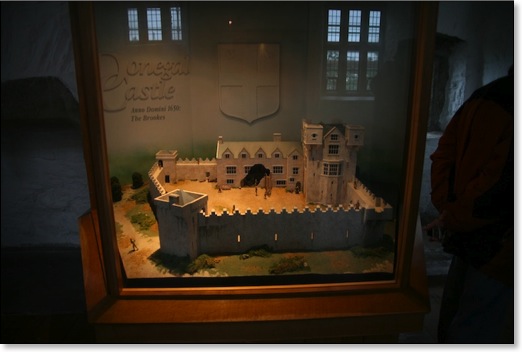
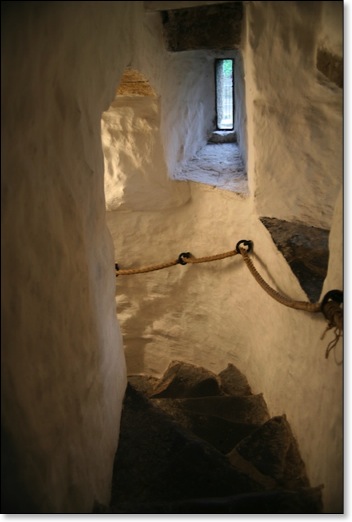
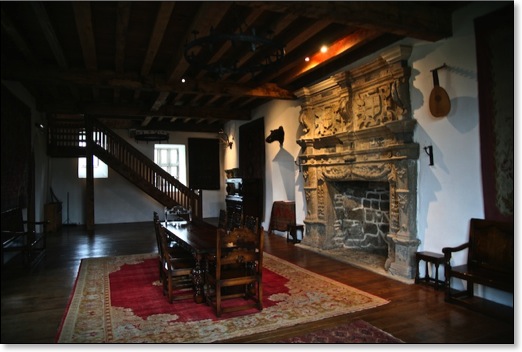
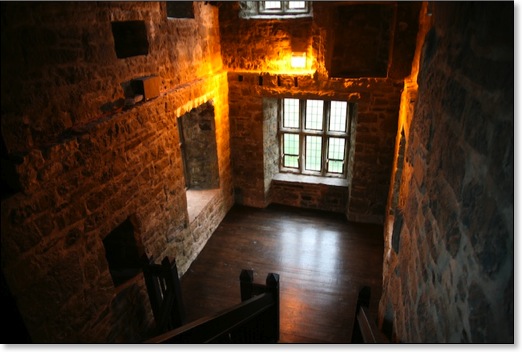
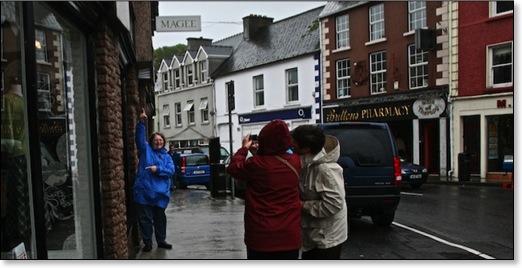
After our castle tour, we did some shopping on the town square, where I captured my favorite picture of the day: I noticed three American ladies who were quite animated in setting up a photograph, and the lady in the blue jacket was posing in a rather unusual body attitude. It took me a second to figure out what was going on. If you look closely above her head, there is a sign that reads "Magee." She is pointing to it with her right hand. Her left hand is pointing to another sign on the door that reads the same. Turns out she is an Irish-American named Magee, so she was literally pointing to her Irish heritage. Not a bad way to spend a rainy day in Donegal.
By the time we got to Donegal, sure enough it was raining. But that didn't stop our enjoyment of the town. Near the carpark (parking lot), only a block from the town square, we observed an immense anchor that honors the town's seafaring heritage.
One of the nicest aspects of traveling in Ireland is the availability of tourist information posted in cities, towns, and villages. Like many seats of county government in Ireland, Donegal Town is a small town, and we could see from this sign board that it would be easy to see most of it on foot.
Irish churches are always interesting so we visited a few. This is St. Patrick's Church, which sits on a hill overlooking the upper main street. It was constructed from granite quarried from nearby mountains and is the main place of worship for the Catholic population of Donegal.
The Donegal town square is especially picturesque, and it was quite busy in spite of the rain.
We were pleased to learn that Donegal has a wonderful castle that is undergoing restoration. Visiting castles is a delightful rainy-day activity: You learn some history, and you get some great photo ops. Donegal Castle did not disappoint!
After our castle tour, we did some shopping on the town square, where I captured my favorite picture of the day: I noticed three American ladies who were quite animated in setting up a photograph, and the lady in the blue jacket was posing in a rather unusual body attitude. It took me a second to figure out what was going on. If you look closely above her head, there is a sign that reads "Magee." She is pointing to it with her right hand. Her left hand is pointing to another sign on the door that reads the same. Turns out she is an Irish-American named Magee, so she was literally pointing to her Irish heritage. Not a bad way to spend a rainy day in Donegal.
Touring A Garden County
October/07/2008 Ireland
Journal
Before we
headed north to County Donegal, we took advantage of
our last day in Kilkenny to visit the nearby County
of Carlow, which is considered to be a garden center.
Only a few miles out of Kilkenny, we stopped to
photograph this picturesque Irish pub. We wondered if
the onwer of Paddy's Pub was actually named Paddy.
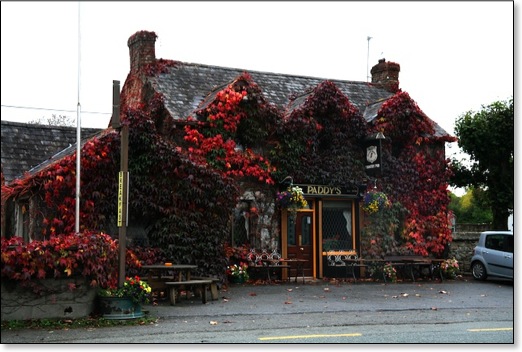
A bit further down the road we encounted this old castle wall . . .
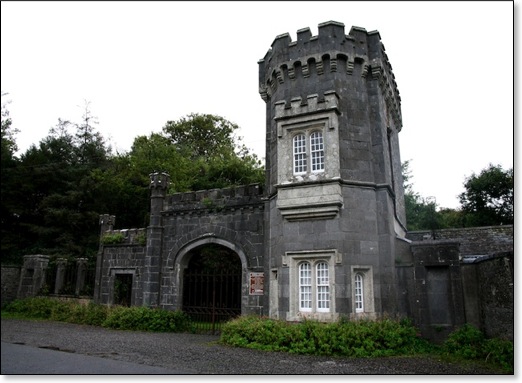
. . . and this lovely country church.
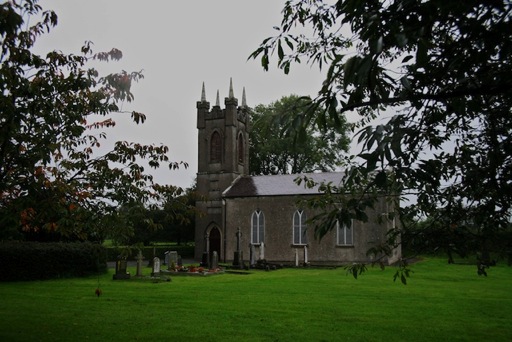
At a crossroads, we decided to investigate Leighlinbridge.
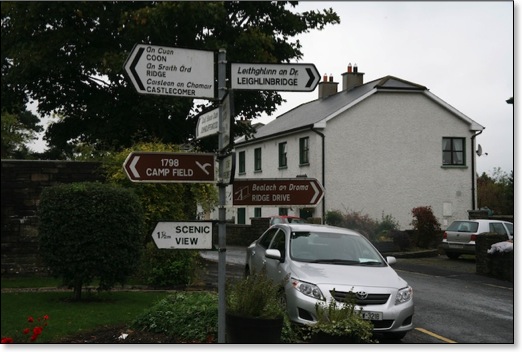
Leighlinbridge calls itself "The Garden Village," and throughout the town, flowers decorated landscapes and homes.
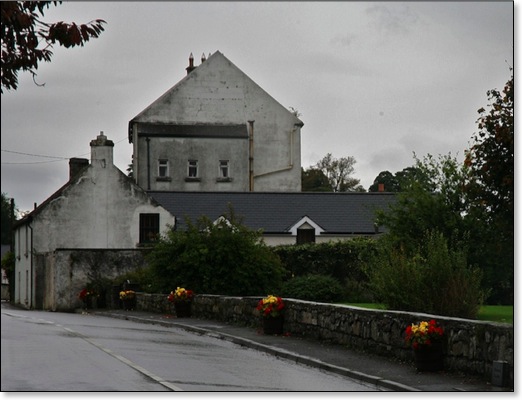
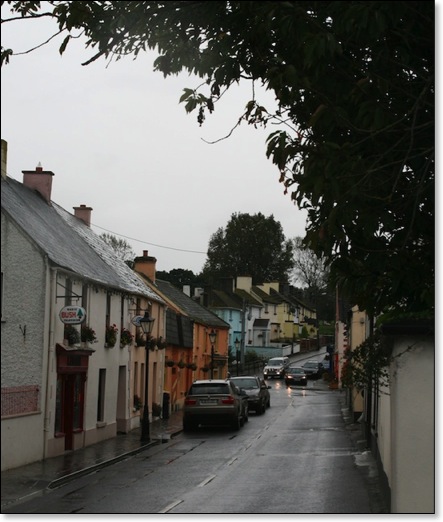
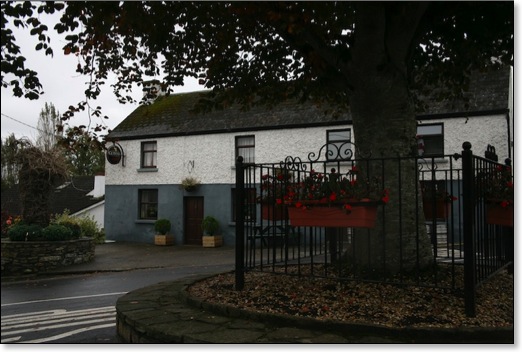
An ancient castle that once protected the town sits along side the river that runs through it.
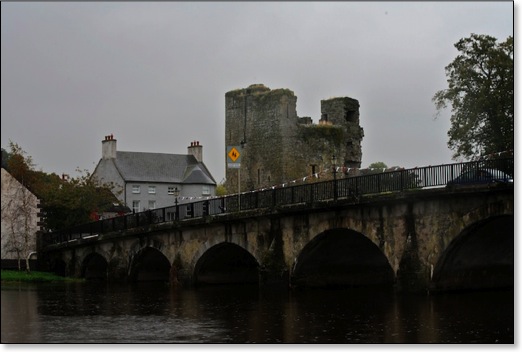
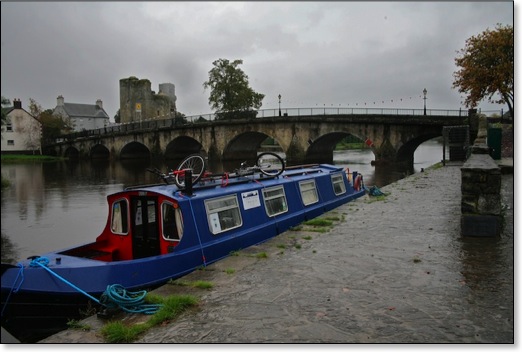
The rest of the day we drove through scenic farmlands, and I stopped to capture this picturesque farmhouse.
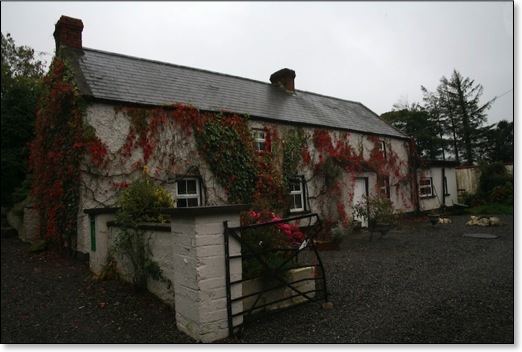
On the way back to Kilkenny, we decided to stop in at Paddy's to sample the Guiness.
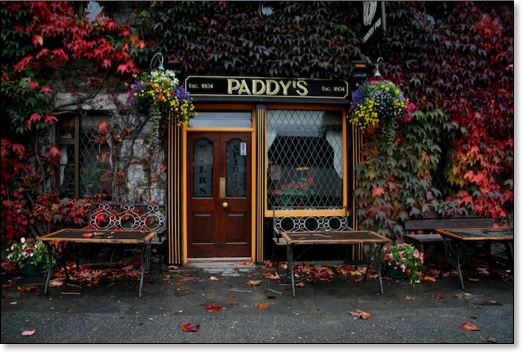
Turns out that Paddy IS the name of the pub owner, and it was as attractive on the inside as it was on the outside.
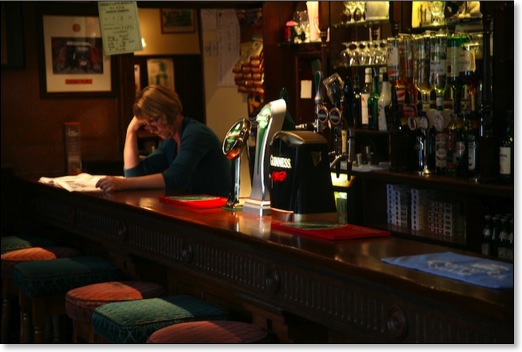
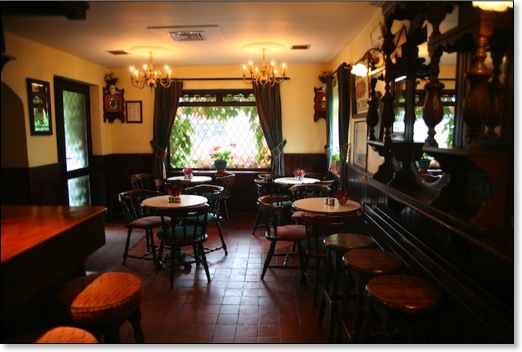
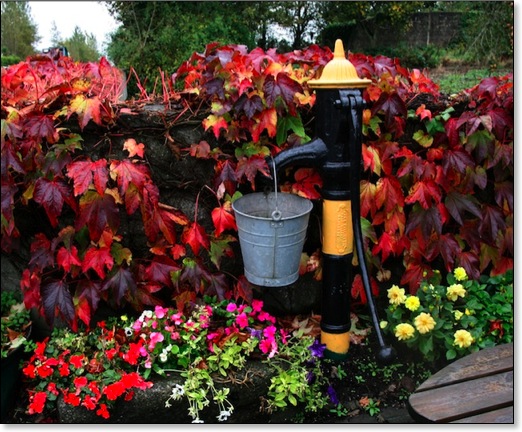
A bit further down the road we encounted this old castle wall . . .
. . . and this lovely country church.
At a crossroads, we decided to investigate Leighlinbridge.
Leighlinbridge calls itself "The Garden Village," and throughout the town, flowers decorated landscapes and homes.
An ancient castle that once protected the town sits along side the river that runs through it.
The rest of the day we drove through scenic farmlands, and I stopped to capture this picturesque farmhouse.
On the way back to Kilkenny, we decided to stop in at Paddy's to sample the Guiness.
Turns out that Paddy IS the name of the pub owner, and it was as attractive on the inside as it was on the outside.
Enjoying A Medieval Tour
October/07/2008 Ireland
Journal
Kilkenny
aptly lays claim to being Ireland's most Medieval
city. Throughout the city you see signs of antiquity.
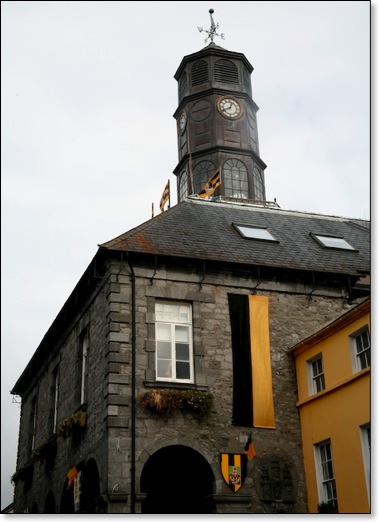
From the busy city center . . .
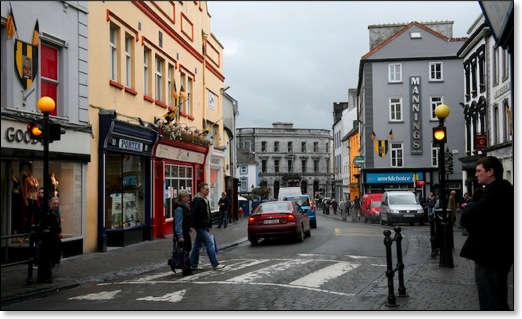
. . . to narrow alleyways.
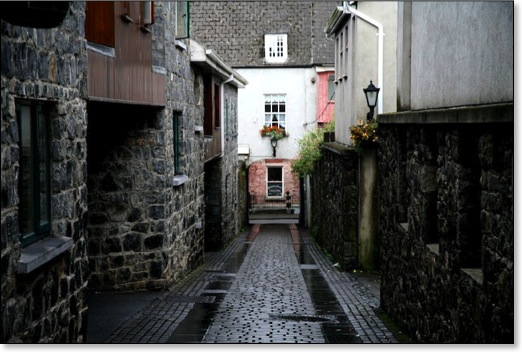
On our last trip we spent half a day touring the spectacular Kilkenny Castle, but we didn't have time to visit Rothe House, so we headed there.
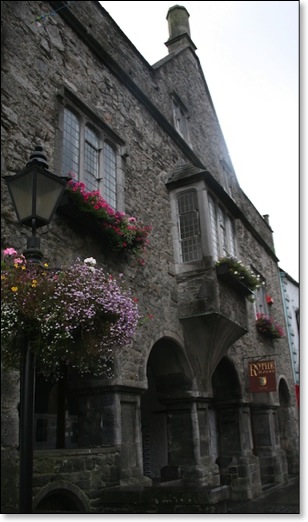
This impressive property, still undergoing restoration, was the home of a wealthy Kilkenny merchant, John Rothe and his wife, Rose Archer, and their 12 children.
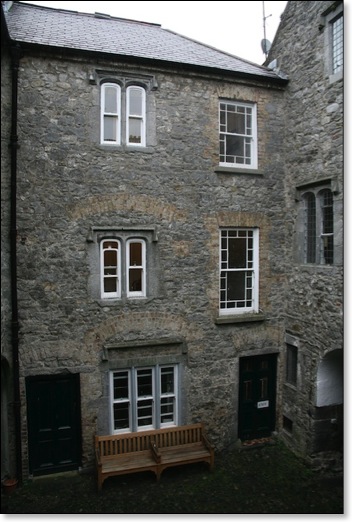
The property comprises three houses; the first one faces the street and most likely housed Rothe's bususiness on the ground floor, whle the upper floor were living and entertaining quarters.
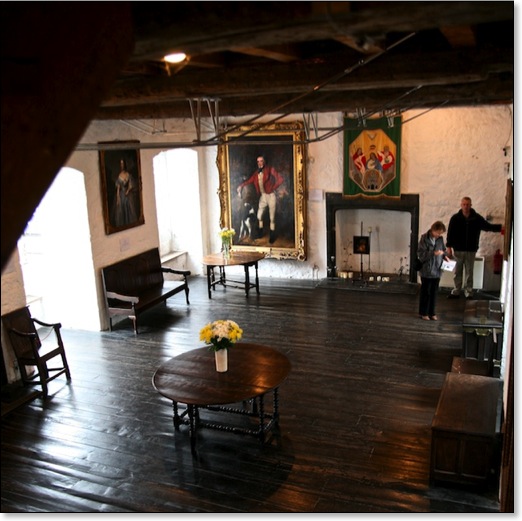
Within the last year, the Rothe Family Garden was restored to represent an early 17th century Irish merchant's urban garden.
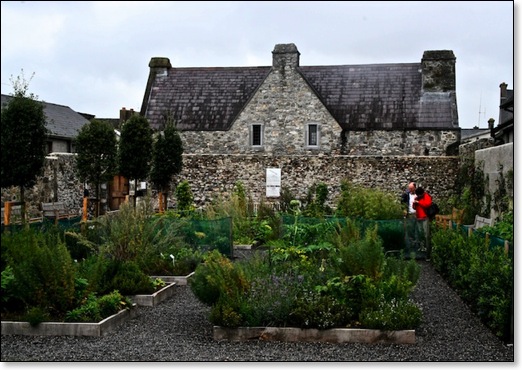
We decided to have dinner at the lovely old Hibernian Hotel, whicn Maria Dunphy had introduced us to last year. We've discovered that this particularly street corner is a great place for people watching, as there is something going on there at all times.
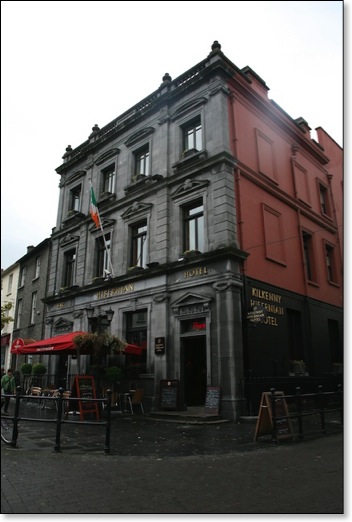
You see all means of transportation going by.
It is also a busy dog-walking corner . . .
. . . or in this case, a dog-resting corner.
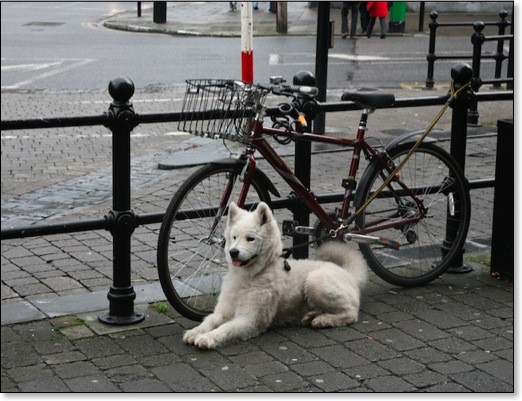
Just a moment later, we witnessed what easily could have turned into a close encounter of the canine kind.
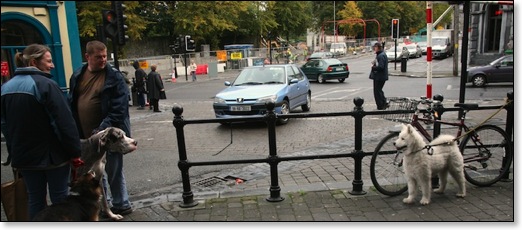
And just across the street, I couldn't believe my eyes when I saw this head pop out of a Land Rover.
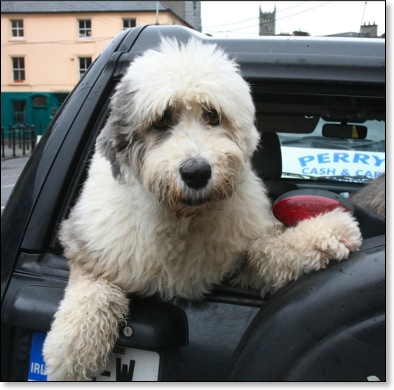
I crossed the street to get a better view . . .
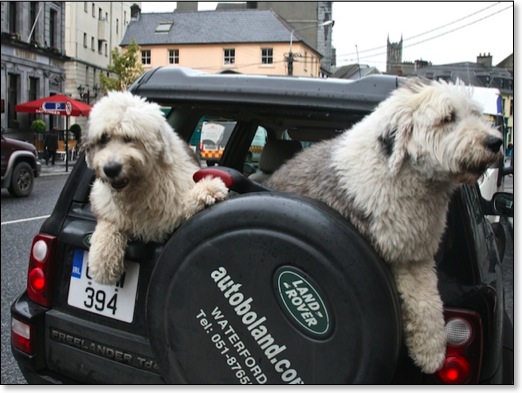
. . . and what I got was a big ruckus from a protective pal, so it was definitely time for me to move on!
From the busy city center . . .
. . . to narrow alleyways.
On our last trip we spent half a day touring the spectacular Kilkenny Castle, but we didn't have time to visit Rothe House, so we headed there.
This impressive property, still undergoing restoration, was the home of a wealthy Kilkenny merchant, John Rothe and his wife, Rose Archer, and their 12 children.
The property comprises three houses; the first one faces the street and most likely housed Rothe's bususiness on the ground floor, whle the upper floor were living and entertaining quarters.
Within the last year, the Rothe Family Garden was restored to represent an early 17th century Irish merchant's urban garden.
We decided to have dinner at the lovely old Hibernian Hotel, whicn Maria Dunphy had introduced us to last year. We've discovered that this particularly street corner is a great place for people watching, as there is something going on there at all times.
You see all means of transportation going by.
It is also a busy dog-walking corner . . .
. . . or in this case, a dog-resting corner.
Just a moment later, we witnessed what easily could have turned into a close encounter of the canine kind.
And just across the street, I couldn't believe my eyes when I saw this head pop out of a Land Rover.
I crossed the street to get a better view . . .
. . . and what I got was a big ruckus from a protective pal, so it was definitely time for me to move on!
A Conference In Kilkenny
October/06/2008 Ireland
Journal
Last October
I had the pleasure of presenting two programs at the
Irish PPA annual meeting in Athlone. Jim and I
enjoyed Ireland in October so much that we decided to
return at the same time in 2008. This would also
allow me to catch up with "The Irish Six," who had
visited with me in Illinois last April. I was eager
to hear about their progress, and Jim would finally
get to meet the four he did not know. And when we
learned that our good friends Beverly and Tim Walden
would be the featured speakers, we were delighted
with the notion of getting together with them in
Kilkenny. On the evening before the convention, here
are Jim and me with the Waldens, at left, along with
Mary McCollough, Maria Dunphy, and Robert Allen.
Maria, who lives in Kilkenny, and Bobby, who is from
Dublin, helped to organize the conference this year,
and their hard work paid off in doubling the number
who attended last year's meeting.
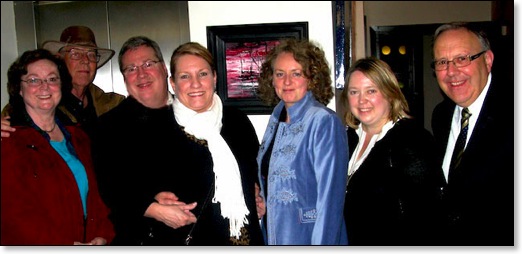
The Conference took place at the exquisite Lyrath Estate, which once belonged to an English nobleman.
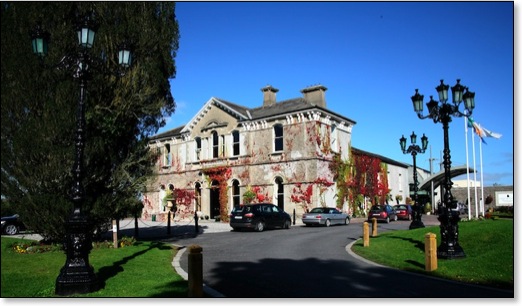
The estate, which sits on substantial acreage that includes manicured gardens, pasture land, and even a helicopter landing area, has been modernized to allow it to serve as an elegant hotel, convention center and spa.
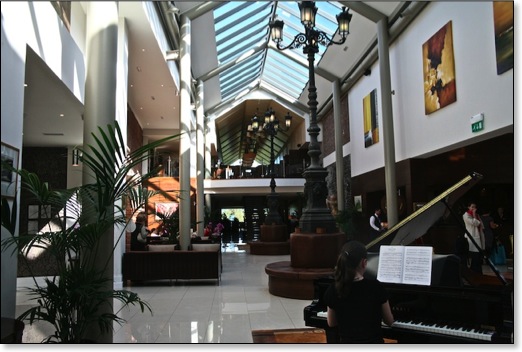
Here I am with "The Irish Six" in a quick take by Tim Walden.
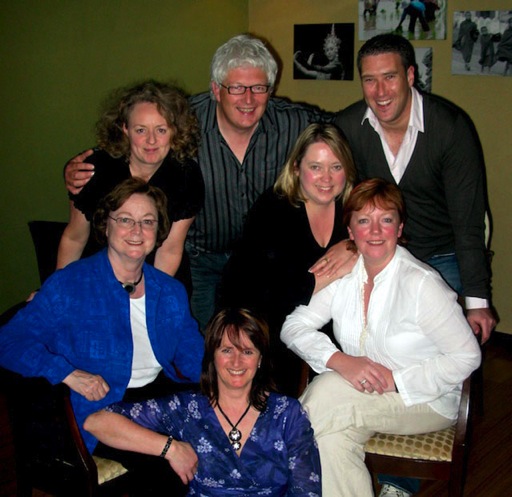
The group treated Jim and me to a wonderful Thai food dinner in the hotel, during which we got updates on everyone's progress, had quite a few laughs sharing pictures we made during last April's trip to Illinois, and took a look at new marketing materials. Beverly got a real kick out of seeing Suzanne's new fold-out business card that was created and printed at Marathon from a template that she designed for the Walden's Bellagrafica line. In the photo below, Bev and Suzanne compare their cards. What a fun reminder that Bellagrafica is international!
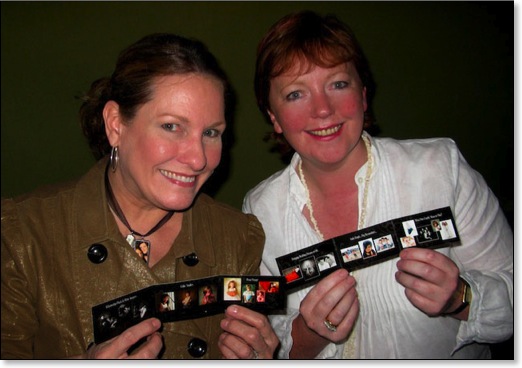
Jim felt right at home at the Lyrath Hotel, which offered a very comfortable area for smokers: The three-sided room was nicely furnished, and the open wall was a great ventilation system.
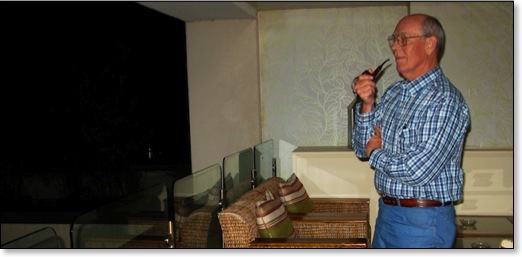
During the conference, Maria and I met at her studio to review the progress she had made in updating her business since formally taking it over from her father. Eventually the studio building will read "Maria of Kilkenny." I was delighted to see the front window filled with pet portraits Maria had created during a very successful "Dog Days of Summer" promotion. Pet photography will be a major focus of Maria's brand. You can read more about Maria and her dad in the blog entry I made on October 10, 2007, when I first visited the studio.
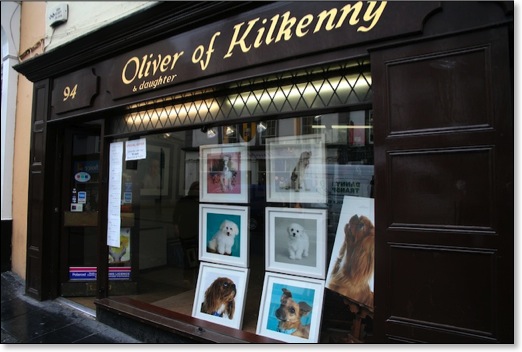
Maria is in the midst of a huge redesign of the studio space on both floors of the building. The newly covered couch and chair in the viewing area are a good indicator of the boutique feel the space will have when it is finished. I promised Maria I will return to see the new look.
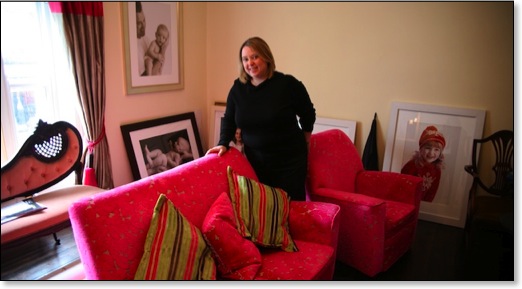
As we were leaving the studio, I noticed that the pet portrait exhibit in the studio window has been a hit with more than just human viewers!
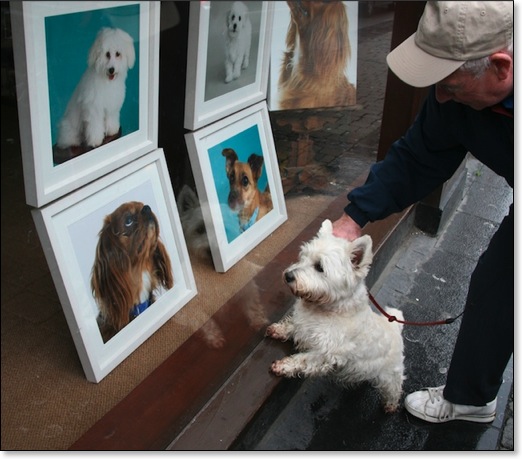
The Conference took place at the exquisite Lyrath Estate, which once belonged to an English nobleman.
The estate, which sits on substantial acreage that includes manicured gardens, pasture land, and even a helicopter landing area, has been modernized to allow it to serve as an elegant hotel, convention center and spa.
Here I am with "The Irish Six" in a quick take by Tim Walden.
The group treated Jim and me to a wonderful Thai food dinner in the hotel, during which we got updates on everyone's progress, had quite a few laughs sharing pictures we made during last April's trip to Illinois, and took a look at new marketing materials. Beverly got a real kick out of seeing Suzanne's new fold-out business card that was created and printed at Marathon from a template that she designed for the Walden's Bellagrafica line. In the photo below, Bev and Suzanne compare their cards. What a fun reminder that Bellagrafica is international!
Jim felt right at home at the Lyrath Hotel, which offered a very comfortable area for smokers: The three-sided room was nicely furnished, and the open wall was a great ventilation system.
During the conference, Maria and I met at her studio to review the progress she had made in updating her business since formally taking it over from her father. Eventually the studio building will read "Maria of Kilkenny." I was delighted to see the front window filled with pet portraits Maria had created during a very successful "Dog Days of Summer" promotion. Pet photography will be a major focus of Maria's brand. You can read more about Maria and her dad in the blog entry I made on October 10, 2007, when I first visited the studio.
Maria is in the midst of a huge redesign of the studio space on both floors of the building. The newly covered couch and chair in the viewing area are a good indicator of the boutique feel the space will have when it is finished. I promised Maria I will return to see the new look.
As we were leaving the studio, I noticed that the pet portrait exhibit in the studio window has been a hit with more than just human viewers!
A Day With the Deasys
October/05/2008 Ireland
Journal
I was really
looking forward to visiting Deasy Photographic, in
Newbridge, only a short drive from Kildare. We were
warmly greeted by Padraic and his wife, Sonia, about
whom I had heard so much during Padraic's time in
Illinois. Back in April the Deasy's youngest child
was only three-months old, but Sonia, Padraic assured
me, was busy at work at the studio while he was gone.
The fact that Sonia will give birth to their fourth
child in just six weeks from our visit wasn't slowing
her down a bit.
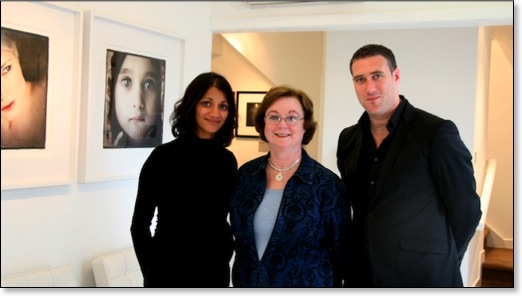
From observing Padraic's work ethic during his visit to Illinois last April, I knew he had a business that was under good control. But I was amazed at how many of the concepts he embraced during our studio visits that he had managed to implement in such a short time. As the studio website says, Deasy Photographic truly is one of Ireland's leading boutique portrait studios. What makes this so are the key elements that distinguish any well-managed boutique studio:
Classic Style - fine-art black and white relationship-style portraits.
Contemporary Style - energetic photojournalistic-style portraits.
I'm certain that you'll enjoy seeing the photography of Padraic and his associate, Richard, when you visit the studio website.
Because Deasy Photographic is doing so many things right, I want to take you on a tour of the studio. The attractive storefront is located in downtown Newbridge, in an area that enjoys a lot of foot traffic. The two-story building is much larger than it appears from the street.
The stylish gallery, just to the left of the entrance, is made even more impressive by the clever use of a mirror wall that appears to double its length.
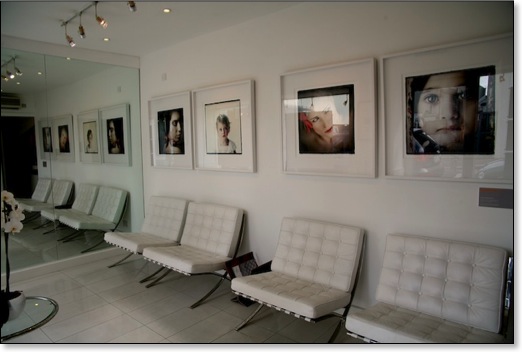
The use of contemporary white furnishings against white studio walls creates a perfect backdrop to showcase portraiture.
The reception area is just as stylish.
As you walk into the camera room, a seating area to your right is the perfect place to relax and get acquainted before the session.
The camera room itself, not surprisingly, is extremely well organized so that equipment is secondary to working with subjects.
The viewing area, which is Sonia's domain, is located on the second floor and features comfortable furniture and all the tools needed to use ProSelect efficiently.
Padraic is in the process of converting the glass on his Signature Style portraits to museum glass. I asked him to demonstrate the quality of this very pricey glass, and as you can see below, the difference is very much worth the expense.
I was also impressed by the studio's stylish packaging. The smallest package contains the studio's gift certificate, called a "voucher" here in Ireland.
In case you hadn't noticed the finishing touch of the studio's decor, it's the black clothing worn by the staff! Here's Padraic with staff members Richard and Anita.
Sonia left early so that she could finish making an incredible Indian curry meal at the Deasy home, where we were met by the rest of the family: Sofia, Matthew, and Lucy, who are featured in a collection of family portraits in the foyer. Fortunately there is plenty of room left for more portraits of the growing family. In the photo below, Sofia and Matthew proudly point to their portraits.
Here's a better view of Sofia . . .
. . . and Matthew as well.
And as you can see, Lucy even managed to charm Jim!
Finally, here's the multi-talented Sonia. It was well worth the trip over just to enjoy her fabulous meal and the great day we spent with the Deasys!
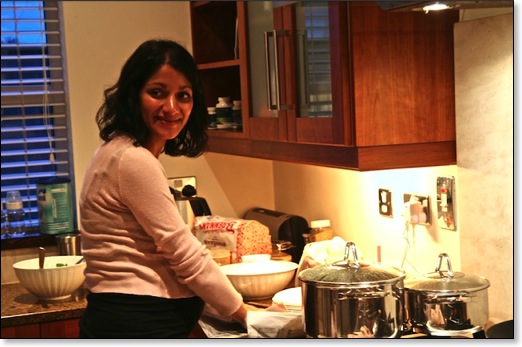
From observing Padraic's work ethic during his visit to Illinois last April, I knew he had a business that was under good control. But I was amazed at how many of the concepts he embraced during our studio visits that he had managed to implement in such a short time. As the studio website says, Deasy Photographic truly is one of Ireland's leading boutique portrait studios. What makes this so are the key elements that distinguish any well-managed boutique studio:
- A simple, easy-to-recognize business concept: specializing in top-quality family portraiture.
- A clear understanding of the target market: sophisticated families who appreciate an artistic approach to decorative photography.
- A client-education effort and selling plan: providing clients with a memorable experience and intelligently selected images.
- A well-defined style and well-developed product focus: Offering three distinctive styles:
Classic Style - fine-art black and white relationship-style portraits.
Contemporary Style - energetic photojournalistic-style portraits.
I'm certain that you'll enjoy seeing the photography of Padraic and his associate, Richard, when you visit the studio website.
Because Deasy Photographic is doing so many things right, I want to take you on a tour of the studio. The attractive storefront is located in downtown Newbridge, in an area that enjoys a lot of foot traffic. The two-story building is much larger than it appears from the street.
The stylish gallery, just to the left of the entrance, is made even more impressive by the clever use of a mirror wall that appears to double its length.
The use of contemporary white furnishings against white studio walls creates a perfect backdrop to showcase portraiture.
The reception area is just as stylish.
As you walk into the camera room, a seating area to your right is the perfect place to relax and get acquainted before the session.
The camera room itself, not surprisingly, is extremely well organized so that equipment is secondary to working with subjects.
The viewing area, which is Sonia's domain, is located on the second floor and features comfortable furniture and all the tools needed to use ProSelect efficiently.
Padraic is in the process of converting the glass on his Signature Style portraits to museum glass. I asked him to demonstrate the quality of this very pricey glass, and as you can see below, the difference is very much worth the expense.
I was also impressed by the studio's stylish packaging. The smallest package contains the studio's gift certificate, called a "voucher" here in Ireland.
In case you hadn't noticed the finishing touch of the studio's decor, it's the black clothing worn by the staff! Here's Padraic with staff members Richard and Anita.
Sonia left early so that she could finish making an incredible Indian curry meal at the Deasy home, where we were met by the rest of the family: Sofia, Matthew, and Lucy, who are featured in a collection of family portraits in the foyer. Fortunately there is plenty of room left for more portraits of the growing family. In the photo below, Sofia and Matthew proudly point to their portraits.
Here's a better view of Sofia . . .
. . . and Matthew as well.
And as you can see, Lucy even managed to charm Jim!
Finally, here's the multi-talented Sonia. It was well worth the trip over just to enjoy her fabulous meal and the great day we spent with the Deasys!
In the Heart of Irish Horse Country
October/04/2008 Ireland
Journal
In making
our plans to attend the Irish PPA meeting in
Kilkenny, where we would have a reunion with "The
Irish Six," who visited the U.S. last April, we
realized that on the way from County Tipperary we
could easily visit Padraic Deasy's studio in
Newbridge, County Kildare. The county is a center for
thoroughbred horse breeding, and at Padraic's
suggestion, we stopped to visit The Irish National Stud and
Japanese Gardens located
on 1,000 acres just outside of Kildare Town.
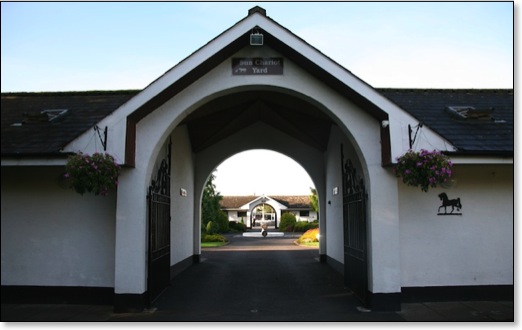
The Stud, as it is known, was established in 1900 by a wealthy Scotsman of a famous brewery family Colonel William Hall-Walker. It was signed over to the British Crown in 1915 and upon independence became the Irish National Stud, and it is where some of Ireland's best horses are conceived and cared for. You don't see many horses, however, as they are too valuable to risk being easily accessible to the public.
In addition to an interesting museum . . .
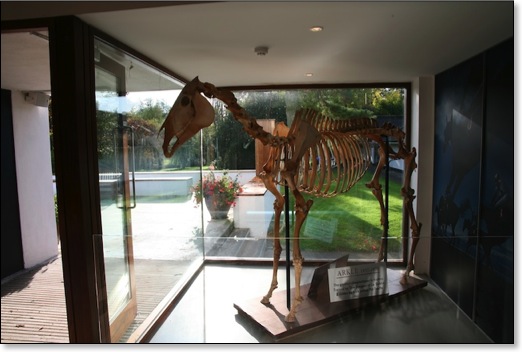
We toured the pristine box stalls, which are cleaner that some people's homes.
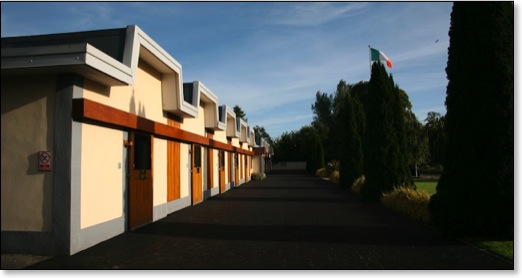
And after a short walk, we came upon one of the famous residents in a secluded paddock.
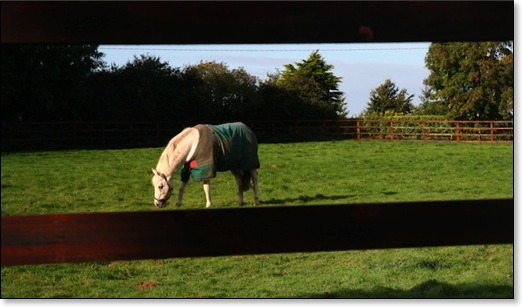
The adjoining Japanese Gardens we devised by Col. Hall-Walker and laid out by Japanese craftsman Tassa Eida and his son Minoru between the years 1906-1910. Planned to symbolize "The Life of Man," the gardens are now regarded as the finest Japanese Gardens in Europe.
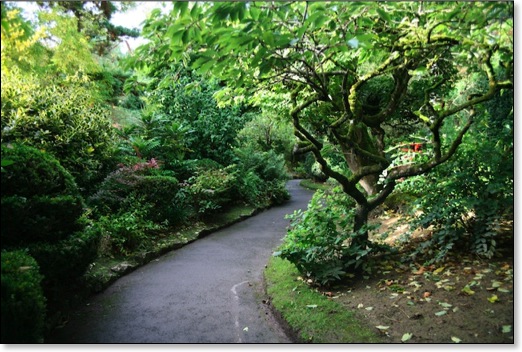
The gardens were, in fact, so beautiful that I made far too many pictures that will require a serious editing job. One of my favorites is this photograph of Jim in one of the garden's rock structures.
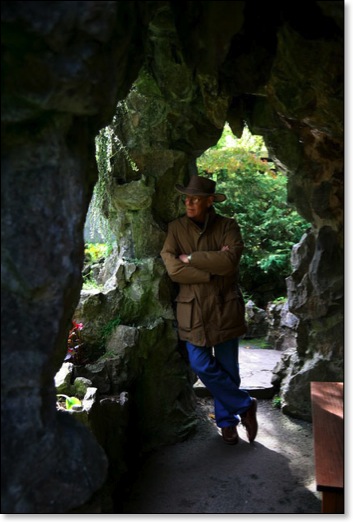
Several ponds and tributaries are filled with ducks and swans. As colorful as these surroundings are, my favorite swan photo is the monochromatic image below.
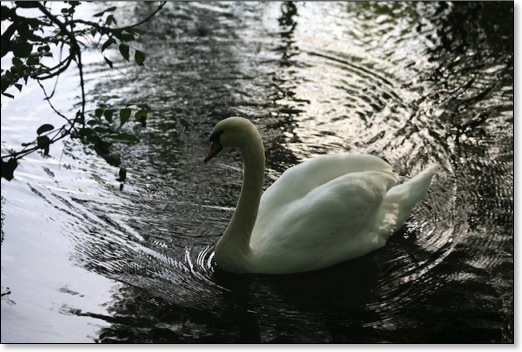
The Stud, as it is known, was established in 1900 by a wealthy Scotsman of a famous brewery family Colonel William Hall-Walker. It was signed over to the British Crown in 1915 and upon independence became the Irish National Stud, and it is where some of Ireland's best horses are conceived and cared for. You don't see many horses, however, as they are too valuable to risk being easily accessible to the public.
In addition to an interesting museum . . .
We toured the pristine box stalls, which are cleaner that some people's homes.
And after a short walk, we came upon one of the famous residents in a secluded paddock.
The adjoining Japanese Gardens we devised by Col. Hall-Walker and laid out by Japanese craftsman Tassa Eida and his son Minoru between the years 1906-1910. Planned to symbolize "The Life of Man," the gardens are now regarded as the finest Japanese Gardens in Europe.
The gardens were, in fact, so beautiful that I made far too many pictures that will require a serious editing job. One of my favorites is this photograph of Jim in one of the garden's rock structures.
Several ponds and tributaries are filled with ducks and swans. As colorful as these surroundings are, my favorite swan photo is the monochromatic image below.
A Visit With Mary In Clare And Tipparary
October/03/2008 Ireland
Journal
Before
leaving for Ireland, we arranged to meet Mary
McCollough just after we landed in Shannon in the
nearby town of Ennis, which has become our usual
breakfast stop, since a 7:00 P.M. flight out of
Newark arrives in Shannon at 7:00 A.M. I absolutely
love the atmosphere of this wonderful market town in
County Clare. With its narrow streets and quaint
shops throughout, I was not surprised to learn that
Ennis was named by the International Project for
Public Spaces as one of the World's Top 60 Great
Places to Visit.
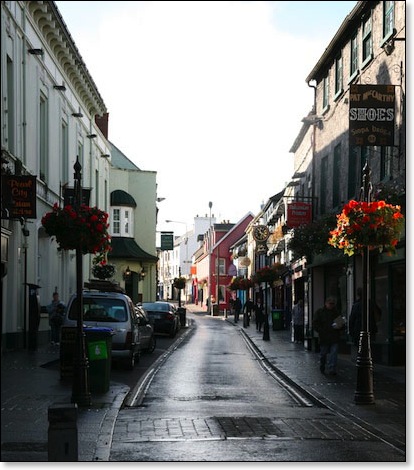
Although Mary lives in the County Tipperary town of Nenagh, where she operates Source Photography as an on-location business, she is considering the possibility of opening a storefront studio in Ennis, which is not a long drive from her home. After breakfast at the Old Ground Hotel, which is the site of Jim's favorite Ennis pub, we visited several possible locations for Mary's business, including the one shown below, where I photographed Mary and Jim.
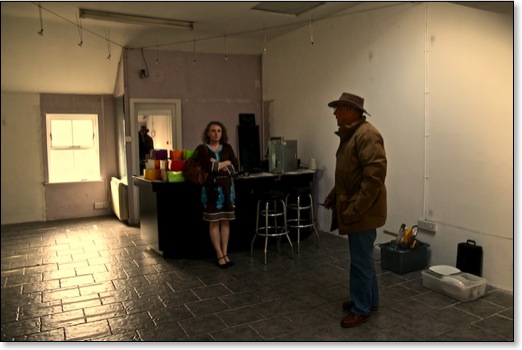
Later, when we arrived in County Tipperary, Mary showed us the lovely little country village, Ballycommon, where she was born. When I say Ballycommon is little, I mean it: Driving on the road to the village, we came upon this beautiful house, which happens to be where Mary's sister lives. It is located at the beginning of the town. After passing three or more houses, we were out of Ballycommon!
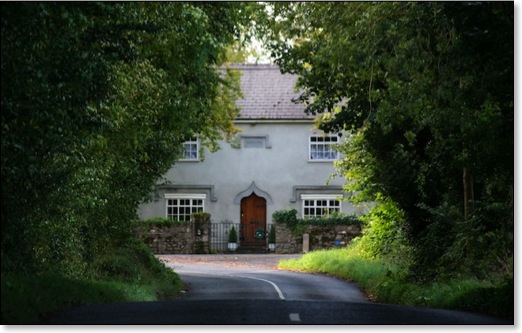
Just before closing time, we stopped at the delightfully colorful John Hanly & Co., a woolen mill near Ballycommon that has been in operation since 1893.
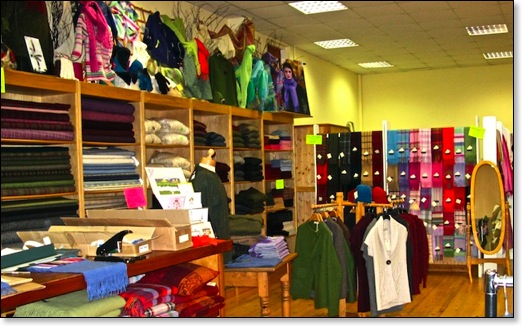
From the mill, we drove on to the darling town of Garrykennedy, which dates back to the Norman era, and where there were lots of picturesque scenes to photograph . . .
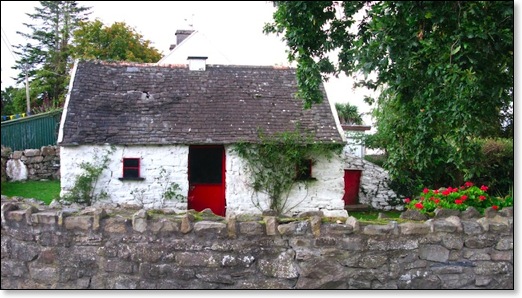
. . . including the tiny harbor on the lovely Lough Derg, which was a stone's throw from the cozy pub where we had dinner.
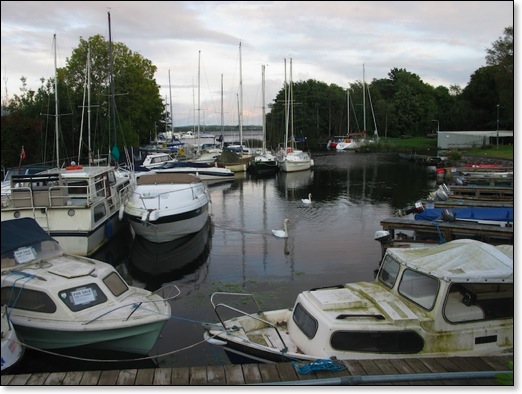
Larkins is owned by a friend of Mary's, and it was the perfect place to dine on our first night in Ireland.
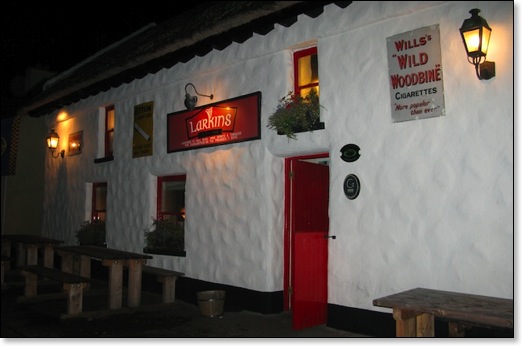
I love to eat at pubs or to just sit for a while and enjoy the congenial atmosphere . . . as well as the occasional pint.
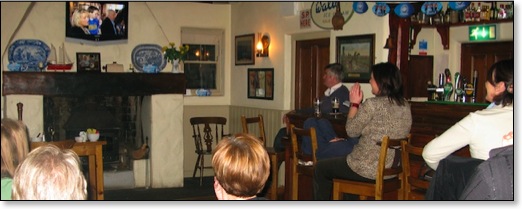
The next day we met Mary in her home town of Nenagh, which is one of two county seats in County Tipperary.
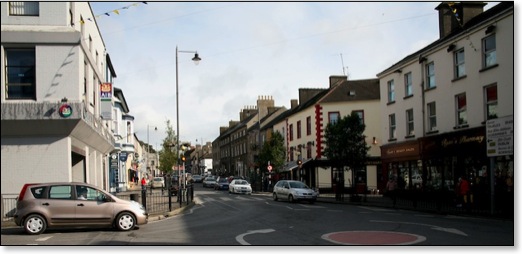
Here she is in front of a display of her photography above the coffee bar in a large local bookstore owned by a friend. I've found that Irish photographers do a much better job of networking with their friends and neighbors than American photographers do. It seems to come naturally in Ireland.
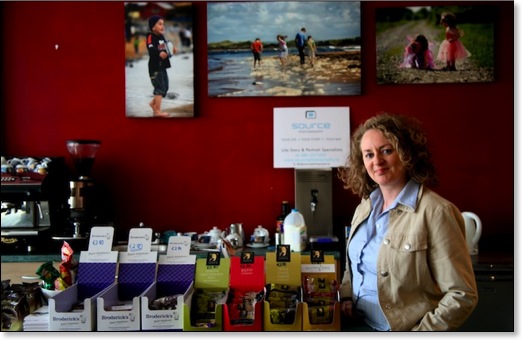
We had particularly nice accommodations for our two-day stay in County Tipperary. By sheer happenstance, Jim booked a room at Otway Lodge in the small country village of Dromineer, also on the shore of Lough Derg. When Mary found out where we we staying, she said this would be our first experience that proves what a small world Ireland is. Turns out the Lodge, shown below, is owned by her sister-in-law Ann, and her husband Frank!
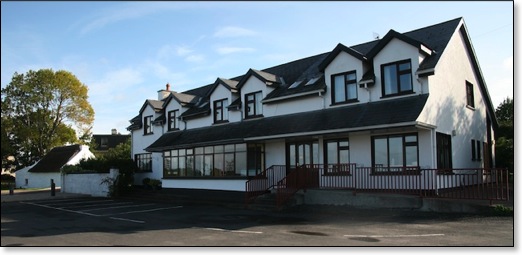
Here's a view of the lake, which is only a few steps from Otway Lodge.
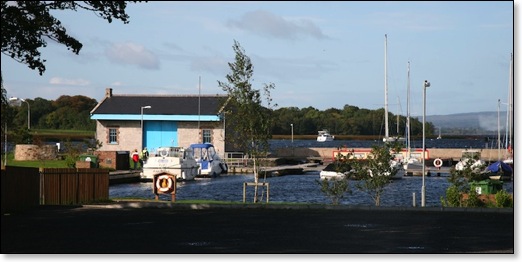
A charming thatched-roof cottage adjoins the Lodge grounds . . .
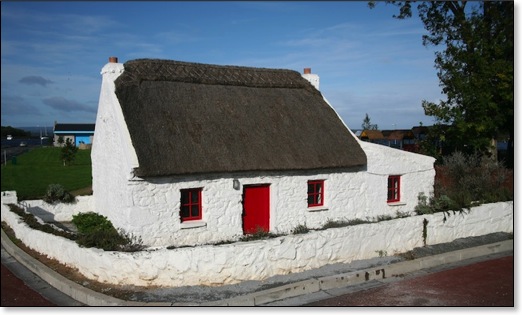
. . . and only a few yards away, you'll find the ruins of a castle that dates back to the 13th century.
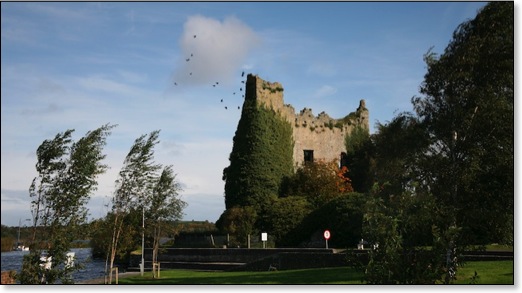
Leaving Dromineer, we started on our way east to County Kildare. At Mary's suggestion, we stoped in the small town of Roscrea, to visit the studio of Brian Redmond. Mary's first job in photography was with Brian, whom she was eager for us to meet. Here's a view of Roscrea.
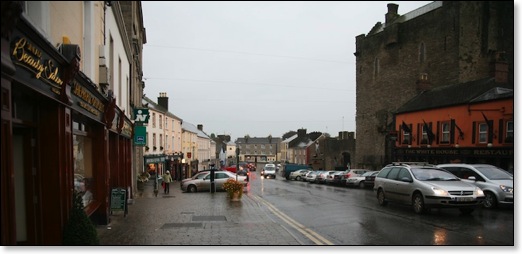
Brian has a beautiful store-front studio on a main street.
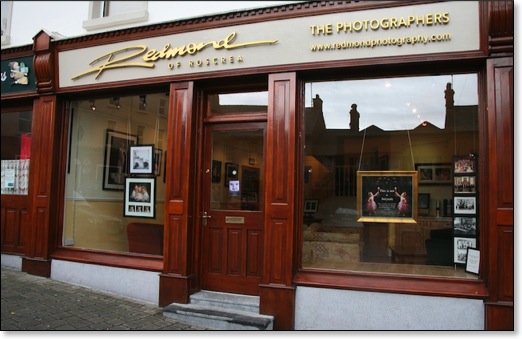
We were fortunate to find him in, and he very kindly offered us a tour of his beautifully organized studio. We learned that Brian has been in the business of photography as long as we have, and we really enjoyed seeing his outstanding blend of classic and contemporary photography. Take a minute to visit his website, because I'll bet that you'll particularly enjoy taking a peek at some charming Irish weddings through Brian's lens.
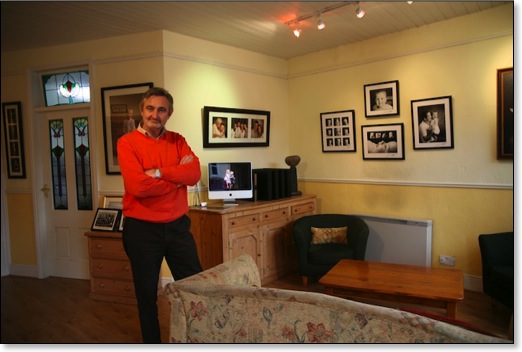
Although Mary lives in the County Tipperary town of Nenagh, where she operates Source Photography as an on-location business, she is considering the possibility of opening a storefront studio in Ennis, which is not a long drive from her home. After breakfast at the Old Ground Hotel, which is the site of Jim's favorite Ennis pub, we visited several possible locations for Mary's business, including the one shown below, where I photographed Mary and Jim.
Later, when we arrived in County Tipperary, Mary showed us the lovely little country village, Ballycommon, where she was born. When I say Ballycommon is little, I mean it: Driving on the road to the village, we came upon this beautiful house, which happens to be where Mary's sister lives. It is located at the beginning of the town. After passing three or more houses, we were out of Ballycommon!
Just before closing time, we stopped at the delightfully colorful John Hanly & Co., a woolen mill near Ballycommon that has been in operation since 1893.
From the mill, we drove on to the darling town of Garrykennedy, which dates back to the Norman era, and where there were lots of picturesque scenes to photograph . . .
. . . including the tiny harbor on the lovely Lough Derg, which was a stone's throw from the cozy pub where we had dinner.
Larkins is owned by a friend of Mary's, and it was the perfect place to dine on our first night in Ireland.
I love to eat at pubs or to just sit for a while and enjoy the congenial atmosphere . . . as well as the occasional pint.
The next day we met Mary in her home town of Nenagh, which is one of two county seats in County Tipperary.
Here she is in front of a display of her photography above the coffee bar in a large local bookstore owned by a friend. I've found that Irish photographers do a much better job of networking with their friends and neighbors than American photographers do. It seems to come naturally in Ireland.
We had particularly nice accommodations for our two-day stay in County Tipperary. By sheer happenstance, Jim booked a room at Otway Lodge in the small country village of Dromineer, also on the shore of Lough Derg. When Mary found out where we we staying, she said this would be our first experience that proves what a small world Ireland is. Turns out the Lodge, shown below, is owned by her sister-in-law Ann, and her husband Frank!
Here's a view of the lake, which is only a few steps from Otway Lodge.
A charming thatched-roof cottage adjoins the Lodge grounds . . .
. . . and only a few yards away, you'll find the ruins of a castle that dates back to the 13th century.
Leaving Dromineer, we started on our way east to County Kildare. At Mary's suggestion, we stoped in the small town of Roscrea, to visit the studio of Brian Redmond. Mary's first job in photography was with Brian, whom she was eager for us to meet. Here's a view of Roscrea.
Brian has a beautiful store-front studio on a main street.
We were fortunate to find him in, and he very kindly offered us a tour of his beautifully organized studio. We learned that Brian has been in the business of photography as long as we have, and we really enjoyed seeing his outstanding blend of classic and contemporary photography. Take a minute to visit his website, because I'll bet that you'll particularly enjoy taking a peek at some charming Irish weddings through Brian's lens.
Off To Ireland!
October/01/2008 Ireland
Journal
If you have
read this blog for more than a year, you'll know that
Jim's and my favorite place to visit is Ireland, and
this year I was able to convince him to spend three
weeks there. I am amazed at how many people have told
me that they enjoyed reading my entries from our
visit to Ireland last year, so I'm going to try to
keep the journal going.
Of special interest this year is that we will be visiting with the great group of friends who came to be known as the "Irish 6." They are the six Irish photographers who met me in Chicago last April to do some marketing and management studies and to visit several boutique studios in Illinois. Most of my April 2008 blog entries tell the story of their visit. We'll be reuniting at the Irish PPA Conference in Kilkenny, where the headline speakers will be Beverly and Tim Walden. How fun it will be to meet up with my teaching buddies in Ireland!
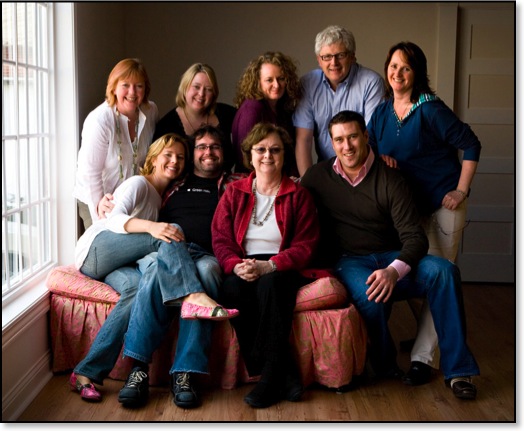
Here are the "Irish 6" together last April, along with Jed and Vicki Taufer (first row left) in a camera room at V Gallery, which the Taufers so kindly let us use for our classroom time. Seated next to me is Padraic Deasy, and from left to right standing are: Susan Toal, Maria Dunphy, Mary McCoullough, Donal O'Connell, and Frances Muldoon. Although we had way more than our share of laughs during their visit, each member of The Six was serious about accomplishing a lot, and they left with some very impressive plans. Happily, Jim's and my itinerary will take us to four of the group's home towns, so I'll be able to see for myself. I'm hopeful that I will have Internet connections along the way, so that I can keep up. And this year, since Jim and I will be covering more ground and visiting more photographers, I hope you'll come along for the ride!
Of special interest this year is that we will be visiting with the great group of friends who came to be known as the "Irish 6." They are the six Irish photographers who met me in Chicago last April to do some marketing and management studies and to visit several boutique studios in Illinois. Most of my April 2008 blog entries tell the story of their visit. We'll be reuniting at the Irish PPA Conference in Kilkenny, where the headline speakers will be Beverly and Tim Walden. How fun it will be to meet up with my teaching buddies in Ireland!
Here are the "Irish 6" together last April, along with Jed and Vicki Taufer (first row left) in a camera room at V Gallery, which the Taufers so kindly let us use for our classroom time. Seated next to me is Padraic Deasy, and from left to right standing are: Susan Toal, Maria Dunphy, Mary McCoullough, Donal O'Connell, and Frances Muldoon. Although we had way more than our share of laughs during their visit, each member of The Six was serious about accomplishing a lot, and they left with some very impressive plans. Happily, Jim's and my itinerary will take us to four of the group's home towns, so I'll be able to see for myself. I'm hopeful that I will have Internet connections along the way, so that I can keep up. And this year, since Jim and I will be covering more ground and visiting more photographers, I hope you'll come along for the ride!
Lies, Damn Lies, And Accounting
October/01/2008 Financial
Management
They call it
the Doctrine of Unintended Consequences . . . an
action taken to improve a perceived problem, but
which, when implemented, creates a problem as bad or
worse than the original difficulty.
A perfect example of this doctrine at work can help to shed light on the current U.S. financial crisis. It involves a little-understood and badly under-reported accounting rule that was put in place in the wake of the Enron Corporation scandal of 2001. Enron, the Houston, Texas, energy giant collapsed like a house of cards when it was revealed that the company had used a questionable accounting scheme to grossly inflate the asset value of its holdings. The collapse left Enron's huge workforce unemployed, numerous members of its senior management charged with felonies, and countless stockholders bereft of their life's savings. The scandal also brought down the venerable Arthur Anderson accounting firm, which was deamed complicit in the scandal by failing to live up to its audit responsibility of protecting stockholders and the public from the devastating financial fiasco.
In the wake of Enron, the Federal Securities and Exchange Commission sought to make the asset value of securities more transparent to stockholders by tightening “Mark-to-Market” accounting standards so that balance sheet assets reflect their current market rather than the price at which these assets were purchased. Clearly the SEC's motive was well-intentioned.
However, in the opinion of numerous economists, the adjustment of these rules is directly related to the current crisis that sent Secretary of the Treasury Henry Paulson with his hat in hand to the Congress in search of what the media and others have dubbed as a Wall Sreet “bailout," designed to remedy the financial chaos that began when real estate markets faltered, followed by failures and/or mergers of major lending institutions. Faced with “restating” the balance sheet value of their mortgage-backed securities at the close of the 3rd fiscal quarter on September 30, firms holding significant shares of these “toxic” securities, saw their ability to borrow money dry up overnight because their asset value was now considered unknown. With the Stock Market in free fall and sources of credit becoming non-existent, the entire economy was said by Paulson, as well as an impressive variety of economic personages, was on the verge of collapse.
Is it possible that such a well-intentioned, yet little-understood, accounting rule alone could be responsible for as much as 70% of the grotesque financial crisis that had delivered the U.S. financial system to such a state of calamity? That's what a host of well-respected free-market economists believe.
Here’s an example of how the Mark-to-Market rules could throw a business into chaos. Suppose that you borrow money to purchase a sizable inventory of products at a set price, and you plan to sell these products at a profit over the next few years. But what if your ability to sell them is governed by an accounting rule that says that if you have one bad sale, you must then mark down the price of the rest of your inventory to match that bad sale . . . say two or three times below what you paid for it. Obviously you would have a liquidity problem, especially if your lender decided to call in your loan. Your products might still be sold at a profitable markup, but your are helpless to do so because of you must “mark” it to the “market” value of your most recent sale rather than keep it at it's purchased value because you plan to hold it until such time as the current downturn is over.
If not the entire reason for the September 2008 meltdown, the arguments posed that the Mark-to-Market rule is at least the proximate cause are fairly persuasive. They suggest that the chairman of the SEC could act to ease the rule so that a $700 billion rescue bill would not be needed . . . or at least not at that high a level of bailout. If you want to read more about the argument behind this point of view, click here and click here.
To learn more about an opposing point of view that argues for keeping the Mark-to-Marketing rule in place, click here.
My concern about the current "rescue" bill that is being cobbled together by Congress is that in its haste to solve this financial crisis, the Doctrine of Unintended Consequences will rear its ugly head at an undetermined future hour. Who knows what type of crisis it might precipitate.
In the meantime, I hope that photographers might take a moment to reflect about what accounting means in their businesses. I find that most photographers will do almost anything to avoid looking at and understanding their numbers.
If we learn anything from the current US fiscal crisis I hope it is this: Numbers have meaning that can illuminate or obscure what you need to know about your financial position. I love the statement that was popularized by Mark Twain: "There are three kinds of lies: lies, damned lies, and statistics." The statement refers to the persuasive power of numbers, the use of statistics to bolster weak arguments, and the tendency of people to reject statistics that do not support their positions. The same can be said for accounting. Because the numbers that constitute business accounting can be arranged in different ways, they, too, can be manipulated or rearranged to achieve a desired result.
Most of financial reports that photographers receive from their accountants are Income/Expense statements generated for the purpose of tax filings, and they are virtually useless for formulating meaningful business strategies. However, the same numbers can be rearranged into a "Managerial" report (see SuccessWare I/E report computer screen below) that will allow you to understand your financial position on a daily basis, while providing additional information that will help you to manage your business with precision. More and more photographers are mastering this common-sense form of accounting that is far easier to understand than tax accounting. Ultimately this knowledge is the first step toward creating a better lifestyle for photographers. So I'm hopeful that the current economic crisis will have the happy unintended consequence of making photographers more interested in not only what went wrong with the U.S. banking system, but also what's going on with their businesses.
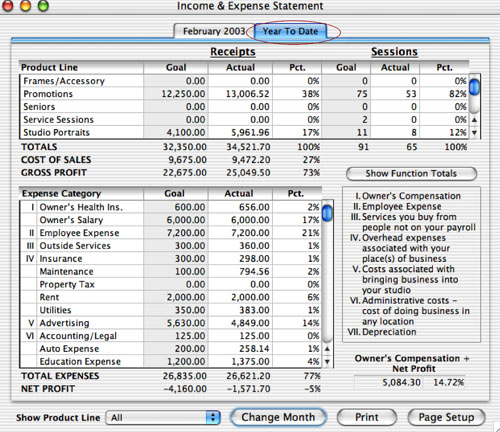
A perfect example of this doctrine at work can help to shed light on the current U.S. financial crisis. It involves a little-understood and badly under-reported accounting rule that was put in place in the wake of the Enron Corporation scandal of 2001. Enron, the Houston, Texas, energy giant collapsed like a house of cards when it was revealed that the company had used a questionable accounting scheme to grossly inflate the asset value of its holdings. The collapse left Enron's huge workforce unemployed, numerous members of its senior management charged with felonies, and countless stockholders bereft of their life's savings. The scandal also brought down the venerable Arthur Anderson accounting firm, which was deamed complicit in the scandal by failing to live up to its audit responsibility of protecting stockholders and the public from the devastating financial fiasco.
In the wake of Enron, the Federal Securities and Exchange Commission sought to make the asset value of securities more transparent to stockholders by tightening “Mark-to-Market” accounting standards so that balance sheet assets reflect their current market rather than the price at which these assets were purchased. Clearly the SEC's motive was well-intentioned.
However, in the opinion of numerous economists, the adjustment of these rules is directly related to the current crisis that sent Secretary of the Treasury Henry Paulson with his hat in hand to the Congress in search of what the media and others have dubbed as a Wall Sreet “bailout," designed to remedy the financial chaos that began when real estate markets faltered, followed by failures and/or mergers of major lending institutions. Faced with “restating” the balance sheet value of their mortgage-backed securities at the close of the 3rd fiscal quarter on September 30, firms holding significant shares of these “toxic” securities, saw their ability to borrow money dry up overnight because their asset value was now considered unknown. With the Stock Market in free fall and sources of credit becoming non-existent, the entire economy was said by Paulson, as well as an impressive variety of economic personages, was on the verge of collapse.
Is it possible that such a well-intentioned, yet little-understood, accounting rule alone could be responsible for as much as 70% of the grotesque financial crisis that had delivered the U.S. financial system to such a state of calamity? That's what a host of well-respected free-market economists believe.
Here’s an example of how the Mark-to-Market rules could throw a business into chaos. Suppose that you borrow money to purchase a sizable inventory of products at a set price, and you plan to sell these products at a profit over the next few years. But what if your ability to sell them is governed by an accounting rule that says that if you have one bad sale, you must then mark down the price of the rest of your inventory to match that bad sale . . . say two or three times below what you paid for it. Obviously you would have a liquidity problem, especially if your lender decided to call in your loan. Your products might still be sold at a profitable markup, but your are helpless to do so because of you must “mark” it to the “market” value of your most recent sale rather than keep it at it's purchased value because you plan to hold it until such time as the current downturn is over.
If not the entire reason for the September 2008 meltdown, the arguments posed that the Mark-to-Market rule is at least the proximate cause are fairly persuasive. They suggest that the chairman of the SEC could act to ease the rule so that a $700 billion rescue bill would not be needed . . . or at least not at that high a level of bailout. If you want to read more about the argument behind this point of view, click here and click here.
To learn more about an opposing point of view that argues for keeping the Mark-to-Marketing rule in place, click here.
My concern about the current "rescue" bill that is being cobbled together by Congress is that in its haste to solve this financial crisis, the Doctrine of Unintended Consequences will rear its ugly head at an undetermined future hour. Who knows what type of crisis it might precipitate.
In the meantime, I hope that photographers might take a moment to reflect about what accounting means in their businesses. I find that most photographers will do almost anything to avoid looking at and understanding their numbers.
If we learn anything from the current US fiscal crisis I hope it is this: Numbers have meaning that can illuminate or obscure what you need to know about your financial position. I love the statement that was popularized by Mark Twain: "There are three kinds of lies: lies, damned lies, and statistics." The statement refers to the persuasive power of numbers, the use of statistics to bolster weak arguments, and the tendency of people to reject statistics that do not support their positions. The same can be said for accounting. Because the numbers that constitute business accounting can be arranged in different ways, they, too, can be manipulated or rearranged to achieve a desired result.
Most of financial reports that photographers receive from their accountants are Income/Expense statements generated for the purpose of tax filings, and they are virtually useless for formulating meaningful business strategies. However, the same numbers can be rearranged into a "Managerial" report (see SuccessWare I/E report computer screen below) that will allow you to understand your financial position on a daily basis, while providing additional information that will help you to manage your business with precision. More and more photographers are mastering this common-sense form of accounting that is far easier to understand than tax accounting. Ultimately this knowledge is the first step toward creating a better lifestyle for photographers. So I'm hopeful that the current economic crisis will have the happy unintended consequence of making photographers more interested in not only what went wrong with the U.S. banking system, but also what's going on with their businesses.